


Derrick May is pissed off. At The Haçienda’s recent Global Warming night his set is cut short, dead on two, by some jobsworth bouncer adhering to archaic licensing laws. Arguments flare momentarily before respite comes as May basks in the adoration heaped upon him as fans bring in old Transmat releases for him to sign. He is the centre of attention, a fit young Black guy renowned for his motormouth and his music from the former Motor City.
Juan Atkins calmly surveys the scene from the dimly lit DJ booth, a father figure to the younger May. Thoughtful, cool and detached – just like his music. It is now ten years since Atkins made his first release, as one half of Cybotron. Inspired by the complex futurism of Kraftwerk, the electronic dabblings evident in George Clinton's P-Funk and the availability of sexy machines from Mr Roland. A Black American, choosing to ignore Detroit's Motown sound for a futuristic fascination with Euro electronics.
“Yeah I kind of think of that.” he confirms. “Kraftwerk was a major influence on me along with Funkadelic, Parliament, P-Funk. Those were two major impacts that shaped my musical background. I grew up listening to P-Funk. That was one of the first funk groups to use a lot of synthesisers and technology to do different sounds. A lot of people use technology just to take the place of conventional sounding instruments.”
Cybotron's ‘Techno City’ was lumped in with the short-lived electro set, even appearing on an early Street Sounds compilation. His maverick music needed a name, as did counterparts and high school friends May and Kevin Saunderson – hence 'techno' was born. The techno term was hyped and bastardised over the last few years. This mirrors music historically. Black Americans inventing a new musical language only to be ignored until white Brit kids offer a diluted version of the original blueprint, dress up in costumes and rake in the cash and the front covers. Atkins agrees that techno had to be sucked through Europe before it could be spat back at an interested white America.
“American kids have caught up. I know that sounds strange seeing as we started things out of Detroit but you've got to remember there's two different types of Americans, there's white American and Black American. And I know people don't think about that over here as much, but sadly to say in America races are still real polarised. So there's things that can go on in the Black community that the white community will never know about. And it takes something like what we do, come to Europe, get accepted before they even have a clue as to what's going on.
“That's simply because of the fact that the way our country has been shaped – we've been separated. Even though things are more progressive now the rules that were laid down hundreds of years ago are just now falling down. There are racial institutions that are just beginning to crumble. But in the last year I'm amazed at the speed the kids have caught up.”
Last year's bpm and breakbeat obsessed mutations did not impress Atkins, though he has respect for the Warp led purists
"What we were doing from day one was atmospheric melodies, more sounds, more listenable. I think that people are beginning to realise and accept the importance of what we were doing. It wasn't techno for the sake of it, it had a warmth to it. I think that was lacking from a lot of the British stuff and European stuff before.
“I like some of the Aphex Twin and Black Dog stuff, they are truer to form than a lot of the other groups that came out last year, a lot of the breakbeat stuff, noise music without melody. Things weren’t good for that time. But I think techno, which is short for tech-nology, is something that you can't dismiss. Let's face it, there are technological changes all around us in our world, period. To me it's something you can't just push to the side.”
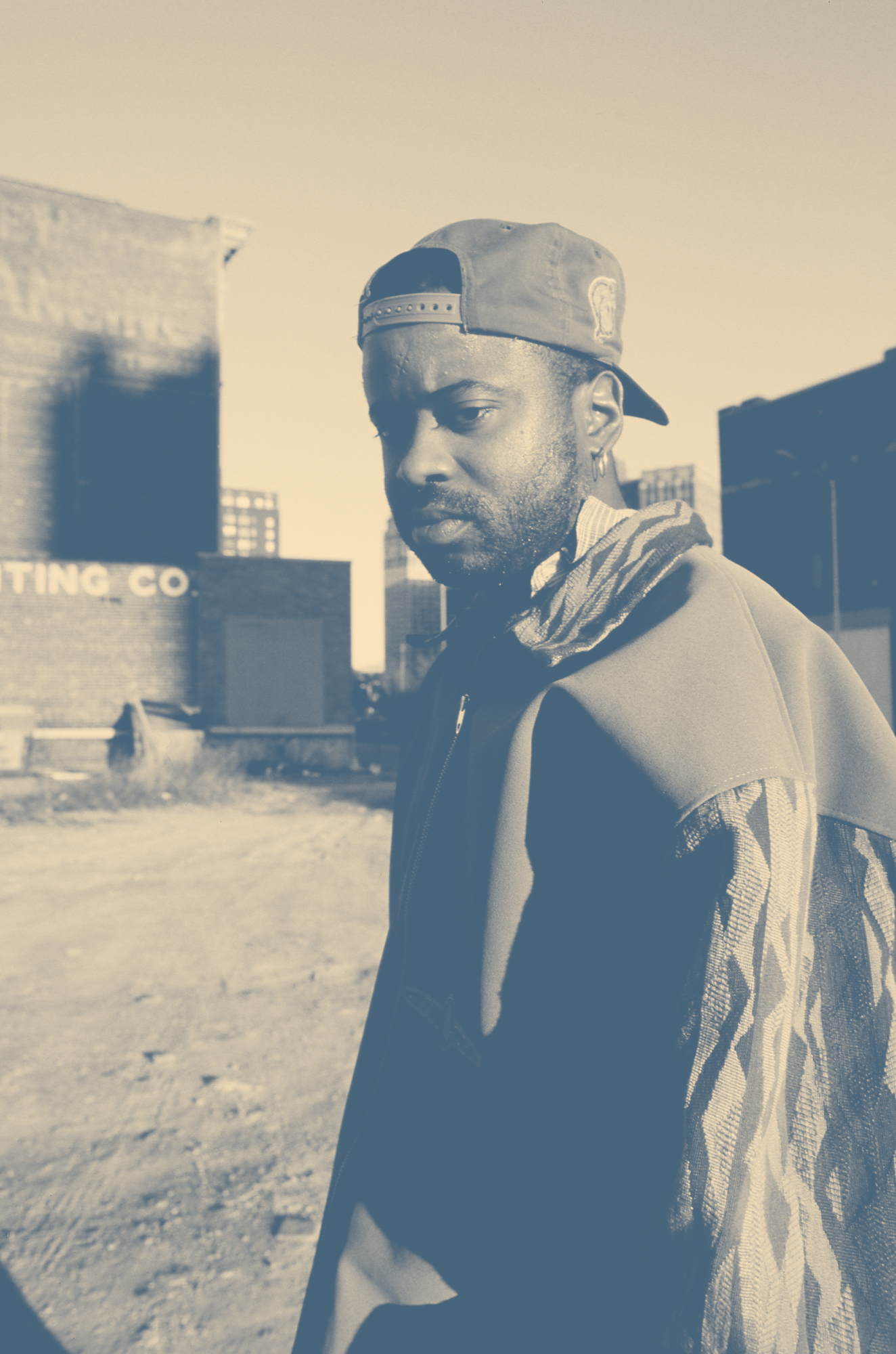
Atkins differs from his Detroit counterparts: Blake Baxter has a preoccupation with all things carnal, Kevin Saunderson offers the soul blend of Reese Project and Inner City and Derrick May's releases are unpredictable, dabbling in neo-classicism. Atkins’ recent Model 500 releases on R&S offshoot Apollo show he has kept to a purist philosophy – emotion expressed through machines. That said, he says he has no master plan when he enters a studio.
“I tend to rely heavily on my subconscious,” he explains. “I don't try to be too conscious with what I want to do. I know when I'm going after something and I have an idea and a plan it never comes out that good. Usually when I don't have a clue what I want to do and just do it. That's when the best stuff comes.
"I always make music to listen to as well as to dance to. I don't think that in order to make a good dance track you're not able to listen to it, or in order to make a good listening track you can't dance to it. ‘The Passage’ [as Model 500] that was released last year was more on the listening side but it was still a danceable record.”
There's not much dancing going on in a city like Detroit. It is seriously fucked. An apt backdrop for 1988s ‘Robocop’ – an apocalyptic vision of technology gone mad in the murder capital of the States. Does he ever try and express a view on the politics that have ruined his city?
“No. I mean I tend to try and say something meaningful if I do any lyrics on a track. But I don't have any political allegiances.”
What would make him leave Detroit?
"Well, I'm pretty happy there. But if someone said to me, if you come over here, you'll never have to worry about another bill, all you have to do is go in the studio and make music and your records would be out worldwide with top notch promotion and all you have to do is go in and record every day. Something like that maybe..."
He’s made a few trips abroad recently; he is currently recording his next release for Apollo in Kraftwerk’s homeland and also enjoys his other hobby – DJing. “I DJ to keep in touch, to see what people respond to, what the other DJs play, what other DJs like. It's great to travel around and see what people are into in different places.”
He continues: "Two years ago I used to play different things depending on where I was playing. But now I can play the same tracks wherever I go, and that shows me that things are becoming more together, more solid.”
Atkins’ decade-old ‘Techno City’ may have been a visionary piece of music but he never foresaw the global impact techno would have. “A techno world… I had no idea; I'd be coming to Europe. I always knew I wanted to get out and travel and make music. But who knows? I don't have a clue what I'll be doing ten years from now. I just love music and try to do the best I can.”
Read our Tribute to Juan Atkins
