.svg)
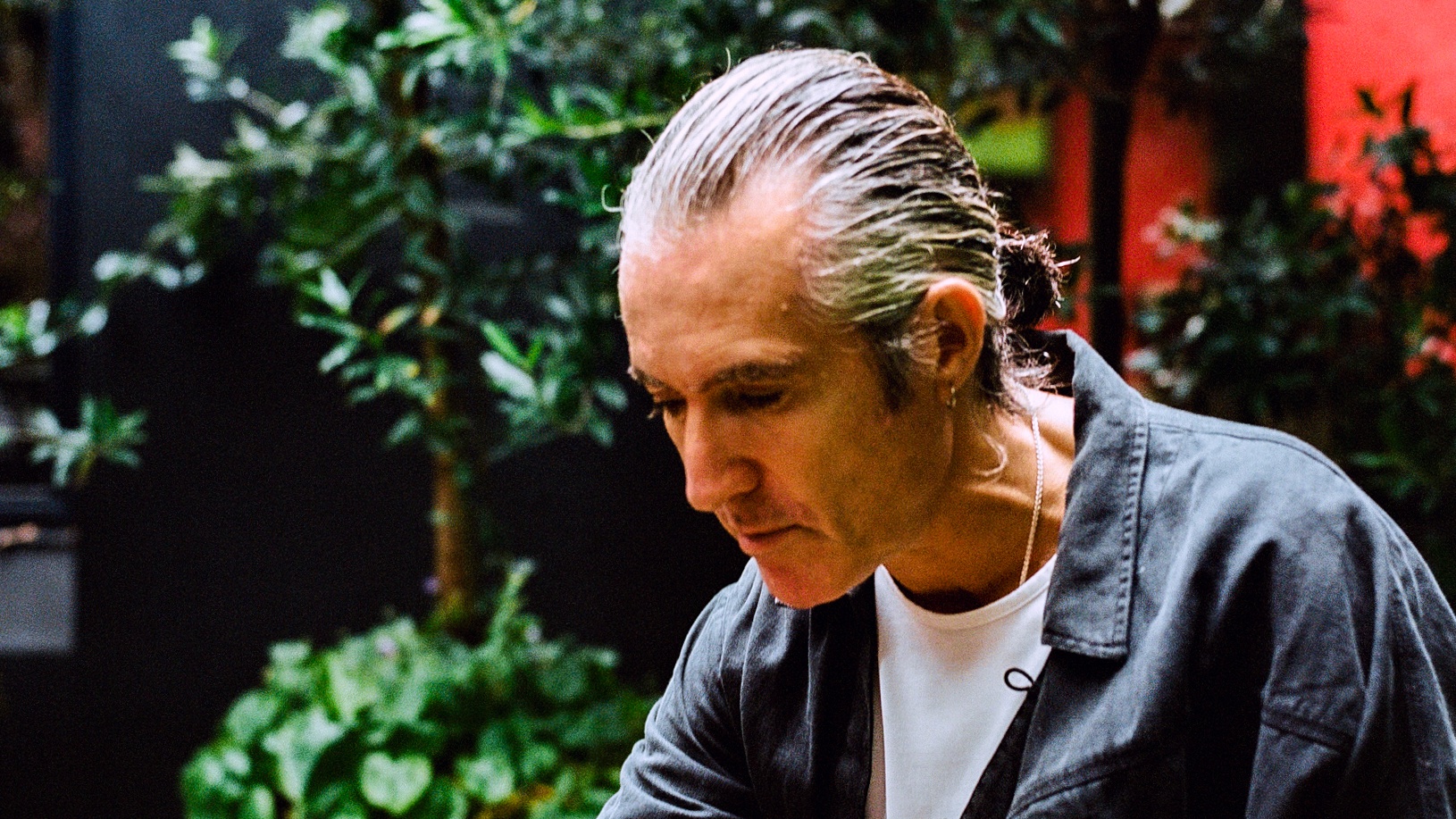
Alexis Taylor is an exemplar of our post-genre world. He’s an unabashed lover of both Gram Parsons and Phil Collins. And his music, in and out of Hot Chip, is marked by a unique fragility and jubilance. A case in point is his new solo record, ‘Paris in the Spring’. Named after a psychology test that measures attention and perception, the record demands the former and urges us to embrace the latter. Gemma Samways quizzes Taylor about European New Wave reggae, equine-related music and the enduring appeal of his band. “The fact that we’re still making music together and enjoying that is something I’m very proud of,” he notes…
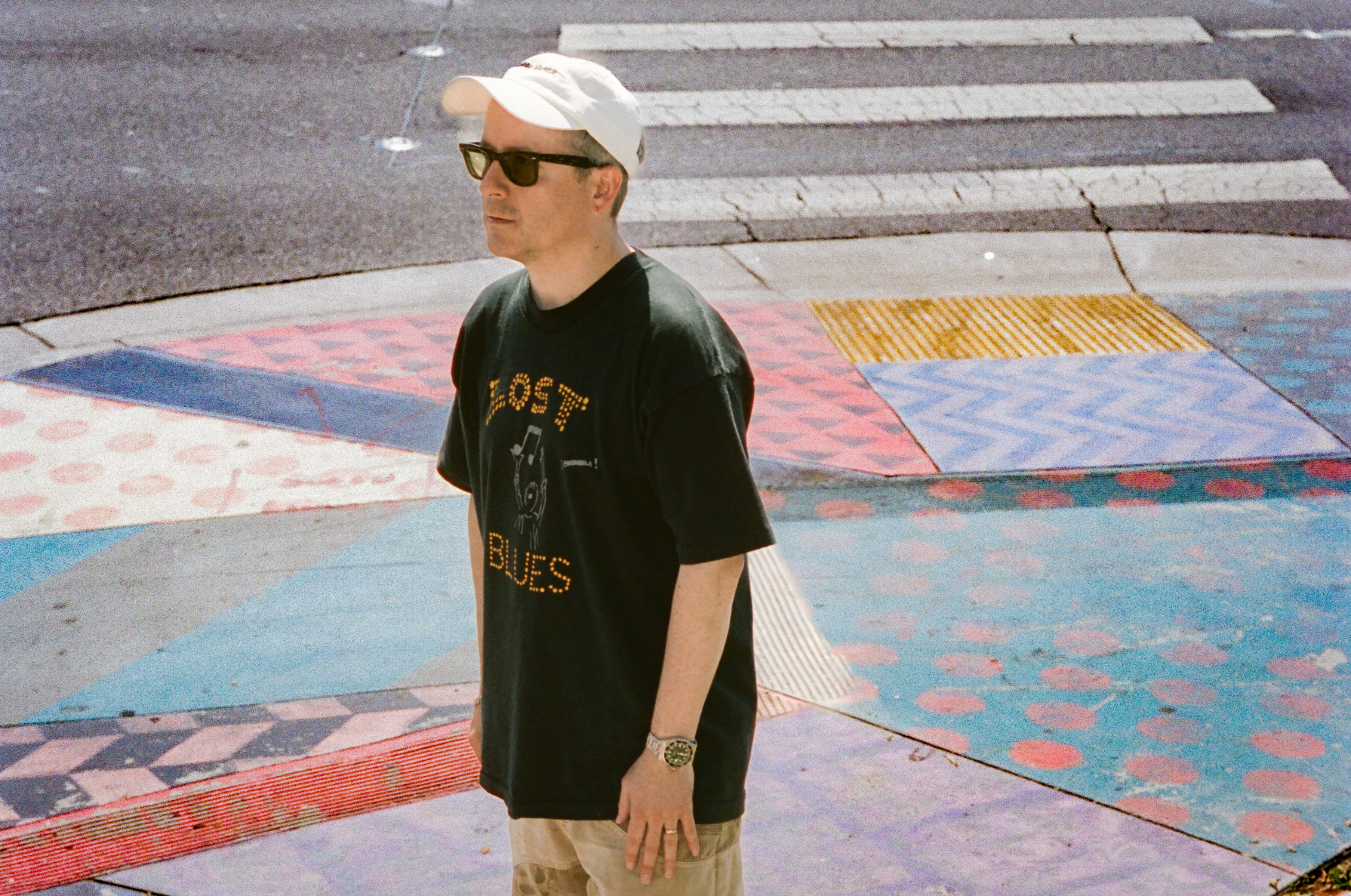
Few frontmen have packed as much into their career as Hot Chip’s Alexis Taylor. Alongside the eight LPs he’s made as part of the Putney-formed synth-pop band (incredibly, now in their 26th year), he’s also released three more with improvisational art-pop outfit About Group and leant his distinctive vocals to the likes of HAAi, Holy Fuck, Nicolas Godin and Cerrone. All of this while sustaining a hugely varied solo career of his own, the latest instalment of which has seen the 45-year-old singer-songwriter hit another rich groove.
Begun at Godin’s studio, and engineered by the Air man’s son Pablo, before being finished in London with Oli Bayston (Kelly Lee Owens, Barry Can’t Swim), seventh LP ‘Paris in the Spring’ finds Taylor musing on mortality and self-doubt, over sparkling productions inspired by an eclectic mix of new wave dub, tear-stained country and shimmering disco.
Named after a psychological perception test, it is deeply personal at points – album closer ‘Black Lodge in the Sky’ pays tribute to his late friend, the Mancunian producer Dan (Black Lodge) Dwaye – and, at others, remarkably universal. It is also far and away his most collaborative solo record so far, featuring contributions from The Avalanches, Godin, Étienne de Crécy, Ewan Pearson, Lola Kirke and Green Gartside of Scritti Politti.
Just back from Milan, Taylor sat down to discuss the album in more depth and to reflect on his journey to this point.
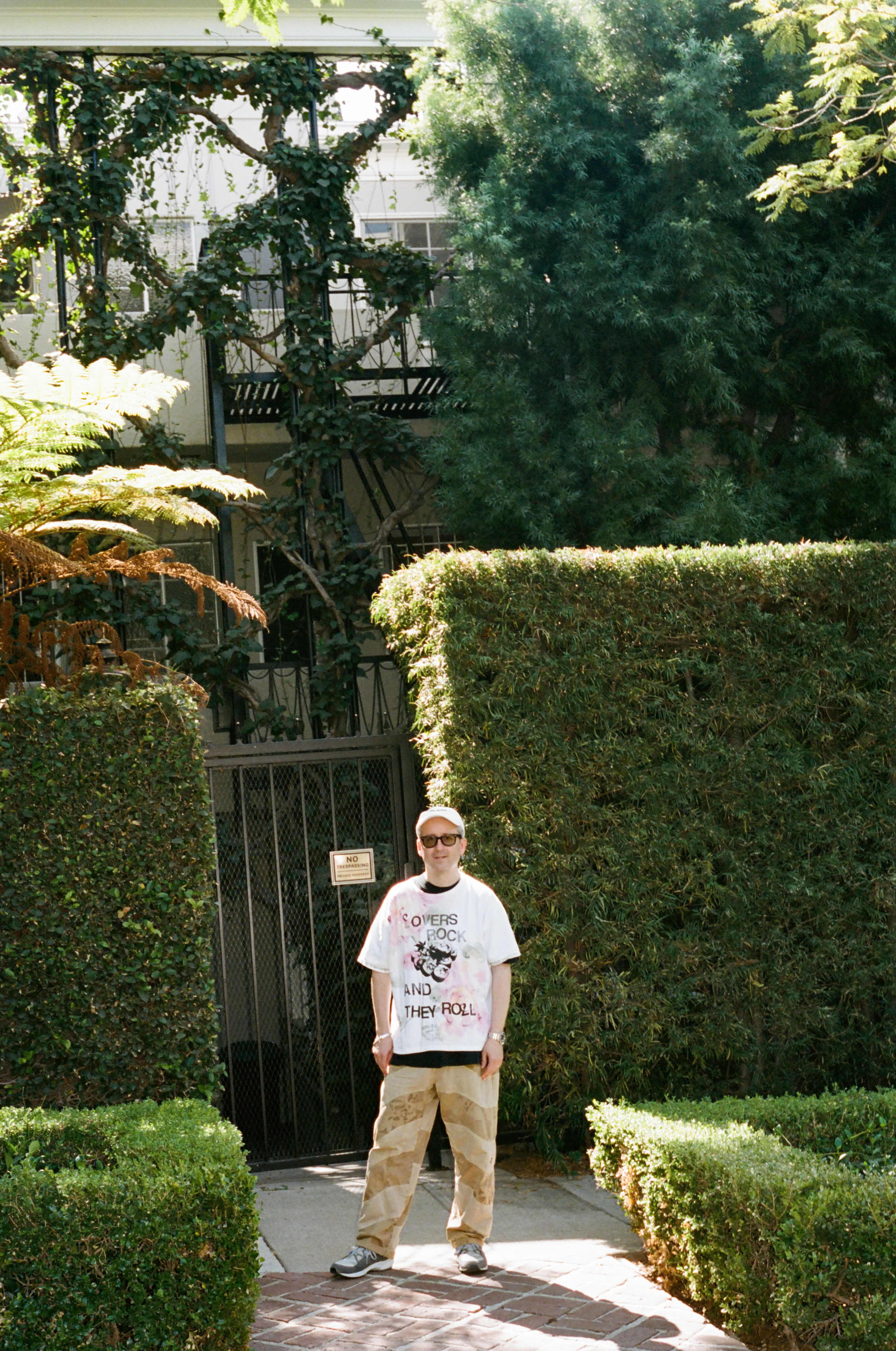
Hi Alex, how was Milan?
“Good. I was DJing a private event in a listening bar-type place. There’s a massive trend at the moment for these listening bars influenced by Japanese listening bar culture. It’s all about vinyl.”
The last time we saw you perform was in September 2025 alongside Ibibio Sound Machine at the Together For Palestine concert. You played a CeCe Rogers cover if we remember correctly.
“Yeah, ‘Someday’, which was sampled by Liquid on ‘Sweet Harmony’. We were also incorporating a bit of ‘Follow Me’ by Aly-US, as well as playing our own song, ‘Melody of Love’. So it was a medley of all those.”
How was the evening for you?
“It was really amazing to be a part of it and to see that number of people turn up, all united in talking openly about what’s happening [in Gaza]. And my daughter was there and she joined Hot Chip on stage which was a really nice thing. But then also, I went from that gig to somewhere else and was being questioned by someone, asking why I did it. It’s quite surprising sometimes how you can be so on board with something and then realise that other people are actually baffled by your involvement.”
Seven albums in, what drives you as a solo artist?
“The same thing that drives me to make any music. One thing that I occasionally remember is that I was a solo musician long before I joined forces with Joe (Goddard) in Hot Chip. My solo work is obviously a space to do whatever I want to do, but I would say that there is a particular type of songwriting that I do – however it’s produced – that is my identity as a songwriter.”
Can you expand on that?
“So even if my last record, ‘Silence’, was more acoustic instrumentation and this [new one] is more electronic, it’s still the same songwriting voice there, even if that develops and changes over time. There’s a continual thread through my solo albums in the way in which I write and express myself as a songwriter and I think this record has something in common with one I did, called ‘Beautiful Thing’. It’s a bit more to do with rhythm boxes, drum machines and instrumentation you get in funk records like the clavinet and the Fender Rhodes. But I’m trying to do something slightly different this time around.”
In what sense?
“I wanted to let things develop, so I spent a lot longer making it. And it was a bit of a journey, because I was originally making most of it in Paris in Nicolas Godin’s studio, with his son Pablo Godin engineering and Pierre Rousseau producing. Two thirds of the record was done there, but then I was faced with a bit of a challenge, because Pierre became unavailable midway through the process. So I lost a lot of momentum and got quite depressed. Not, you know, depressed in my life in general, but just concerned about how I could finish this record. I lost confidence.”
How did you regain that confidence?
“I just didn’t stop. I went to do other recording sessions. Like, ‘For a Toy’ was done in Los Angeles at Ariel Rechtshaid’s studio, which was a really great, different place to work in. And The Avalanches had produced ‘I Can Feel Your Love’, initially done with them working remotely and then me finishing the track with a bit of help from Étienne de Crécy and Oli Bayston. And it was Oli who helped me finish the record. So it’s taken a lot of work and time and travel and finding different people to work with to complete it.”
Can you give us an insight into The Avalanches’ creative process?
“I’ve done a couple of tracks with them – this one on the album and one that hasn’t come out yet. I don’t always see that process in action, but I think it’s literally sourcing vinyl – buying records, traveling with a turntable, finding snippets and sampling them. With ‘I Can Feel Your Love’ they sent me an instrumental and words came to me straight away and it felt really good. The thing that was then a bit complicated was that we realised that they had a sample in the track that could never really be easily cleared, so we had to get rid of it altogether.”
The album title, ‘Paris in the Spring’, is a phrase used in an attention and perception test. Why did that resonate as a title?
“Well, I thought about where I made it, and then I spoke to my friend Oliver Payne – who made the cover for my album ‘Piano’ – and he was like, ‘Are you familiar with the “Paris in the the Spring” test?’ And it felt like that fed into the subliminal messages in the music, and into the unconscious influence in the songwriting process.
“Originally, the working title for the record was ‘Cocaine, Wild Horses and Real Love’, taken from three of the songs on the album. I thought it sounded like an outlaw country album from the 70s and I loved it. But then my record label pointed out that no one would play any of it on the radio and none of the streaming services would support it. (Laughs) And as I’ve never taken drugs in my life, it would have been quite funny for me – the squarest, most straight edge person – to sabotage myself in that way.”
Can we talk about the decision to cover The Rolling Stones’ ‘Wild Horses’. You’re a big fan of Gram Parsons’ version, specifically?
“Yeah, The Flying Burrito Brothers’ version of that song is really, really beautiful. When I first met Pierre Rousseau – working on the Nicolas Godin album (‘Concrete and Glass’) – we got chatting about making some music together and what I wanted to do was cover that song but influenced by the Rhythm & Sound records that Mark Ernestus and Moritz von Oswald (Basic Channel) made in the 90s. And also these records by Spectral Display, which are kind of European New Wave reggae music. And instead of him saying, ‘Why would you ask that?’ he said: ‘Yeah, that sounds great.’ So we did that cover, and then we made a cover of the Prefab Sprout song ‘Wild Horses’. We talked about making more horse-themed covers.”
What other horse-related songs were you considering covering?
“One called ‘Horses’ that Palace Brothers released in the 90s, as well as a Smog song called ‘I Break Horses’. And there’s this song ‘White Horse’ by Laid Back, which is a pretty brilliant dance record. My late friend Dan (Black Lodge) Dwaye – who I’m singing about on ‘Black Lodge in the Sky’ – he made a very good record in the early 2000s on Mo’ Wax, called ‘Horse With No Name’, that uses samples of that Laid Back track and Laurie Anderson’s ‘O Superman’ and various other things. So we could easily think of more [horse] songs but we just didn’t complete the project.”
The song title ‘mp3s Can Make You Cry’ is obviously tongue in cheek but it does beg the question, what was the last MP3 that made you cry?
“There’s one track by Alasdair Roberts called ‘Lord Ronald’, which always makes me cry every time I listen to it. It’s a traditional murder ballad, but his version pairs this very vulnerable and frail vocal with understated Casio keyboard drone and Will Oldham doing backing vocals. It’s incredibly sad and really, really beautiful.”
As someone whose music tastes have always been very eclectic, you must feel very at home in today’s post-genre world.
“I do welcome that development, yeah. I have met other people along the way whose music taste is a little bit less eclectic, or they don’t really understand how you could accept certain forms of music as good. Like, you know, the fact that I like Phil Collins sometimes was incredibly confusing to The Jesus and Mary Chain.
Some people hear what I do in Hot Chip and they don’t understand why I’m talking about country music or whatever it is I’m talking about. But I’ve listened to a lot of music my whole life – I just don’t wear those influences on my sleeve very obviously. Like, in all my years of listening to Will Oldham, I don’t think I’ve made any records that particularly sound like him. Or, in all my years of listening to Prince, I’ve always felt like I can’t make anything that sounds like Prince, because he’s so unique and so special and I just don’t sound like that.”
It’s been 20 years since your breakout hit ‘Over and Over’ came out. Does your affection for it remain undimmed?
“Luckily, I like it still so it doesn’t become an albatross. I don’t listen to it very much, but I like what we did with that song a lot and I don’t think I could say that about everything that we’ve made. I like the production and the groove of it and all the sounds in it. I feel like it’s a reasonably good indicator of what Hot Chip is all about.”
Did you immediately know you’d written a hit?
“I don’t think we thought it was necessarily a hit, but we did think it was a good one. We actually started playing it live about a year before it was out in the world, so it occupied a space in our live set like, here’s the big song. We felt the same way about ‘Boy From School’, and both of those are still songs that are meaningful for lots of fans of Hot Chip.”
Do you have any specific highlights of that period?
“I remember we opened for Four Tet in America and we had a really good reaction from the crowds on that tour. I remember getting to know the people at DFA Records around this time as well – Tim Goldsworthy and James Murphy and Jonathan Galkin. Building a friendship with them was quite a big thing for us in that a cool American record label thought we were good. In the UK we got good reviews but everyone only wanted to talk about us being nerds. US audiences were different, saying, ‘This is really good music,’ rather than, ‘Why do you look like that?!’”
In the 26 years since you formed Hot Chip, what has been your proudest achievement?
“I’m proud of the records themselves and that there is an audience for this music, and that seems to remain there. That doesn’t happen for everyone. I’m also proud of the fact those sort of friendships remain within the band. I’m aware that that’s quite an unusual thing, because bands often fall apart over time. Just the fact that we’re still making music together and enjoying that, and working really hard at it, is something I’m very proud of.”
This feature first appeared in Disco Pogo issue 9
.jpeg)