.svg)
No 90s dance duo better captured the joyous, out-of-control mayhem of a party than Basement Jaxx, whose music – frenetic, carnival-like, free – was mined straight from the source. The nights that Simon Ratcliffe and Felix Buxton held in and around the boozers of Brixton in south London shaped the likes of ‘Jump n’ Shout’, ‘Where’s Your Head At’ and ‘Red Alert’. Miranda Sawyer, a regular at those Rootylicious gatherings, remembers the sticky dancefloors well…
.jpeg)
The end of summer and behind a fence in Crystal Palace Park – a wide, flat, open space, a south London savanna – there’s a party brewing. It’s a multi-generational, multicultural shindig, with several families (no under 18s allowed), all drinking, gossiping, stretching out and revving up on the scrubby grass in the sunshine. The middle-aged women, with crossbody bags and bright trainers, are on the cooler side of mum, but they’re getting lairier by the minute, especially those with their mates. Their husbands are not as loud; the teenagers are lanky and hyped, already at the front.
After an afternoon in the sun, dotted with appearances from Gilles Peterson, the Rooty sound system and Kitty Amor, just as the sun starts fading, the main event starts. A sound like a horn brings us in. “Commmme onnnn!” shouts one mum nearby, hopping up and barrelling towards the front. The teenagers are already there, phones aloft, bouncing. When the music starts, this lot don’t stop.
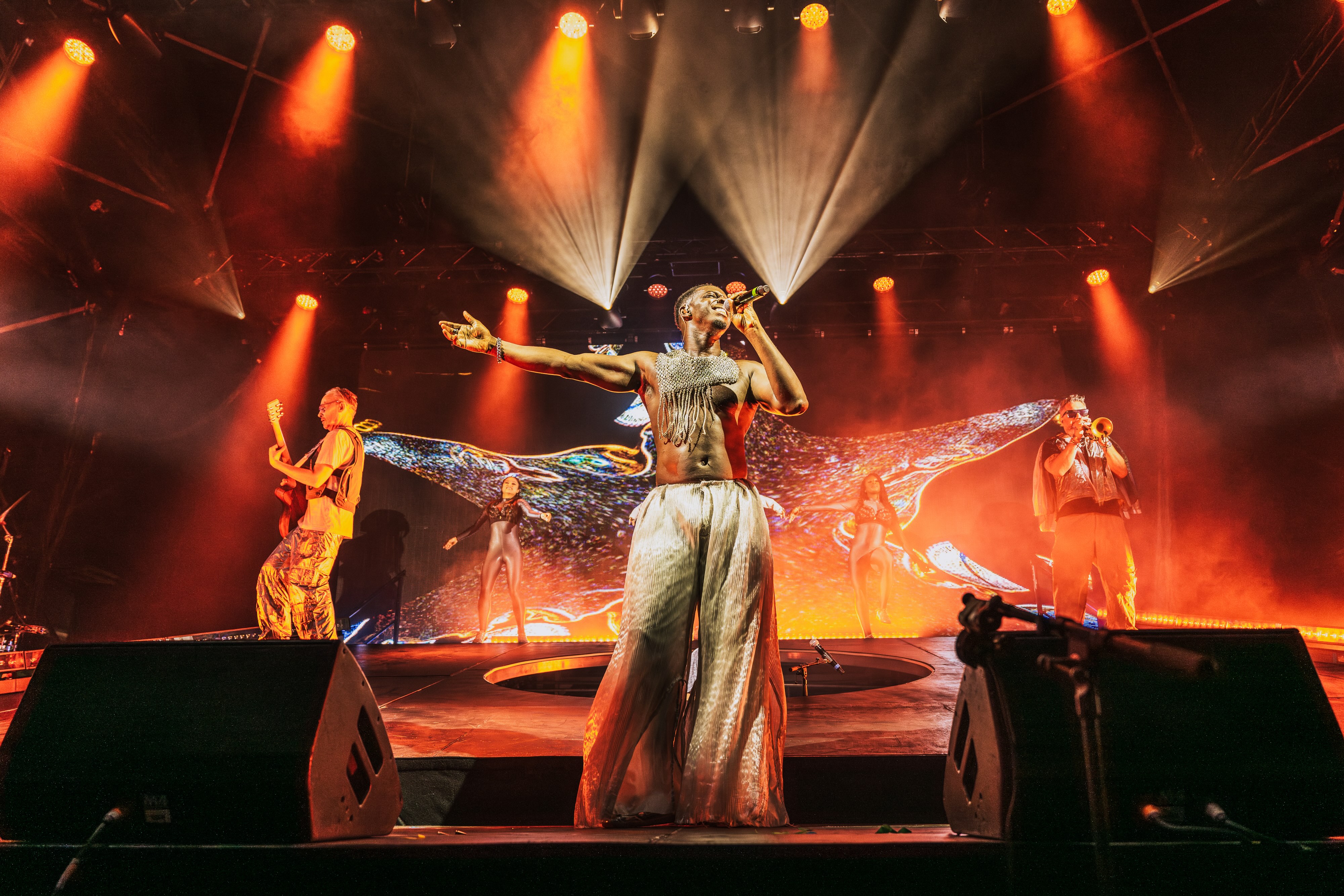
Onstage, the back screen twirls with rocket-fuelled pyramids, with kissing lips, with spaceships and all-seeing eyes, aliens and flowers and outstretched human hands. A floating ramp showcases leotarded dancers, singers dressed as silver space queens, a band with feather epaulettes. And stationed centre stage, in a hole in the ramp, their heads popping up like neon-lit moles, are two men. They’re playing their machines, but, every so often, one comes out to wield his guitar. That’s Simon Ratcliffe. The other, Felix Buxton, sporting a glistening flowing robe and enormo-sunglasses, stalks across the front of the stage with a vibe that falls somewhere between exuberant vicar and Sun Ra. “South London, we love you!” he shouts.
This is Basement Jaxx in 2025, 10 years after their last live shows, banging through and twisting up their back catalogue with panache and joy. “It’s like a soul revue,” says my friend, and it is: a stage packed with people entertaining you at all times. A lot to see and, of course, a lot to hear. There’s a full-on four-to-the-floor section in the middle of the set, a medley of early hits early on. ‘Bingo Bango’ is merged with a spot of ‘Bamboléo’, ‘Never Say Never’ is a pure soul-house heart-lift, and ‘Where’s Your Head At’, a huge anthem for Generation TikTok, goes off like the fireworks that burst across the sky. The encore gives the old-school fans a nod with 1996’s ‘Samba Magic’, before Basement Jaxx close out with their brand new Latin track ‘Bambina’. And the crowd drifts away, across the dark park to buses and trains and Lime bikes, zipping down hills in the cooling air, joyful, sated. Partied out.
Basement Jaxx were always about the party. The party rather than the club. A couple of hundred people squished into a low-rent venue, mashed and mangled and really dancing, not posing. Bottles of water poured over heads, sweat dripping down the walls, sticky carpets instead of shiny floors.
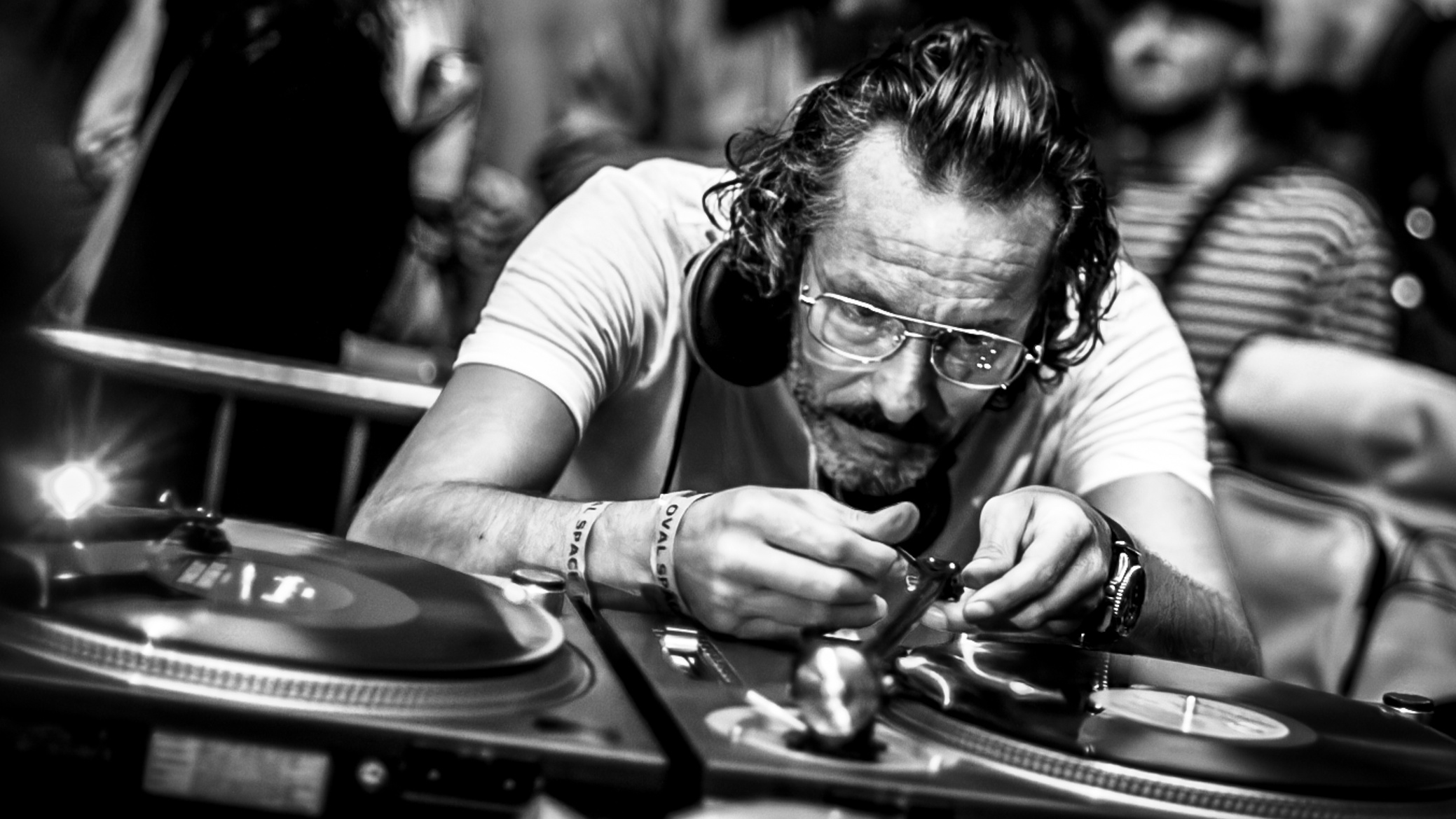
Actually, writing that has made me remember the sticky dancefloor at Basement Jaxx’s Rooty nights at the Telegraph: the feeling of the carpet, tacking itself to your trainers. The Telegraph was a pub on Brixton Hill, towards the top, next to a chicken shop; a rackety Victorian joint with wood-panelled bars, big musty windows and a handful of dedicated locals. The landlady was fine with hiring out the back room as long as her regulars could drink undisturbed in the front one.
And so, at Rooty, in 1999, you paid your £5 to Alma, on the desk at the door, and made your way through to the back bar, which was pretty similar to the front bar, but with some decks to the left and a small area of wooden floor. The dancing started early, with Frank Tope and Tayo Popoola DJing, known these days as the Rooty Soundsystem. The rule was: no house music before midnight. They’d drop a mad Latin track at the end of their set, to ramp things up and let the crowd know that Basement Jaxx were coming on. Then, everything went off.
And at some point, when you were in the thick of it, when the room was at full pandemonium and the air was almost a living thing, the carpet would feel wrong under your feet and you’d have to manoeuvre yourself off its claggy surface to the centre of the dancefloor (about six feet from the bar), by smushing and squidging, by passing drinks over, by jumping and shouting to ‘Jump n’ Shout’. The build-up, the breakdown, the smash back in. Those Rooty parties were the best.
In the late 80s, the UK’s first acid house parties were an antidote to nightclub snootiness. They stood against the kind of places with a ‘no trainers no jeans no baseball caps’ door policy; the ones where you were turned away for not being dolly enough. I remember, in 1987, being told by a bouncer at such a club to “come back when you’re a real woman”. I didn’t qualify because I wasn’t wearing heels.
In house clubs, you could wear what you wanted, and what you wanted to wear was a T-shirt and jeans, or shorts and a bra top, because you were going to get hot. The best nights were about dancing, as opposed to pulling, and by the end of the evening, we all looked pretty similar: wide pupil-ed, wet haired, pulling a hoody over your head as you staggered through the exit, the sweat-steam billowing out of the door into the night air.
But as house music moved into the 90s, its sound morphing into cheesy anthems, slinky pop, it shifted away from its outsider origins to find itself slap bang in the mainstream. Then the mainstream did what it always does: smoothed off house’s outlaw edge and sold it back in diluted form. Flyers were sexified, with images that were less open-your-mind outer space and more foxy ladies in small frocks. Clubbing’s dressing up factor returned. The multi-floored make-da-money superclub arrived.
Basement Jaxx were not like this. As Felix told The Face in 1999: “We’re the exact opposite of shiny club bras. We’ve always set out to be unglamorous and noisy.” He meant ‘shiny bra clubs’, but we understood. No leather waistcoats and private tables for the Jaxx. They were about the party part of house music. They brought sirens and whistles and enormous basslines, Latin rhythms and ragga raps, strange noises and pumping beats. They brought the good time.
There were others who were also working the mainstream from within. The Prodigy scared away the normies by turning rave into punk rock. The Chemical Brothers brought over the Britpop kids by mixing acid house and indie. But Basement Jaxx had their own thing, something more upbeat and Latin soul. Though they had their rave past – well, Simon did – by the time they started releasing tracks on XL, in the late 90s, they seemed to be drawing from the same positivity well as ‘It’s Alright, I Feel It’ by Nuyorican Soul or Stardust’s ‘Music Sounds Better With You’. They combined that optimism with a clattery madness, an experimental chaos – very different from, say, Daft Punk’s precisely delivered cool – and that came from their Brixton clubs. They ran a few before Rooty; a few after; and each was an absolutely bananas, utterly unifying, night out.
You can hear the party in their first proper chart hits. Both 1999’s ‘Red Alert’ and ‘Rendez-Vu’ are a full-on, shake-your-booty, here’s-the-entire-kitchen-as-well-as-the-sink good time that welcomed everyone in but are completely rooted in where they came from. Rooty was a good name for it (it came from a Japanese girl describing the Jaxx vibe as “rootsy” but getting it wrong). Party music, yes, but we all know that a true party is more spiritual and unifying than just a straightforward top night out. All Basement Jaxx clubs were in and of their local community, and that manifested in their music. They made clubs such as Rooty and it was clubs like Rooty that made them.

Like so many Londoners, Felix and Simon were originally from out of town. Felix was from Leicestershire; Simon grew up in Holland, England and Wales. So when they arrived in Brixton, in the early 1990s, they saw their new home with a wide-eyed sense of wow. In interviews, they extolled the delights of Brixton and Camberwell, from the different foods in the market to the front-foot conversations, all thrilling after the buttoned-up dullness of rural England.
Felix’s dad was the vicar of Ibstock and he grew up in a vicarage that was also a small farm. His family life was happy, but, he said, “square”; he was barred from watching ‘Top of the Pops’. “I had to look after old ladies,” he once said. “I had to mow the lawn before the church fete. And there was this terrible Easter procession through the village: I’d be playing the violin while the other kids were racing past on bikes.”
One of the Buxtons’ memorable out-of-area trips was to the BBC’s flagship children’s telly programme, ‘Blue Peter’. The family dog had given birth to 12 puppies, and the show’s producers were keen to feature them. But when the Buxtons arrived at the studio, the puppies’ daddy dog attacked presenter Lesley Judd – specifically, her cardigan – and she fainted. So the dogs were barred for life and the Buxtons went back to Leicestershire. (We could make an extrapolated metaphor about grown-up Felix wanting to welcome everyone, no matter how rabid, into his clubs, but that would be silly.)
Anyhow, after such small, failed delights, the expansive joy of Brixton blew Felix’s mind. SW9’s mish-mash of different cultures – Caribbean, Portuguese, Italian, soul, reggae, gay, dog-on-a-string – has always been what makes it fizz. Though Brixton’s now known as a dining destination, back then, it had very few restaurants. Instead, there were bars and pubs and clubs and squat parties, any amount of different venues for drinking and dancing, from Mingles to the Fridge Bar to Cooltan. To be honest, you didn’t even have to venture into any of these places: people sold music cassettes in the tube station, tunes banged out of cars on Coldharbour Lane, there was always someone busking, whether singing or throwing some shapes. (All still true today, though it’s CDs rather than tapes now, and those venues are no more.)
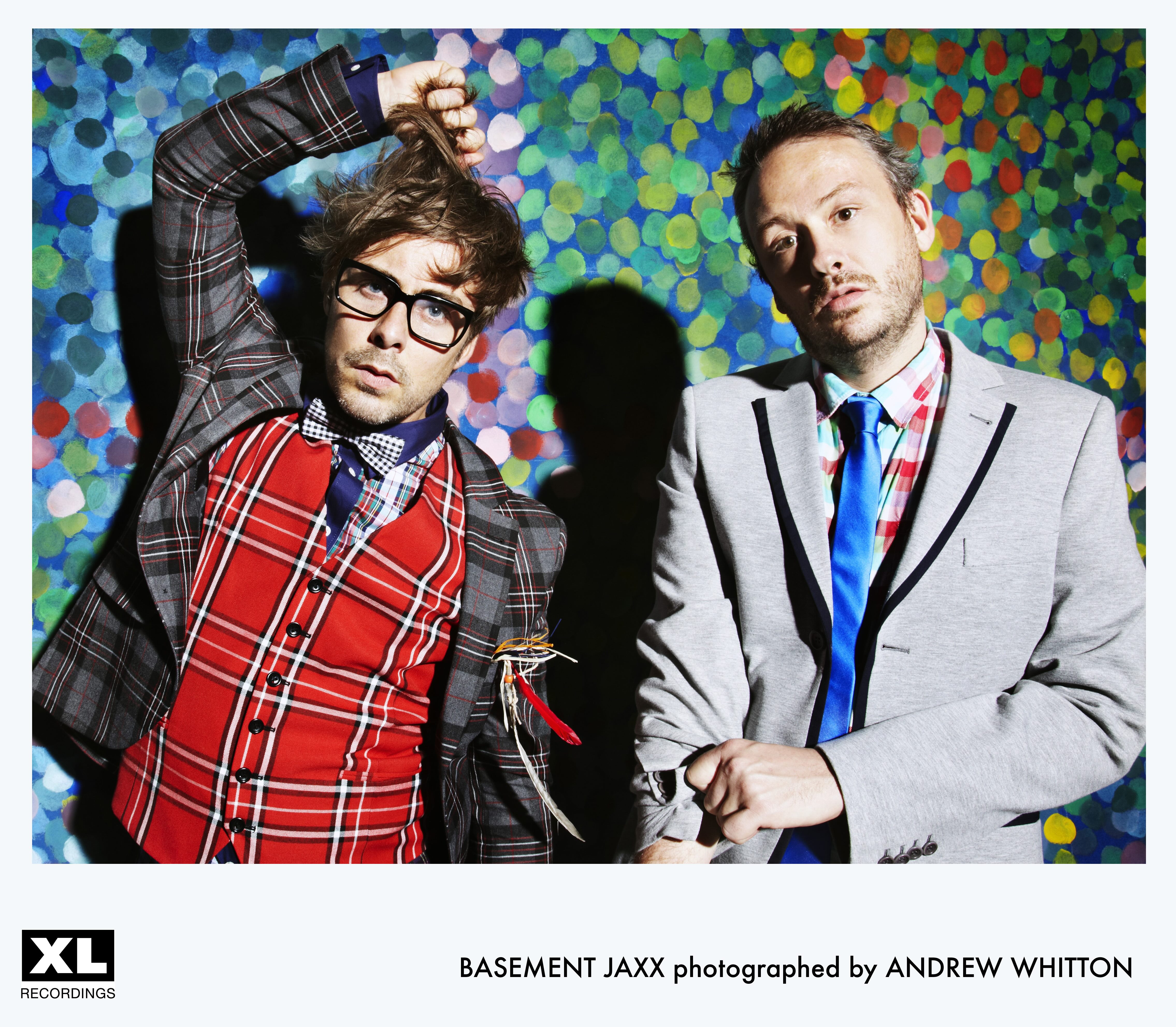
Simon dropped out of university after a year, moved to London and lived in a squat. He created a basement studio that he used to make tracks with his friend Dylan Barnes under names such as Tic Tac Toe (‘Ephemerol’ - hardcore rave) and Helicopter (‘On Ya Way’ – slower, more sample-heavy house), and made money from fitting people’s hi-fi equipment. When Simon and Felix first met, in a south London pub, the latter was working as a print designer for a PR firm (key client: Tupperware). They bonded over Masters At Work; Felix hired Simon’s studio for a couple of sessions.
Soon after, they created a label, Atlantic Jaxx, and spent the next few years releasing EPs, while also building up their DJing chops. They complemented each other. Buxton brought a jazz hippie vibe (Jazz Hippie was his nickname at school: his interests have been very consistent), Ratcliffe was into dub, and was a “pop and rock person who accidentally got into house”. In those formative creative years, they made cool deep house cuts, but, by 1997, they wanted to do something more interesting. “We’re just saying fuck off to all that,” explained Simon to Jockey Slut. “You can get a bit serious and say: ‘This is really cool,’” added Felix. “When actually it’s just boring.”
The B-side of their ‘EP3’, released in 1996, featured ‘Fly Life’ and gave an indication of what their new moves might be: funny noises and Latin rhythms. (“The atmosphere we create is the atmosphere we feel,” said Felix in the same interview. “There are noises that are urban, squeals that mean something.”) But then ‘Urban Haze’, their last release before they were signed, in 1999, to XL, has ‘Set Yo Body Free’ on the B-side: an absolute bass-bin-burning track that isn’t quite house, or techno; that, when they played it out, grew and grew and set your brain on fire.
In promo for the first Basement Jaxx album ‘Remedy’, Felix and Simon called their new music “punk garage”, by which they meant garage house, rather than American scuzz guitar. The punk side is interesting. They were inspired by the attitude of original 1970s British punk, which saw rastas and punk rockers mix (The Clash’s ‘Police and Thieves’; Bob Marley’s ‘Punky Reggae Party’). “That’s the side of punk that appeals to me,” said Felix. “Instead of wanting to destroy the system, let’s look at how we can celebrate the diversity within it, and use force for change in a progressive way.” He and Simon were inclusive and idealistic; they wanted everyone to feel free, to be one nation (or at least, one room) under a groove. And, in contrast to smooth mixes and shiny bras, they wanted to embrace mistakes, to capture mess and experimentation and life.

“A lot of the original Chicago house was done by people who really weren’t that musical,” said Simon to The Wire. “But the wrongness gave it a real excitement. It’s good not to be too safe about being in tune or having correct timing… It’s about energy and oddness. We want you to hear something different each time you listen.”
When they made music, the two of them crammed into a small room on the intersection between Brixton and Camberwell, they innovated and tried new ideas spontaneously, in the moment. Even though what they were doing was sampling and EQing and programming – they would joke that all they did was move their fingers in a knob-twiddling motion – in the old rock parlance, they jammed.
“We freestyle,” said Felix, and described how he would find samples, play them and pitch-bend them, while Simon would simultaneously put effects on and then shove their new sound into a track, all in a matter of minutes. It gave their tunes a breathless, live feel, a ‘happening now’ exhilaration. ‘Yo Yo’, on ‘Remedy’, has a deliberate skip. “It makes you feel like everything’s slipped,” said Felix. “It’s great.”
They went out of their way not to repeat themselves, even within a track. Think of how many riffs and funny noises there are in ‘Red Alert’. There’s the guitar line, the trim-phone sound, the “don’t worry, don’t panic” hook, before we even get to the real sing-along: “and the music keeps on playing on and on”. And then, after that, there’s the ‘shake shake shake’, the scream, the drop out, the come back.
It sounds like Brixton, or at least their version of Brixton back then: noisy, random, overstimulating, full of joy. A band playing at full pelt, then falling down the stairs, landing in a heap at the bottom and somehow continuing. Those jazz cats dropping through the floors in ‘The Aristocats’. The never-ending party.
I went to many of Basement Jaxx’s Brixton nights. The first was at a bar called Taco Joe’s, under an arch on Atlantic Road that stretched through to Brixton Station Road at the back. There, they set up an open mic as well as music and met some of the artists they would feature on later records. The Taco Joe nights were an interesting, very typical Brixton local mix of “very nice, middle-class, young Soho trendies,” said Felix, “... and bad boys.”
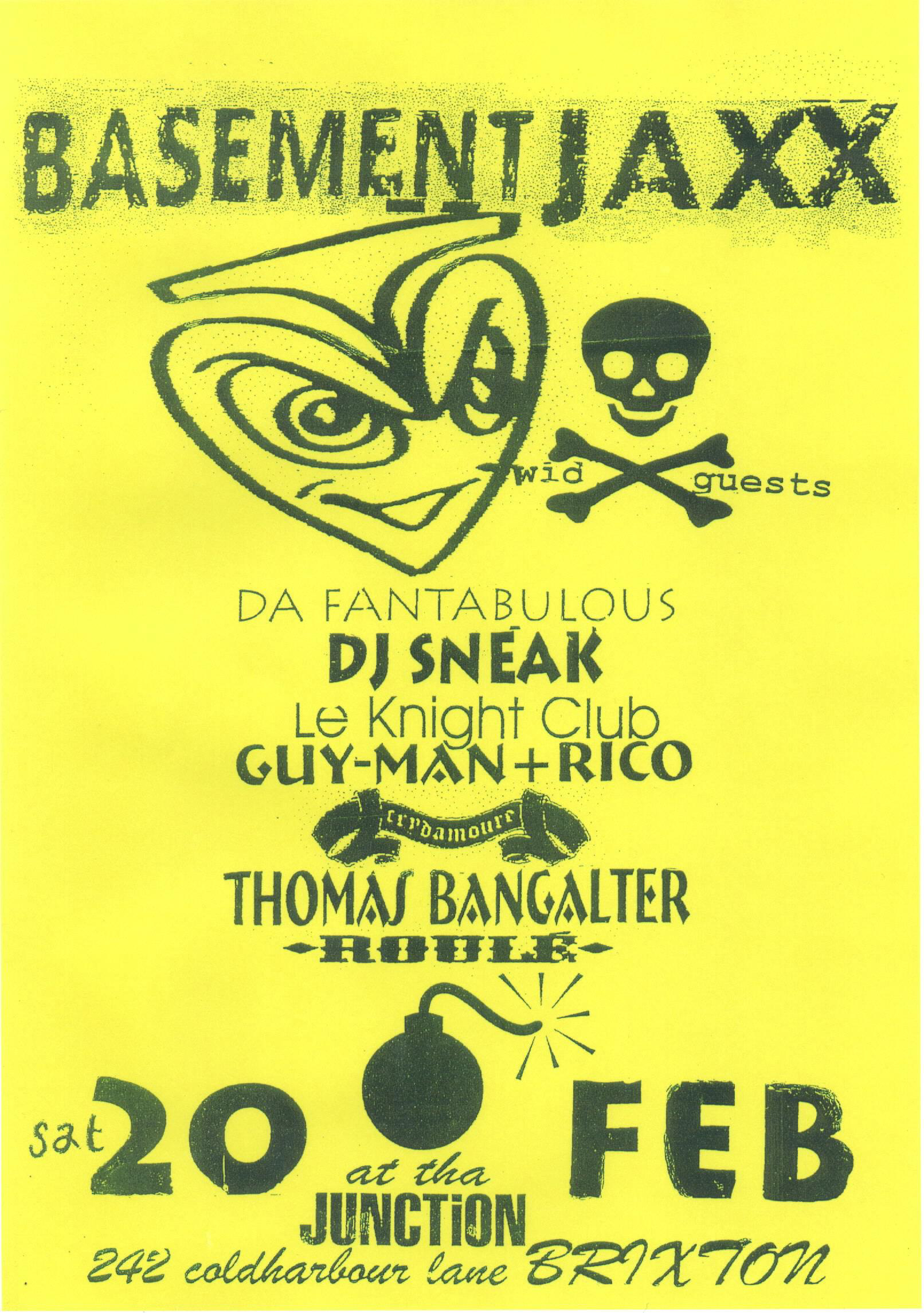
For a while, they moved to the enormous St Matthew’s church – where ex-prime minister John Major got married, pop/politics fans – which was converted into a couple of venues, around 1992, including a big room in Mass. Basement Jaxx were in the Crypt, the small room in the basement. After that, there were nights at the George IV on Brixton Hill, the ‘Remedy’ launch party at the Fridge, then The Junction in Loughborough Junction, then back up Brixton Hill, to the Telegraph.
The George IV and Junction parties were fantastic. The George IV was a rattly mini-gig venue: the Junction, a longer, thinner room. In both, the atmosphere was nuts and at the Junction there were several high-profile, but unpaid, guests, such as Daft Punk. But things changed, mostly because of us, the press. Felix lived with a Mixmag journalist for a little while, and there were plenty of journos at the parties, so, inevitably, the Junction nights were written about. The Face, then still hugely influential, put Basement Jaxx on the cover in 1999.
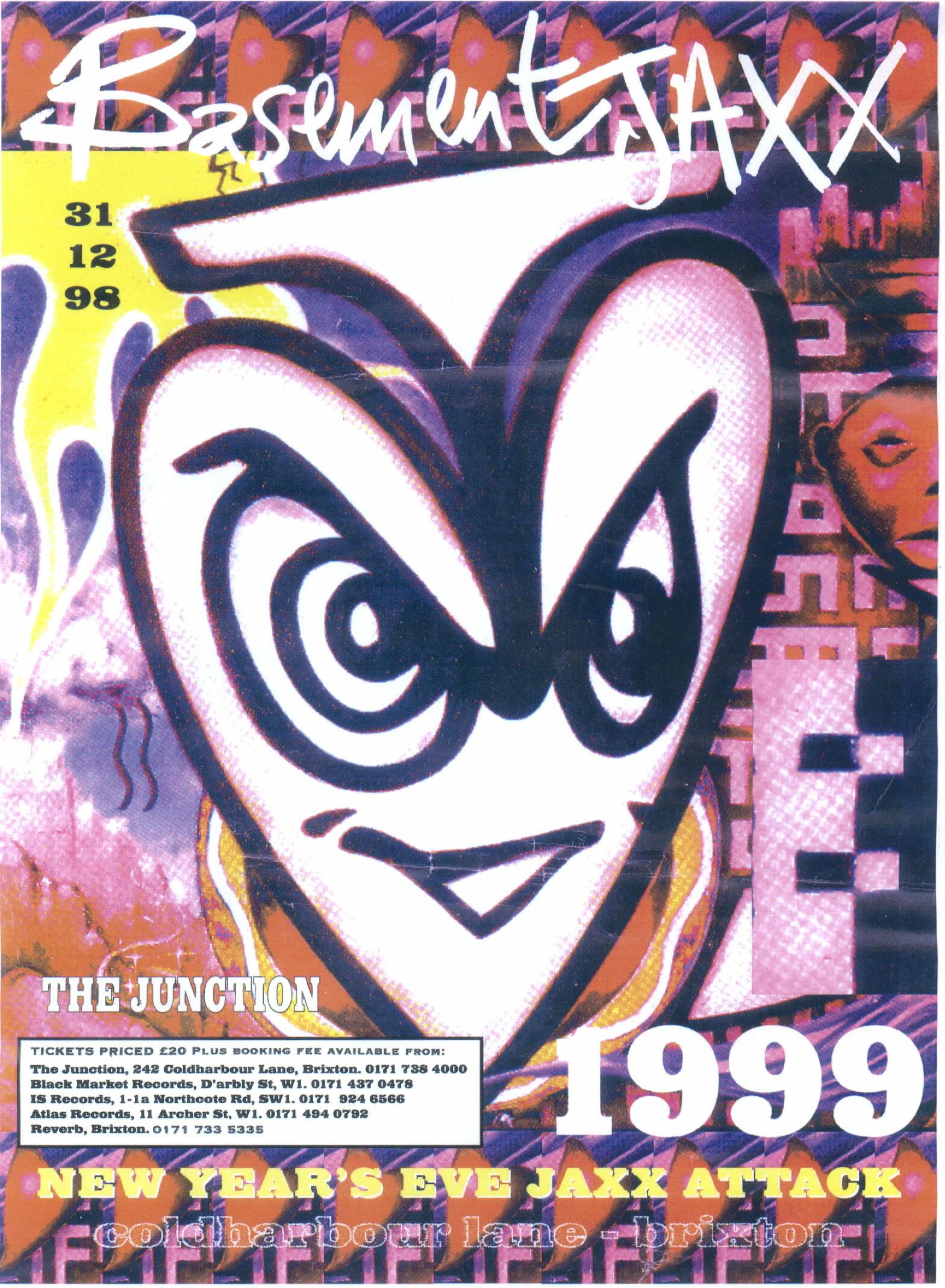
As soon as the article came out, you could feel the change. The queue for the next Jaxx night stretched down Coldharbour Lane; it was weird to see people we’d never seen before. Another odd thing: early on the same evening, Felix came over to chat to our little group of friends, as he often would. But this time, everyone stopped talking, because he was now important, a celebrity. And that night, when Basement Jaxx came on to the decks, everyone on the dancefloor turned to face them. Before,
we’d faced every which way. We’d been dancing with one another.
After the Junction, the Basement Jaxx parties moved to the Telegraph. There was a sense that everything was changing. Their career was taking off, and now everyone faced the DJ booth when they played. Still, up until around 2003, and the album ‘Kish Kash’, their tracks were still very based in and born of their parties. The ‘Summer Daze’ EP, which came out in 1995, features ‘Samba Magic’, a Rooty floor filler, as were so many of their tracks, from ‘Jump n’ Shout’ (1999) to ‘Do Your Thing’ (2001). Their second album is called ‘Rooty’; their 11th EP is called ‘Junction’ (and features a great acid track called ‘Acid Luv’).
‘Rooty’, released in 2001, was still based in Rooty the club. But as Basement Jaxx got bigger, they got busier, touring and playing festivals and working out a live show. Their Glastonbury 2005 headline slot – they were drafted in when Kylie Minogue had to pull out – was a riot of carnival lunacy and by the end of the 2000s, their onstage good time was so tempting that even a 25-year-old Prince Harry wanted in, at 2009’s Wireless. They let him dress as one of the gorillas that jumped about during ‘Where’s Your Head At’. (Harry blew it, because one of the requirements of being a festival gorilla was not to do too much - “you had to get into the part of being a gorilla”, said Felix - and he got carried away and started disco dancing. Felix, who’d forgotten that Harry was in the suit, was so incensed that he rugby tackled the gorilla to the floor, nearly causing a national emergency.)
Post-‘Rooty’, over the next decade and a half, Basement Jaxx grew up, diversified, tried new things, enjoyed themselves – as did their original audience. They released albums until 2014, and then they went away (though they’re rumoured to be returning with a new LP soon). During that hiatus, over the past decade, others have found their music. It’s the way these days. Artists disappear, and when they reform and decide to play a few gigs, somehow they’re much bigger than they were in the first place. The live acts get larger, the venues more vast, the screen art more whizzy, the stage show more exciting. The fun expands, invites in the newcomers, welcomes all nations, all ages. But it’s still, at heart, a Basement Jaxx party.
This article first appeared in issue eight of Disco Pogo.