.svg)
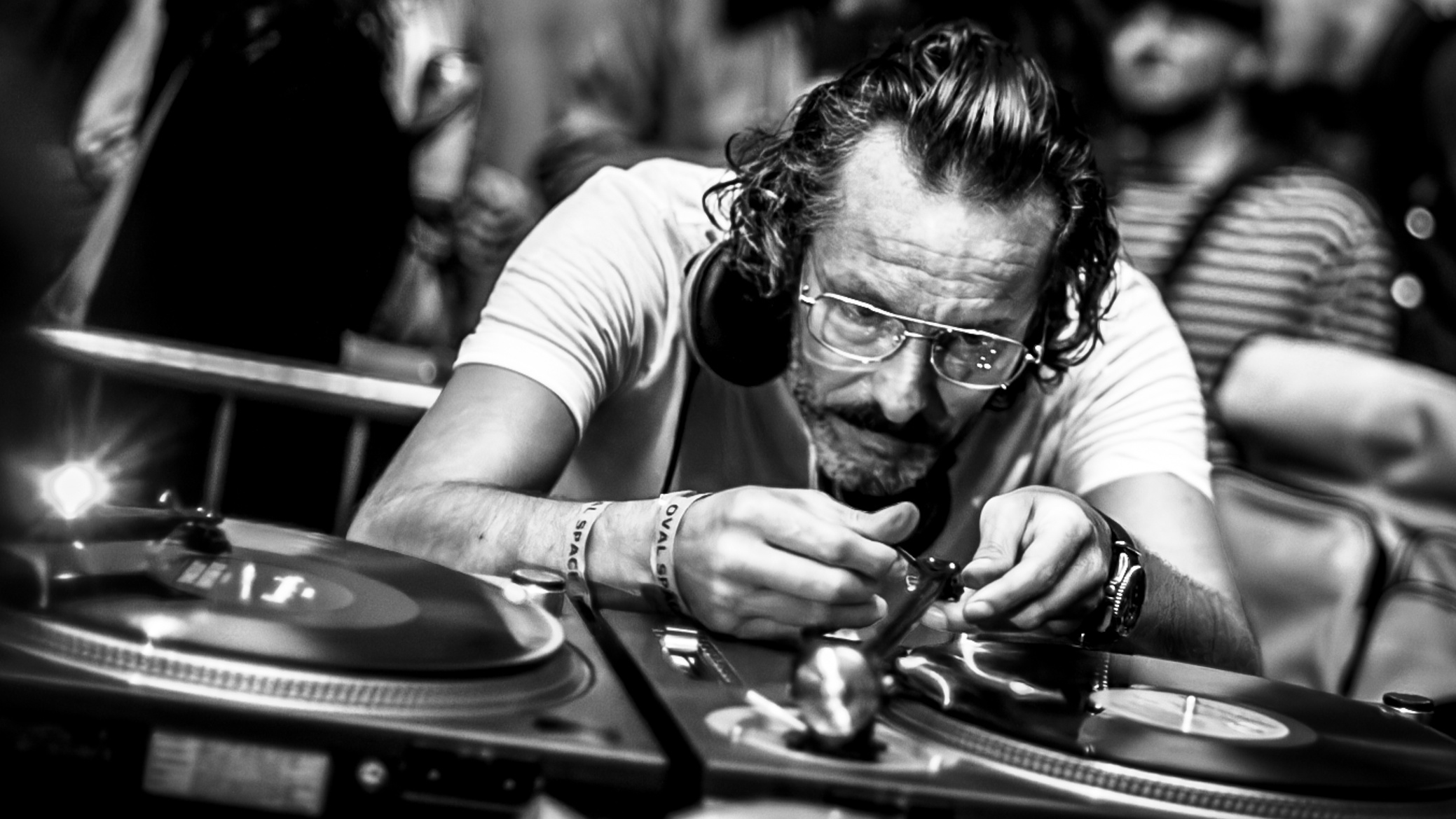
DJ Harvey is the DJ’s DJ. His exuberant and carefully curated sets have made him the doyen of his profession for close to 40 years. In a rare interview, he looks back over his stellar career, but admits his eyes are firmly on the present and the future. “It’s better now than it ever ‘used to be’,” he tells Joe Muggs. “All those moaning, bitching, middle-aged fucking DJs, I’m fucking sick of it. Just retire.” Shine on, Harvey, you lovable loon…
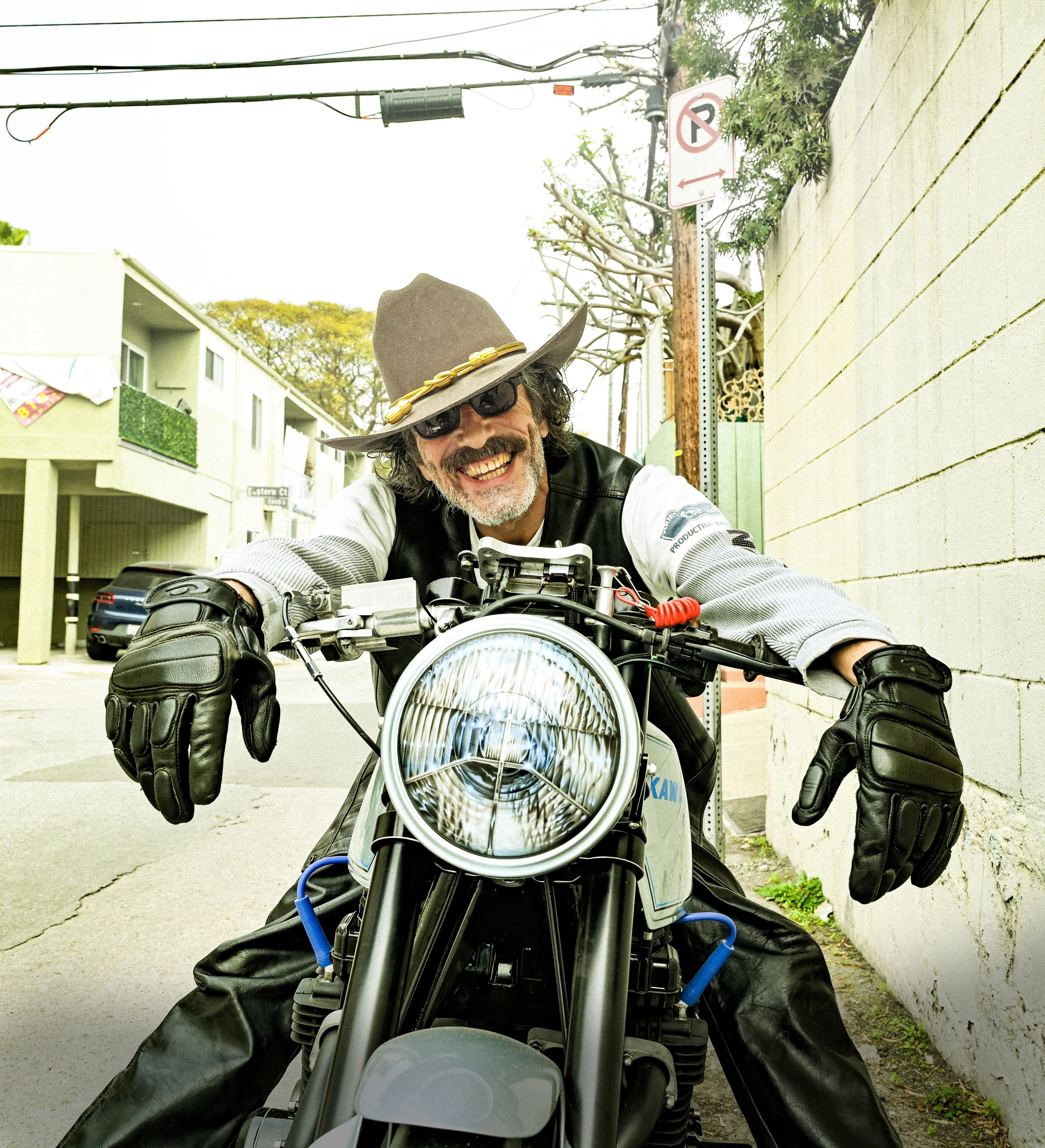
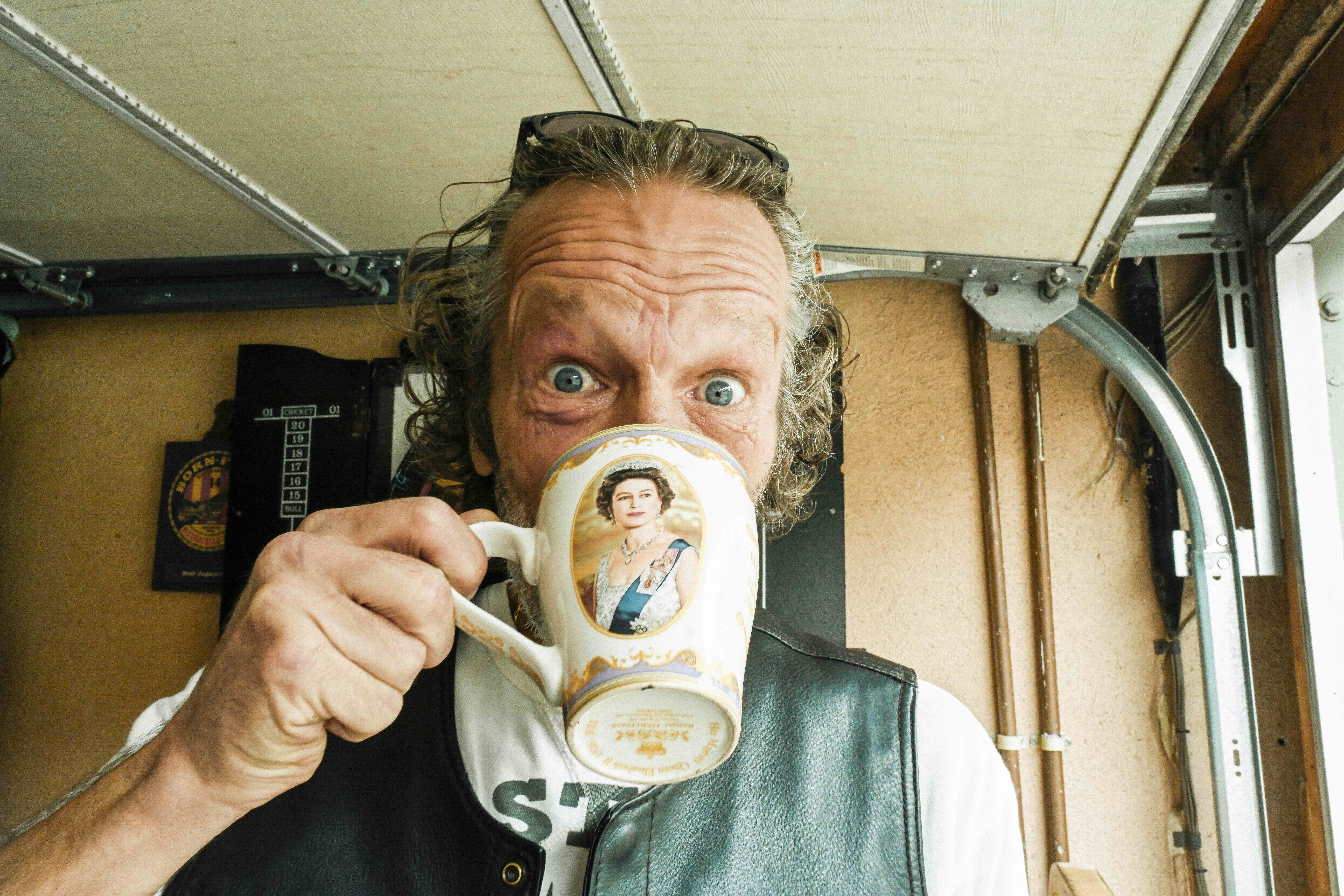
“Sixty is the new 19!” grins Harvey Bassett from his home in LA, in response to a suggestion that he doesn’t appear to be slowing down much in life. Though to be fair, there can’t be many 19-year-olds with lifestyles like his. He’s just got his blues rock band Wildest Dreams booked at his favourite motorcycle festival in Southern California where last year his “1979 Kawasaki KZ 440 big block dragster” won Best Japanese Bike In Show, and he’ll “set up a pop-up store with some surfboards and music and motorcycles and stuff” there.
He’s just celebrated a year of Klymax in Bali, the “best club in the world” as he’s happy to put it, which he helped found and design. As well as being a resident there, he still gigs constantly as a DJ around the world to adoring crowds, to the point where: “If I was to go to Shanghai tomorrow and walk down the street, someone would come and ask to take a picture with me, and that tells me that I might not be huge, but I’m global.” When he’s in LA he still surfs regularly and rides a skateboard around his neighbourhood. And he is absolutely basking in it. “Oh, I am living my best fucking life,” he grins again – Harvey grins a lot – “you better believe it!”
The thing is, though, he kind of always has done. An alternative scene musician from pre-teens and DJ for his entire adult life, he’s always been in the thick of things: from 80s squats into the white heat of acid house and on, his events have been consistently where it was happening, his selections impeccable, his crowds the funkiest. Tonka Sound System, Moist, New Hard Left, Mercury Rising, Harvey’s Sarcastic Disco: just the names of the parties are enough to get discerning clubbers’ eyes glinting, and that’s before you get to the records released, the legends from Larry Levan and Underground Resistance on down that he’s played alongside, and the DJ sets themselves which right up to today can turn any venue into a capital letters P-A-R-T-Y and turn burly, bristly men of a certain age into gibbering emotional wrecks. Through all of that, he has shown every sign of – as his occasional colleague in mischief Artwork would put it – “having a lovely time” pretty much all the time.

He even describes his 70s childhood as “absolutely fucking amazing”. Harvey was born in the Royal Middlesex Hospital, just off Tottenham Court Road (“I’m not a spiritual person, but central London is my spiritual home”) but the family moved out to a village outside Ely in Cambridgeshire when he was young. He was set up early for a musical life: his mum was a party girl who made him learn to dance to her Buddy Holly and Johnny Cash records with her in the kitchen (“She could really dance, pushing off a door frame to rock’n’roll and spin round!”) while his dad was an electrical engineer, so “we had the first colour TV in the village, he brought home a video recorder in 1972, we had some Western Electric tube sound system that he’d rescued from the Lyceum Ballroom when he kitted it out in 1968…”
Maybe even more than his parents, though, he soaked up cultural influences from the generation before. On his mum’s side his granny and great aunts had been kind of it-girls of London in the 20s and 30s. “In fact, my Auntie Carmen modelled for the icon of Selfridges, so every time I walk down Oxford Street I salute my Auntie Carmen and that always makes me feel happy.” Meanwhile his paternal grandmother “was glamorous in a different way – she was boyish with short hair, had travelled in North Africa and rode motorcycles, which of course I loved. Her and my grandfather may have had a ‘lavender marriage’, we never knew. She was very stern; she would open a tin of war rations and if you didn’t eat it for tea it would be served for breakfast – whereas my other granny would be persuading me to eat smoked salmon. They were a huge influence on me, the yin and yang, really. Even now I could live on hot dogs if I had to… but I’d rather eat endangered species!”
By the age of nine, Harvey reckons the wheels were already in motion for everything that was to come. He remembers a babysitter introducing him to Hendrix at that age. “She said: ‘This will probably be too heavy for you’ – I had no idea what ‘heavy’ was, I just really liked it because it was all whizzy, whooshy, dynamic noises!” Around the same time his glam granny would take him to Soho: “She’d drag me around delicatessens or whatever, and I would see these people – you know the dandies, the rent boys, the teds, the punks, the cool cats that stood on the street corners in Soho and look like they did nothing except be cool – and I knew what I needed… it was that. And of course that’s what I spent most of the 90s doing.” Add to that a heady atmosphere in 70s Cambridgeshire, “the legacy of the Pink Fairies and Pink Floyd and squats and magic mushrooms and all these clever young people wandering around the university”, and it naturally seemed like bands were the way forwards. He got hold of a drum kit and by the age of 12, in 1978, he was playing with punk band Ersatz and even recorded a Peel Session.

Having absorbed Hendrix, glam, soul, reggae and punk – as well as his mum’s rock’n’roll – as a kid, he became stylistically voracious through his teens. By the time he left school and dived headlong into the Cambridge, and then London, squat scene, this was leaning more and more into music for dancing. He and his punk friends were also spending time at The Midland Tavern, which mainly served as a drinking spot for Cambridge’s Jamaican community; there, “we were exposed to sound system culture and would go and hang out at blues parties. And then as the music was developing, like maybe we wanted to listen to James Brown or Fela Kuti or some electro sounds, we were like: ‘Well, okay, we could play music on this kind of sound system rig and then invite friends!’” With suitably hefty speakers and turntables acquired, the squat parties started getting longer and longer and more and more popular.
The growing culture around hip hop and electro was also fascinating to Harvey and his Cambridge friends who started calling themselves Tone Deaf Krew or TDK, adopting b-boy fashions and writing graffiti. Harvey naturally tried to adopt the techniques of hip hop DJs – “as a drummer, I realised that scratching and phasing and double copying and all of that kind of thing were just like drumming” – and a trip to New York at 19 got him taking it very seriously. This coincided with the warehouse parties, where the likes of Norman Jay, Soul II Soul and Coldcut were cutting their teeth, taking off in London and he rapidly started to realise that being a DJ as such might be a viable way forward – and out of band politics, which he increasingly found “like having four girlfriends, and then all your four girlfriends get girlfriends and everyone wanted a say… what I realised was that as a DJ I could be a one-man band and determine everything!”
TDK became Tonka Sound System and the parties with the DJ team of Harvey, Choci and The Rev at the heart of them kept snowballing… and then there was a big shift. “At a certain point in the 80s,” remembers Harvey, “a lot of clubs were pretty scary. You want to go and see [legendary soul DJ] Steve Walsh at the Tudor Rose? Take your fucking life in your hands, mate. Just to go to a gig like that, you might get stabbed, you might get beaten up, you might get your shoes, clothes taken off you. Then it changed. Suddenly someone comes up to you, they’re going to hug you, probably give you their T-shirt and shoes too! I remember a gig in Brixton, an acid house thing set up in the back, smoke and strobes, so I wandered in… some guy came over, I thought he was the bouncer and was going to kick me out, but he just gave me a big slimy hug. I’m like: ‘I have fucking arrived.’ The music is heavy and the philosophy is good, man, and I’m like, that’s it, we’re here. Now 35 years have passed and I haven’t looked back.”
In many senses, it really is as simple as that. When acid house hit, Harvey was ready and waiting. He had the mixing skills, the good taste, the already-enthusiastic regular crowd and the endless appetite for getting stuck into the party himself – and he got on board, and very genuinely didn’t look back. In fact, anti-nostalgia is something you quickly discover he is militant about. For sure, he’ll enthuse for a bit about Tonka parties on Brighton beach or setting up at the notorious Glastonbury of 1990 – “probably our finest moment, I remember seeing a horse and cart on the dancefloor and someone else rode a motorcycle through the dancefloor... it was pretty outlaw stuff” – but he absolutely will not dwell on “those times” as a whole as something special.
Rather the entire Harvey ethos is that the acid house disco party formula worked then and works now, and the best party could be, in fact very likely is, just round the corner. “Fuck ‘like it used to be,’” he rages with sudden vehemence as the conversation moves on to how things shifted after the first flush of acid. “It’s better now than it ever ‘used to be’. All those moaning, bitching, middle-aged fucking DJs, I’m fucking sick of it. Just retire. Maybe your career peaked at a certain time and I’m sorry if it didn’t work out for you, but maybe… maybe you weren’t keeping your eyes on the prize, mate. Think about that.”
So, it’s without sentimentality that he relates: “We were a solid crew and it was exciting and good times, but the thing with Tonka is it didn’t have a leader or whatever, so making decisions was, well… after five years some people couldn’t even remember their names, let alone where we were playing that weekend, so that kind of sort of slowly fell apart. That was definitely some fun, but you know, there’s some people that would like to think that was the defining moment of their lives, but it wasn’t mine, it’s just a small facet of a big picture.”
By the time the Tonka parties stopped, Harvey already had other irons in other fires. With Heidi Lawden – his romantic partner back then, still his manager to this day, and of course a sterling DJ in her own right – he started Moist in Covent Garden, and around the same time became a resident at the brand new Ministry of Sound, quickly expanding to doing both Friday and Saturday nights. Moist he describes as “a New York garage and sleaze boogie kind of sound as an alternative to the sort of cookie-cutter scream-up handbag of the major dance floors of the time”. It allowed them to book a who’s who of US legends: Darryl Pandy, Mad Mike, Larry Levan and Mr Fingers to name just a few. At Ministry he played “a bit more electronic, I suppose techno if you really must use ‘the t-word’, on the Friday and house and disco on Saturday”.
In reality these all flowed together. And – especially – when he got to do the graveyard shifts at Ministry he had well and truly settled into the anything-goes, genre agnostic Harvey groove that again continues to this day. “I suppose that’s just my punk mentality. I always like to provide maybe a little bit of an alternative, a little bit contrary, a little bit exciting, do you know what I mean? And I like to not underestimate an audience – because I might come on after a DJ that’s been banging it out and maybe not bang it out quite so much and the crowd really don’t seem to mind, you know?” That contrariness famously includes being willing not to mix when he feels like it. “I’d rather play one good record at a time than try and make one good one out of three shitty ones. And the good record, if it’s well made, does everything for you. All you have to do is press play.”
So, it continued on through the 90s: a Ministry mix album, a whole load of studio work remixing for everyone from Ninja Tune and Mo’ Wax to the majors, and a new residency – New Hard Left – at The Blue Note as Hoxton began to bubble. Electronica, psychedelia, “the t-word” and more were continually in the mix, so he did take particular umbrage at attempts to lump him in with a mooted disco revival at the end of the decade, perhaps related to his series of edits released on his, errrr, Black Cock label. “Actually though,” he says, “if you listen to the disco edits there’s the first ever techno edit on there so people ain’t paying attention! I’ve never played a whole disco set in my life, it’d be boring! It’s just that I played some disco when not many people were playing much disco, so it’s like: ‘Oh fucking hell it’s a disco DJ!’ A disco DJ? I play fucking Berghain, mate!”
Rather than identify with any genre or scene, Harvey calls himself that most unfashionable of things – and possibly an anathema to certain Very Serious Music Heads – “a personality DJ”, which comes complete with signature dance moves, tambourine-shaking, theatrical pretending the sound has gone wrong before slamming a track back in and all the rest. Although his definition of this might go some way to explaining the deep emotional attachment people get to his sets. “I’m a personality DJ, you get my personality when I play,” as he puts it. “I speak with the music. I learned that from Larry Levan. You play the music with a lyric that suits the moment. If you’re feeling good, play a song that says, ‘I feel good.’ If you’re feeling bad, same, ‘I’m feeling sad.’ You talk to the crowd. And they listen. Even if they’re not listening, they hear it.”
So, it has gone on right through the 21st century, with an “it’s not broke so don’t fix it” mentality, week-in-week-out. He started gravitating to LA early in the 00s, but issues with a visa overstay left him unable to leave the USA if he ever wanted to come back, and to keep things interesting he moved to Hawaii. His absence from the UK and European scene led to an immense deepening of the mystique around his reputation due to a lot of what he calls “computer gossip, chat rooms and suchlike” – though he claims not to have been aware of any of this at the time as “I didn’t have a phone or a bank account or a watch” and his main concern was the nuts and bolts of keeping the club he’d founded, thirtyninehotel, going “despite there only being about 100 hipsters in Honolulu when we started out!”
During this time, he kept involved in the studio with the dark Balearic electro-disco of Locossolus and the sleazy psychedelia of Map Of Africa (with NYC mainstay Thomas Bullock of ARE Weapons/Rub’N’Tug). And when he emerged out of that period back into international touring in the mid-2010s, it was to find that that “computer gossip” had, in the UK in particular, helped coalesce an already keen fandom into the fully-fledged Cult of Harvey. He regarded it with some bemusement but ultimately says: “I don’t mind it at all. I mean really, I think it’s great. I have heroes I worship. I love François Kevorkian and Frankie Knuckles and Dave Mancuso and Larry Levan, all the people that I looked up to and checked out their charts and their music and their stuff and whatever. It’s cool. If people care and they’re down and it’s passionate and it’s productive, then amazing, fantastic. I want to thank those people for the love and support.”
Right there, maybe, is the hidden essence of DJ Harvey. For all the goofing and gallivanting and raconteurship, and for all that there’s enough ego there that he can so casually put himself into a category with the legends of dance music, when it comes to the crunch there’s a fundamental sincerity. And once again, it’s about the nuts and bolts, it’s about the craft and tradition of DJing and learning from the masters by dancing to them and poring over their playlists. It’s the same reason every conversation about his passions – be that motorcycles, sound systems, fashion or food – comes back to ultra specifics. And he’s explicit that it’s why he’s never got jaded, even in an era of infinite choice and information glut: because DJing remains, as it was when he first learned the skills in the early-80s, a set of techniques for self-expression.
“If I wasn’t a DJ,” he says, “I’d be a comedian or an actor or painter or a sculptor. I exist within the realm of art and I love to entertain. And if that can pay my rent, that’s a mission accomplished. My medium is this unlimited heap of musical vibrations that I can then put in order through my mind and give it to the people via the medium of the CDJ. People will say it’s just playing other people’s music, but if you’re a writer you only say other people’s words, right? If you’re an artist, you’re only painting with other people’s colours, there’s only three basic colours available, right? But you make those choices.”
So it is that through Harvey’s Sarcastic Disco warehouse parties in LA, through the Mercury Rising sessions at Pikes in Ibiza and untold more worldwide, he’s continued delivering those same fundamentals of a good party as he has for 40 years now. He is happily ensconced in LA – “not for the club scene, that’s for sure, there isn’t one, it’s all under the surface here, you don’t go to a nightclub, you go to somebody’s house that has a nightclub in!” – and optimistic about life. “My grandma used to be freaked out about the modern world and punks and drug dealers,” he muses. “I would say: ‘When you were my age they just dropped the atomic bomb. There was a fucking Holocaust going on down the road and the child infant mortality was one in three. And you’ve got pink hair. So, shut up!’ As I see it, this crap’s been chugging on this way for probably a couple of hundred years already – so get with the programme, play the card you’re dealt and love your friends and family, man.”
As ever with Harvey, this is played for laughs – he’s ever the entertainer – but there’s more to it. For all that it might come over as jokey or glibly positive, there’s worldly knowledge and rational thinking there and what’s more it reveals a deeper underpinning to that vehement hatred of better-in-the-old-days misty-eyed club culture mythologising. That, in turn, underpins the deadly seriousness about the craft and commitment to the best party yet potentially being the next one. And it goes a long way to demonstrating why the oldest teenager in town is still worth listening to.
Read: When Harvey returned to the UK to DJ for the first time in years
This article first appeared in issue seven of Disco Pogo.