.svg)
Producer and DJ Teneil Throssell, aka HAAi, has come a long way since working in a hair salon in western Australia and playing with a short-lived shoegaze band. Now, as the former winner of the BBC’s Essential Mix of the Year tells Felicity Martin, she is preoccupied with AI’s encroachment into dance music, the focus of her multi-layered new album, ‘HUMANiSE’. But how are styling hair and spinning tunes connected – and why does her ChatGPT think she’s a gay man?

Perhaps you’ve heard of The Velvet Sundown, the ‘band’ that generated 1m plays on Spotify – and who are completely AI. Or the Japanese girl group AKB48, who released a single created using AI, after it proved more popular with fans than a rival track written by a human. Xania Monet, an AI artist, recently secured a $3m record deal. Whether we like it or not, it looks like artificial intelligence in music is here to stay.
HAAi’s second album, ‘HUMANiSE’, is in part a reaction to AI’s encroachment into creativity, “to the fear of where things are heading, especially within music”, she says. “The most human thing you can do is tell your own story and talk about your experiences and have something people can genuinely relate to. It would be naive of me to think it’s not going to really, really impact [musicians’] jobs. But the thing we can bring is our stories.”
London-based Australian Teneil Throssell, aka HAAi, is in a bar in Hackney. She’s incredibly apologetic about being a few minutes late, having made the classic error of hiring a Lime bike with no pedals. Her ice-blonde hair is tucked behind a brown cap that reads ‘Lil Cowboy’ – merch from the Handsome comedy podcast – and she’s wearing a cream bowling shirt. At this moment in time her schedule is packed: she’s about to fly out to play Pacha in Ibiza, as well as a string of parties in the US and London’s LGBTQIA+ Body Movements, all while planning a Maida Vale session, an expansive remix project that she’s keeping under wraps – and promote ‘HUMANiSE’, which is why she’s here today. She’s had to put Radical New Theory, the label she runs with her partner that champions emerging electronic artists, temporarily on hold.
“It’s, like, this is what you work your whole life to do,” she says of being pulled in so many directions at once. “But then, amid all the travelling, I’m trying to do my washing and see my cats and have a relationship! It’s like splitting your brain into so many parts. Kind of not so bad for an ADHD person. There are so many cool things happening that are my life’s dream that I kept on trying to find the balance between nailing work stuff and trying to have, like, a holiday. It’s easy to bottle it all up and be like, ‘I just don’t want to let anyone down.’”

HAAi was born in the small mining town of Karratha in western Australia, later moving to the city of Bunbury. She left school early to work as a hairdresser. “The schooling system was not designed for people like me,” she says. “All of my memories of my report cards were like, ‘Teneil is easily distracted.’ And I’m like, ‘No shit!’” she laughs, alluding to the neurodivergence diagnosis that she later received. “It’s something I get quite emotional about, because it’s very easy to grow up feeling like you intellectually don’t fit into a lot of situations. But I was always a really creative kid. I get the same feeling of excitement that I did back then when drawing a picture or making little songs, which is really cool. There’s something to be said about the inner child in you.”
She loved working in a salon. “One of the common threads [between cutting hair and DJing] is that the number one goal is to make people feel good. With hairdressing, you want someone to walk out there going like, ‘I feel fucking great.’ And you want someone to feel a certain way on the dancefloor. There’s such a link in wanting people to feel happy. People told me some crazy stories – and so did I – but, also, you had the same clients who’ve been seeing you for years and years. They become dear friends that you look forward to seeing – a bit like having a DJ residency.”
HAAi’s own entry point to music was through bands – she was one-third of shoegaze group Dark Bells, eventually sparking her move to the UK. After they disbanded, she made an atypical shift into electronic music. Spotted by Canadian DJ and producer Jacques Greene’s manager while playing records in Dalston’s Ridley Road Market Bar, she was offered a Phonox residency. What followed was two years, or (at least) 564 hours, of a now-fabled Saturday-night residency that won over revellers desperate for more of her unpredictability behind the decks. “I run into people at festivals and there’s this – which I love – sense of pride from people who are like, ‘I used to come to your residency all the time!’ I really love seeing the joy in people’s faces when they’re like, ‘I was a part of this at the beginning.’”
She left the position following creative differences with the club, stemming from her wanting to be more experimental (they’re still on good terms and she’s played at Phonox since then). “There were some pretty heavy chats about the kind of music they wanted played there and what they didn’t,” she says. “As someone who was so invested in every part of that play, I remember feeling like it was short-sighted, because you’re not really offering anything new, or not giving people a reason to want to come back. I remember saying, this comes from me just being so laser-focused on that crowd for so long. And I just went with my gut.”
She’d recorded a bold BBC Essential Mix as a kind of rebellion against what was happening at the time. Serendipitously, it ended up being broadcast on the final night she played there – and it would later be crowned Essential Mix of the Year in 2018. “I’m not very hippy dippy, but I feel like there were a lot of signs that I was making the right decision,” she says. “I feel like I had a lot of people rooting for me during the whole thing, even how much love was in the club on the final night. I personally feel like everything changed for me when I purely went with my gut. That was so separated from any ego or anything that was really to do with me; it was about what I felt was right for the environment. That was when I went from being someone who was selecting and playing records well enough, to leaning more into experimentation. More fearlessness, I think. That was what pushed me into where I am now.”
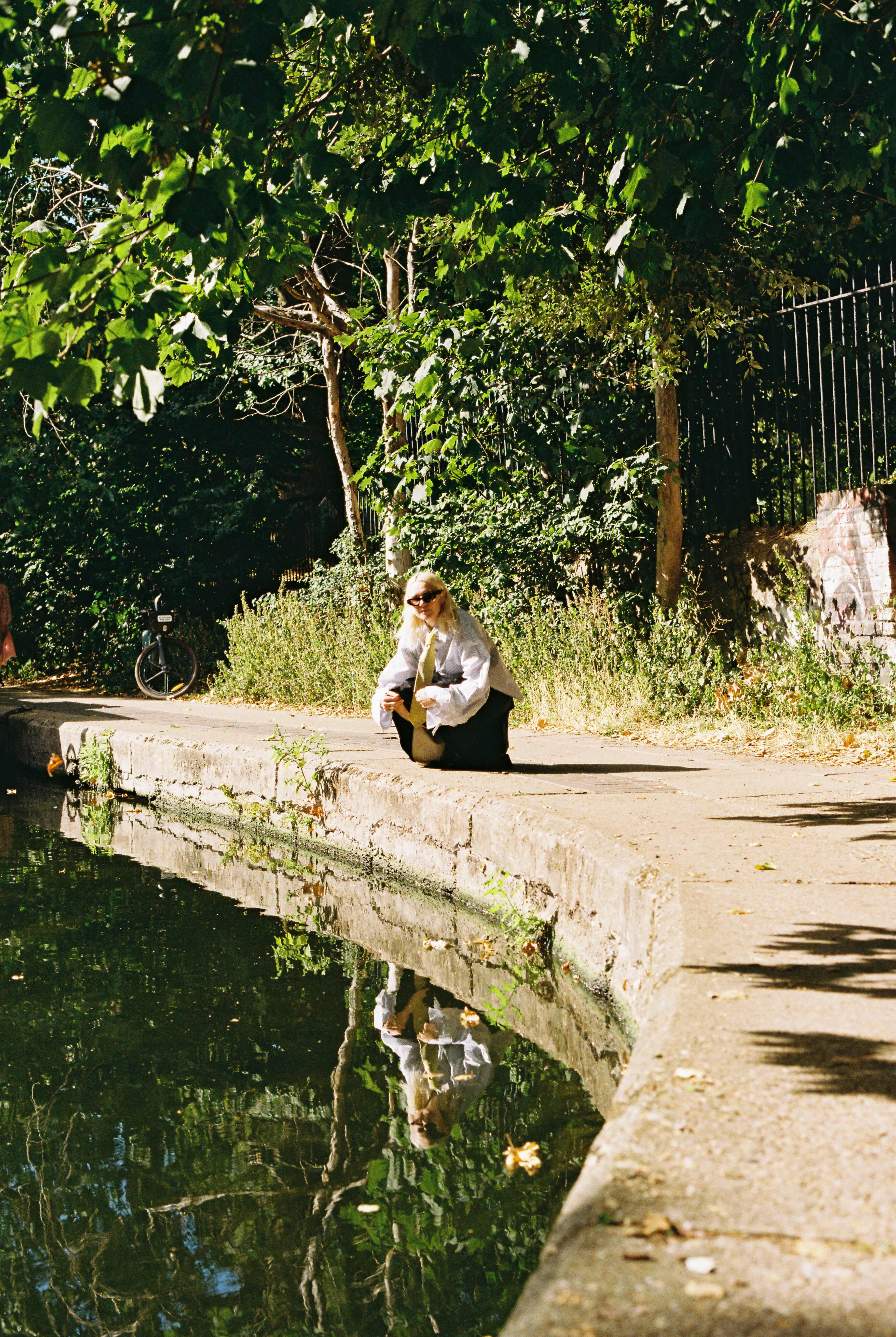
Never one to meticulously plan her DJ sets, HAAi prefers to feel her way through the moment, weaving together everything from 10-ton techno to searing breakbeats on instinct. The only time she’ll roughly map things out is for marathon sets. “Unless it’s an eight-hour set, I literally throw myself into a 10,000-capacity room with just my scrambled hard drive,” she says, grinning. “I enjoy it – but it’s not for everyone.”
Since being diagnosed with ADHD, she’s come across countless other DJs or people who work in music with similar experiences. “It’s a very attractive job for people whose brains often split into eight!” she laughs, referencing the typical phrase sequencing that DJs use. “I love how much of a conversation it is now, how much more people know about it, and how more people know about how gendered it can be or affected by hormones and all sorts of stuff.”
She’s leant into her neurodivergence in a positive way – for example, the hyper-focus she gets when working on a particular track. “When I’m on a real roll with music writing, it’s something that can become so obsessive. I’ll be trying to get into the bath or something, and I’ve still got Ableton open. My girlfriend will have to grab the laptop from me!” It’s also helped with the relentlessness of touring. “I have a really hyperactive nature, and it’s really helpful for me when I’m traveling and I feel like until I get home, I feel like I can bounce back. Even in the way that I DJ, I really lean into the chaos of my brain.”
But it’s not all “rainbows and unicorns”, as HAAi says her mum puts it. In person, HAAi is warm, very funny and easy to chat to, often flashing a conspiratorial grin, but she finds social situations tough. DJing has helped, though. “One of the things I find really appealing about this job is how you’re socialising, but in a way that you’re around a lot of people, and you can have some really nice chats, but you’ve got a job to do. You have something to pull you away if you need to.” She pauses. “It sounds kind of wild to say out loud, but sometimes [when I’m not DJing] I’ll bump into someone and I’ll just be like, ‘How long am I going to be talking for? Am I allowed to go and get a drink now?’ It’s almost like I’ve forgotten how to socialise.”
The tension between the demands of her career and personal life is a theme she explores on album track ‘Can’t Stand to Lose’, a driving, midtempo number with a bittersweet melody, in which she sings: “A thousand clocks upon the horizon/If time’s a question, so is she.” The track, like much of ‘HUMANiSE’, marks a shift towards songwriting territory, most evident on ‘Stitches’, arguably her most traditional verse-chorus track to date, yet still wrapped in characteristically layered production: stuttering drums and saw-toothed synths. On it, HAAi sings about love stretched across distance, missing moments spent drinking wine and listening to music with her fiancée: “If you’re thinking of me/I’ll be thinking of you too”. ‘Rushing’ is another of the album’s most personal moments, revisiting HAAi’s childhood in a single-parent household, while ‘Go’ faces the challenges of growing up Queer in a small town.
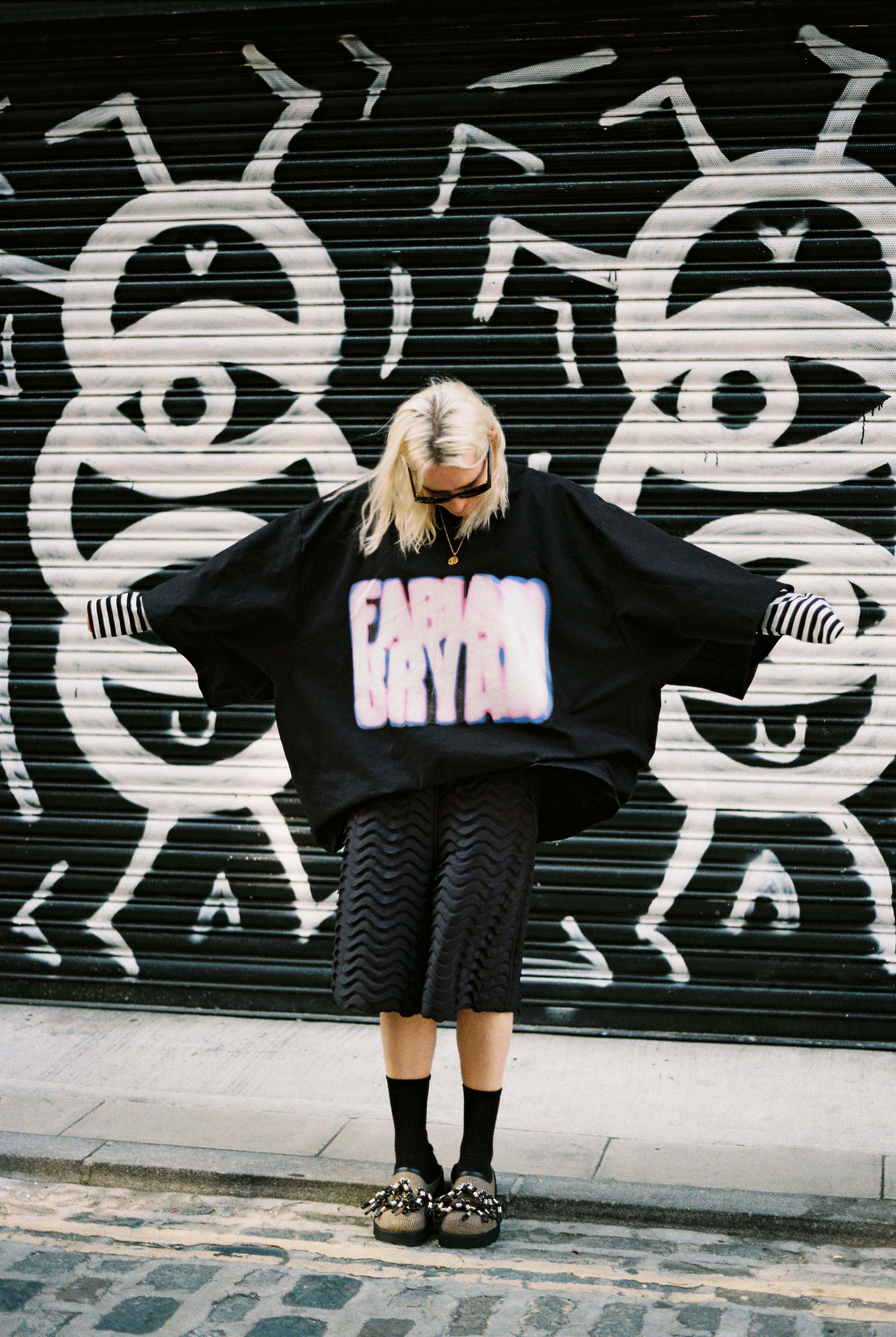
Writing more personal music is something that HAAi had to push herself to do. She tapped into the talents of songwriter Låpsley – something she calls a “pivotal” moment for the album. “One of the biggest boner killers of creativity, or creative flow, is like when you stop – this is gonna sound really corny – but when you stop being present in what you’re doing and start to think about how it’s gonna be received,” she says. “When you’re writing songs, it’s like, you just have to get over yourself. And that’s what had to happen to me.”
One of the themes of ‘HUMANiSE’ is the idea of people and technology coexisting. While HAAi doesn’t use AI to produce, her process involves a variety of plugins, hardware and machines. It was during a studio session with Jon Hopkins, while working on the track ‘Satellite’, that she came across a plugin called Humanize – a type of AutoTune processing designed to make a voice sound even more human. “I was like, ‘That’s so wack that it’s got this function’,” she recalls. “And then I kept thinking about how it’s something that we live with a lot now. There’s so much talk about AI in music, and in our lives, and I was finding it really interesting – like terrifying, interesting.” The discovery ultimately inspired the name of the album, the follow-up to 2022’s ‘Baby, We’re Ascending’, which blended thumping acid with spacious, introspective ambience.
Although she doesn’t use it for music creation, she does find AI helpful for organisational purposes and general questions. “I think my ChatGPT thinks I’m a gay man!” she laughs. “I’ve actually developed a really warm relationship with it. I signed off the other day like, ‘Anyway, better go.’ And then it replied: ‘Slay the house down, Queen!’ What’s interesting about chatbots is they really replicate your own tone... Not that I’m saying ‘Slay the house down!’ But that’s why people like them so much, because they’re relatable.” The technology is something she finds “equal parts fascinating and terrifying. I’m also really happy with what I don’t know about it right now, because that will be when the real fear kicks in,” she adds.
As well as her own vocals, HAAi gives space to other collaborators on the album, most of whom are longtime friends. ‘Shapeshift’ – which sounds like listening to the booming bass from a club from behind closed doors – features KAM-BU, with whom HAAi has worked before. Vocal collective TRANS VOICES appear on three tracks, while Queer poet Kaiden Ford (“a dear friend of mine, they’re a really important voice right now”) provides a beautiful outro to the record on closer ‘HQ’, interspersed with voice notes sent endearingly between them. Hot Chip’s Alexis Taylor – another close pal of HAAi’s – sings on ‘New Euphoria’, while James Massiah is a new sidekick for HAAi (“He’s a friend of KAM-BU’s, so it didn’t feel like a stretch,” she says).

In the past, she says, she shied away from collaborations. Since she first started producing – her first official release was in 2017 as DaDaDa on her own Coconut Beats label – things have, thankfully, progressed, but there was a time when female producers were often subjected to accusations that they’d had help from male beat-makers. “The things that really kept me from working with other people in the past are now the reasons I lean into it more,” she explains. “I took so much pride in doing something solely by myself, so that there was no opportunity for someone to say you hadn’t done that. Whereas now I [relish] the experience of working with other people and learning from what they know, and vice versa, and how much more you can get out of it that way.
“Don’t get me wrong, there’s still a lot of misogyny in our world,” she continues. “But I certainly feel more comfortable knowing what my skills are and aren’t. That was a huge step for me, being like, it’s OK to not be a great piano player. I love working with Jon [Hopkins] for the fact that he’s an extension of the freaking piano when you’re in the room with him – that’s something I’ll never be able to achieve!”
Another of the record’s themes is the importance of unity and community, particularly in our fraught political age. HAAi has been a vocal supporter of Palestine, while also urging the government to pull the plug on the Rosebank oil field project in Shetland, and frequently comments on queer and female issues. She’s attended workshops with the non-profit Slow Factory and Brian Eno about how to navigate your moral compass as an artist. “When you’re someone who’s very visible, the more vocal you are, the more people are going to keep an eye on what you do and don’t say,” she says. “I wish that people would give everyone a bit more grace, because I think everyone feels so helpless and furious and sad and affected by everything that’s going on in the world. We’re inside of this house that’s being set on fire from the outside, and everyone on the inside is telling each other they’re not putting it out right. Maybe if everyone came together and was like, ‘Right, how the fuck do we put this fire out?’ We could make the right decisions together.”
For HAAi, though, connection on the dancefloor is what she’ll always aim for. “There’s this place I played in Manchester recently called The Loft; it’s semi in the round, you’re on the same level as everyone else and you’re just surrounded by people,” she says. “You can really see in their faces if they really love a bit of a song, or if they’re having a moment with their friends. There’s something about the intimacy of that that I really, really love.”
Next year, HAAi will be at the centre of an even more intimate event when she marries her partner. As we finish our frozen margaritas, she chats, excitedly, about her Pinterest board and the venue the couple have lined up. “I’m not sure I’ll DJ it – it’s gonna be packed with DJs, so I imagine the line-up will be pretty stacked,” she laughs. “I always say I’d play the opening of a fucking wardrobe, but I think for this particular night it might be nice just to dance.”
This article first appeared in issue eight of Disco Pogo.

.jpg)