


.svg)
Back in the mid-00s, a wearied George Evelyn, aka Nightmares On Wax, the high priest of trip hop in the 90s, contemplated knocking music on the head. Now, at 56, energised by Ibiza and given an Adrian Sherwood dub makeover, he has sold out the prestigious Royal Albert Hall. Put that in your pipe and smoke it, he instructs Paul Mardles…

Eight years ago, while climbing Mount Kilimanjaro, George Evelyn had an epiphany. He was tired, emotional, drained from the trek that would culminate in the “world’s highest DJ set”, as it was billed by group leader Jonny Lee, founder of Last Night A DJ Saved My Life, a charity established for children in need. He was also flummoxed, three days into the hike, by ‘The Good Book’, a sampledelic album by hip hop producer The Alchemist.
How did he chop up tunes like that, wondered Evelyn, a tireless exponent of stoned beats for the small hours who’s better known as Nightmares On Wax. In search of solitude, he reached for his headphones and, about 10,000 feet above the ground, put his act’s back catalogue on shuffle. Among the first songs he listened to was ‘Nights Interlude’, the opening cut on debut set ‘A Word of Science’, which utilised Quincy Jones’s ‘Summer in the City’. Quickly, it dawned on him: he’d pulled off the same trick, in 1991, years before The Alchemist.
“It kind of blew my mind,” he says. “I was just like, Oh my God! I did it back then. I did that same technique. How did I not know that?’” And how, three days later, was the DJ set, given that climbers are advised to remain for a maximum of 15 minutes at that altitude? “Everybody with us was starting to drop like flies. It was like being at a really bad ketamine party or something. People were like, ‘It will be all right. Come on! Just half an hour.’” The Leeds-born producer puffs out his cheeks and chuckles. “I don’t even remember playing, to be honest with you. It was so cold. But our Sherpas were with us, playing the drums and that.”
Fast forward to today and Evelyn, 56, is on top of the world again. He is in Ibiza, his home for 20 years, a photograph of which adorns the wall behind his head. Soon he will be in Australia and New Zealand, where he will DJ, having taken a year off, principally to start work on his next LP. But the tranquil end of the White Isle is where his heart now lies, not least because it saved him from “hanging up my headphones”.
He and his wife moved there for their daughter, then a toddler, because Britain was becoming “anti-family” (“Even going out for a meal was an issue unless you went to Wacky Warehouse or McDonald’s”). But by the time they arrived, desperate for some sun and a healthier environment in which to raise a child, Evelyn felt exhausted from promoting an album (2006’s ‘In a Space Outta Sound’, which has been remixed by Adrian Sherwood and retitled ‘In a Space Outta Dub’, marking its 20th anniversary) and was heading towards burnout. Yes, he loved the climate, the landscape, their new house (“It felt like we had come home, not left home”), but professionally, creatively, “there was a lot to process. At first it was great – everyone wants to come over – but for me it was like, Well, how do I do this? It felt like a great idea to build a new studio in the sun, but how do you do that? Do you really want to be in the studio when everyone’s in the pool? I didn’t want to DJ. I didn’t want to do anything. I was trying to find my groove. It just felt like I was done.”
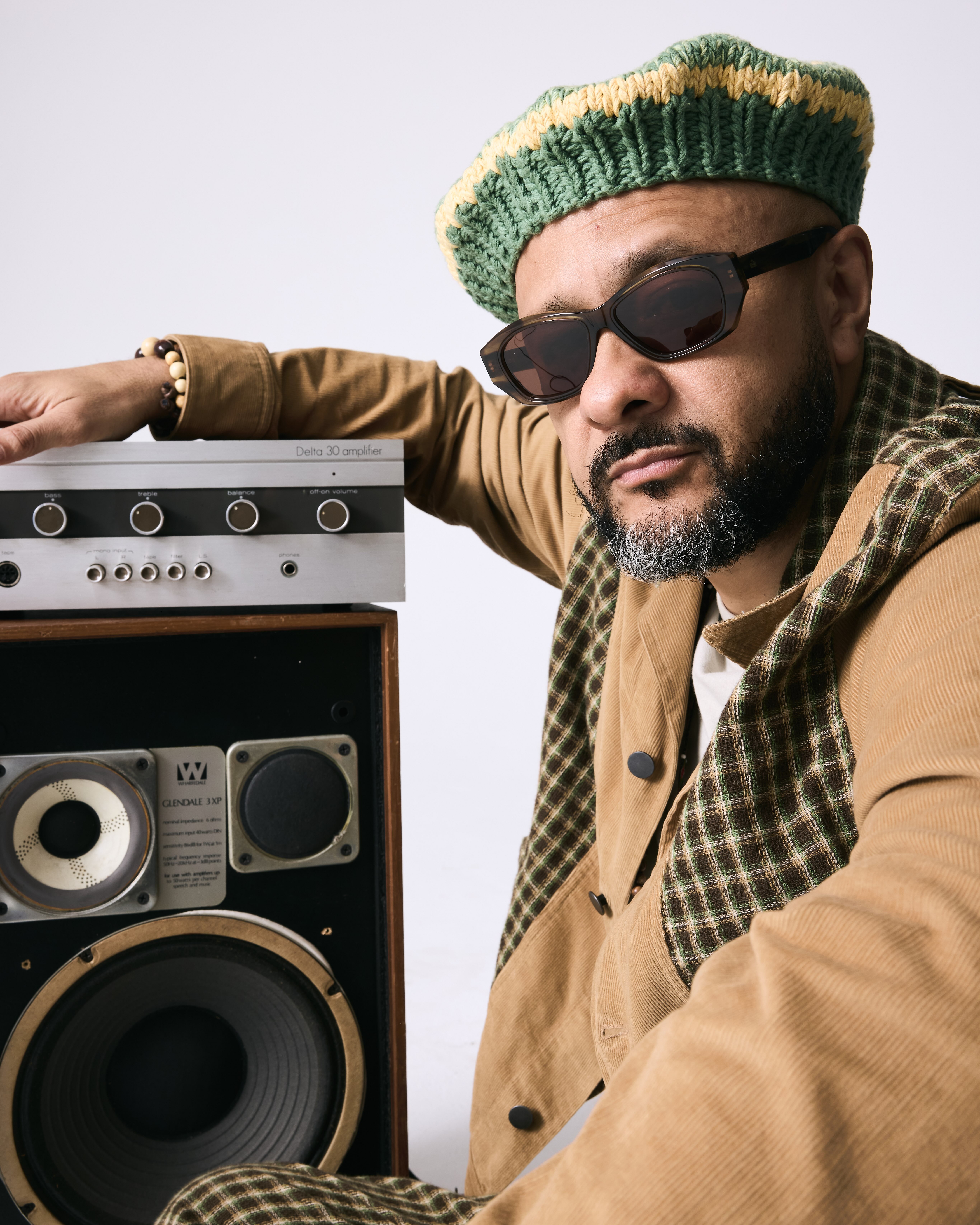
It’s hard to equate such negative thoughts with the Evelyn of 2026: open, gregarious, genial, lively. Maybe it was those very qualities that slowly enabled him to thrive in a new land – a task that took him three years, he thinks. First, as he puts it, “a magical thing happened”: he met Igor Marijuan, the owner of radio station Ibiza Sonica, who offered him a show Evelyn called Wax Da Box. “That got me on the front foot again,” he says, “‘cause obviously you have to find stuff every week.” Then, disappointed with some of the gigs he subsequently landed (“I thought the way that people were treated was cold”), he hosted his own Wax Da Beach parties to air the soul- and funk-fuelled sounds neglected in most clubs. Next came Wax Da Jam, an evening in a restaurant, where a live music element featured on the menu and DJ Shadow was among the guests.
“It was like starting again,” he says, disappearing to let his cat into the house. “But what happened really was Ibiza gave me a blank canvas. I just remembered what I did. A lot of people think, ‘The club scene’s this and that’, and it’s not. It was something completely different – the complete opposite of what was happening elsewhere in Ibiza – that took me back to the basics of playing music and just being myself.”
Revitalised, Evelyn produced a run of albums – ‘Thought So’ (2008), ‘Feelin’ Good’ (2013), ‘Shape the Future’ (2018) – along with a few mix CDs, ‘Back To Mine’ among them. Then, a few years ago, during lockdown, he started to complain of pains in his neck. “My wife looked at it and said: ‘That looks like a lump. You should get it checked.’ So the doctors do some checks and they’re like, ‘We think it could be a lipoma, which is fatty tissue. What do you want to do?’” His eyes widen. He is, fleetingly, back in the hospital. “I’m like, ‘Fucking get it out! I’m in pain.’” When he woke up later, post-op, with a banging headache, the diagnosis had changed. The growth was five inches long. They weren’t sure what it was. “The doctors were like, ‘It’s bigger than we thought’. It was kind of touching the membrane of my brain. They sent it away and told me it would take two weeks for the results so to go home and get some rest.”
Rest proved difficult. One day when his daughter was changing the bandage he asked her to photograph the wound. “And that’s when it hit me,” he says. “I could see the stitches and all. I was like, ‘Shit, that’s big.’” Understandably, as he was working on some music, he sought refuge in his studio. “I was producing some stuff and this thought just came in like an arrow. It was like, ‘Have you made sure the family are all right? Have you sorted it out?’ And I was like, ‘Whoa! I’m not thinking on that tip.’ And this voice was just like, ‘Well, you need to think about it.’ So I played it all out in my head and when I got to the end I was like, That’s not me – I’ve still got shit to do.”
Two weeks later, thankfully, he got the all clear, but the experience left an indelible mark. One: it made him want to talk, to share his hopes and fears, to spurn the fear of dialogue peculiar to men. “I did a few interviews with a couple of people who had been through similar things and it was great to have those conversations,” he says. “Men don’t talk enough to each other. We don’t open up because of our upbringings. It’s time we were free of that.”
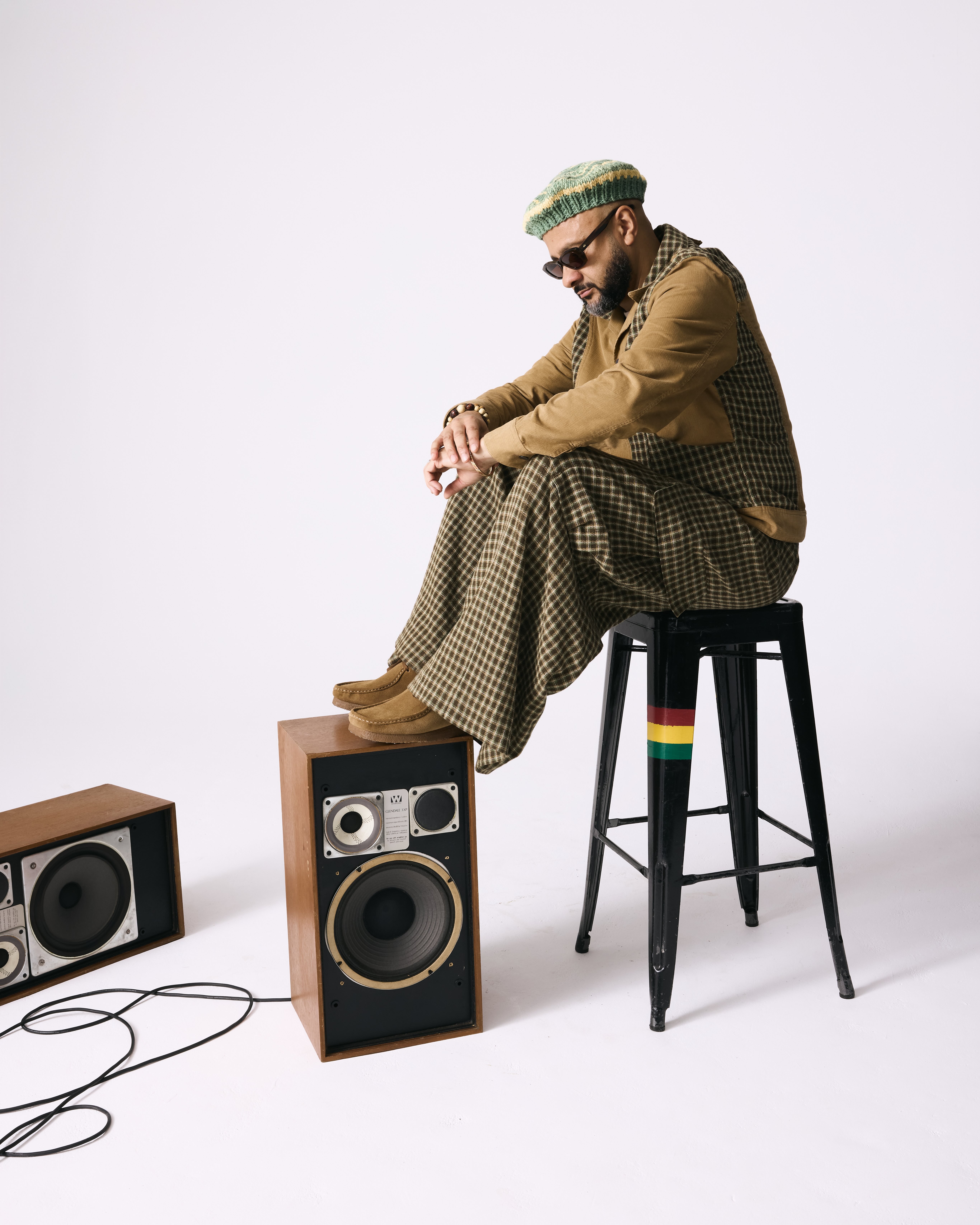
Two: it acted as the springboard for an album, ‘Shout Out! To Freedom’, in 2021. “This was pandemic times,” he says, “when people were having all these conversations about freedom and it made me think, ‘Well, what is freedom?’ This [the cancer scare] was something I wanted to be free of. Another person’s view of freedom could be something else. Everyone’s got some shit they want to be free of, whether you know it or not. You might look like the happiest person on Earth, but you’ll have something you wish you were free of. And that’s what inspired that record. I call them crazy blessings. But it was a reaffirming experience. Be grateful every day, every moment, for everyone in your life, and remind yourself of that, because you don’t know what tomorrow will bring.”
Life seemed so much simpler, free of stress and fear, in Leeds, LS6, when Evelyn was a child. His dad owned two record players, in the lounge and kitchen, “which you weren’t allowed to touch, but I did when he went out”. In 1977, when Evelyn was seven, his sister became an accomplished disco dancer, regularly winning competitions in nightclubs, sometimes returning with a 12-inch or mixtape. “I would always wonder what a nightclub was,” he says. Around the same time, Evelyn had a friend called Dennis Smith, with whom he used to walk home after school. He liked hanging out in his mate’s house, because his mum’s food was “always next level” and reggae was the soundtrack to every meal. Smith’s older brother, Clifford, owned a sound system, whose speakers were stored in a lock-up near the playground of Evelyn’s school. “We used to sit in there after school and hear them talk about sound clashes, but we were too young to understand,” he says. When, later, he started to attend youth club, he would listen to the noise of the windows rattling as the sound system shook the older kids’ building. “I just wished I could be in there,” he says. “It was like I got backstage but could never see the show.”
One artist stands out from those years: Scientist. Not just for the music, which Evelyn adored, but because his record sleeves were a riot of colour – a brilliantly drawn alternative cartoon universe. Designed by illustrator Tony McDermott, Greensleeves Records’ in-house graphic artist, they depicted the Jamaican dub producer battling vampires, shooting space invaders and, perhaps most famously, winning the World Cup, his country trouncing England 6-1 in the final at a time when black footballers in Britain were treated with hostility by some in the game.
“I used to go to the record shop with my friend,” says Evelyn, “and, because as a kid you’re attracted to animation, we’d look at all these sleeves with cartoon characters on and go ‘Bagsy, that’s me. No, no, that’s me.’ He was the first artist I really followed, whose records I collected.”

This was the early 80s when Evelyn was searching for like-minded people, a movement with which he could identify. He was a rude boy. He was a mod. He loved the much-maligned UB40, too, and their “incredible” ‘Signing Off’ album. What he loved most of all, however, was hip hop, then in its infancy, “which changed my life. I just connected with the sound system thing, because there was a DJ and a MC. It opened up my world. I started discovering other people too. You know, ‘Curtis Mayfield? Who’s that? Oh, so Kool and the Gang made cool records too, not just pop ones’. I started connecting people like that with break records. I began to go to flea markets and buy those records, which is how I found ‘Summer in the City’. And it made me realise that I didn’t need much to do anything. I didn’t need much to express myself, whether that was through dancing or rapping or trying to graffiti in my bedroom.”
It was his punk moment. “Exactly,” he smiles. “Exactly.” Which leads him to pause then draw parallels between Malcolm McLaren’s ‘Buffalo Gals’ and the evolution of classical music. “When people talk about that, I always wonder: what happened? What actually happened? It’s like a pebble hit the water and there were ripples and everyone went mental for, like, 200 years. And, to me, that’s what happened with ‘Buffalo Gals’. He [McLaren] had all the elements of hip hop in that video. The hunger for it was insane, because we didn’t have any connection to it before then.”
Energised, Evelyn embarked on a quest for visual representations of hip hop, whether in films rented from a video store or in reports on children’s news programmes. “I would sit in front of the TV with my cassette recorder on pause in case there was a clip of something on ‘John Craven’s Newsround’. I would try to compile all this stuff just to capture something. But it was scraps, man. Scraps. John Peel would play one or two songs on his show. Then ‘Flashdance’ came out and…” He laughs to himself, distracted by a section in that film. “I found out later that when she [Jennifer Beals] does a backspin, it’s not her, it’s [b-boy] Crazy Legs. Crazy Legs with a wig on.”
As his interest in hip hop sparked an obsession with sampling, Evelyn started to make his own mixtapes that he and his friends would soak up after hours. This was the late 80s, the early years of clubbing. In Leeds at least, chillout rooms did not exist. “I call those mixes the ‘experience tapes’,” he says. “There was no plan or structure of what to listen to. We were creating something without knowing it. I had a sampler by then and was just sampling everything and listening to loops. That’s when I got the idea to do an album.”
When it arrived the LP, ‘A Word of Science’, was accredited to Nightmares On Wax, the group Evelyn formed with Kevin Harper and John Halnon (who dropped out before it was completed), and released on Warp. It incorporated many of the samples that he had been tweaking, repurposing, for years, resulting in a supple, effervescent hybrid of tongue-in-cheek hip hop (‘Mega Donutz’) and vivid techno-funk (‘Coming Down’). Two tracks stood out, though, for their audacity: ‘Aftermath’ and ‘Dextrous’ pioneered the bleep sound, a brazen reminder that “proper” instruments could no longer rival the raw power of machines.
“That was definitely reactive,” says Evelyn. “Everything we did in the early days was reactive, and that was a response to [A Guy Called] Gerald’s ‘Voodoo Ray’. We all came from battling and breaking – that b-boy mentality. And because we were brought up with sound system culture as well and knew about dub plates and about not letting people know what tunes you were playing, there was this real competitive mentality – a call and response thing. So when a tune came from Manchester it was like, ‘Yo! We need to do a tune.’ It was beautifully ego-driven.”
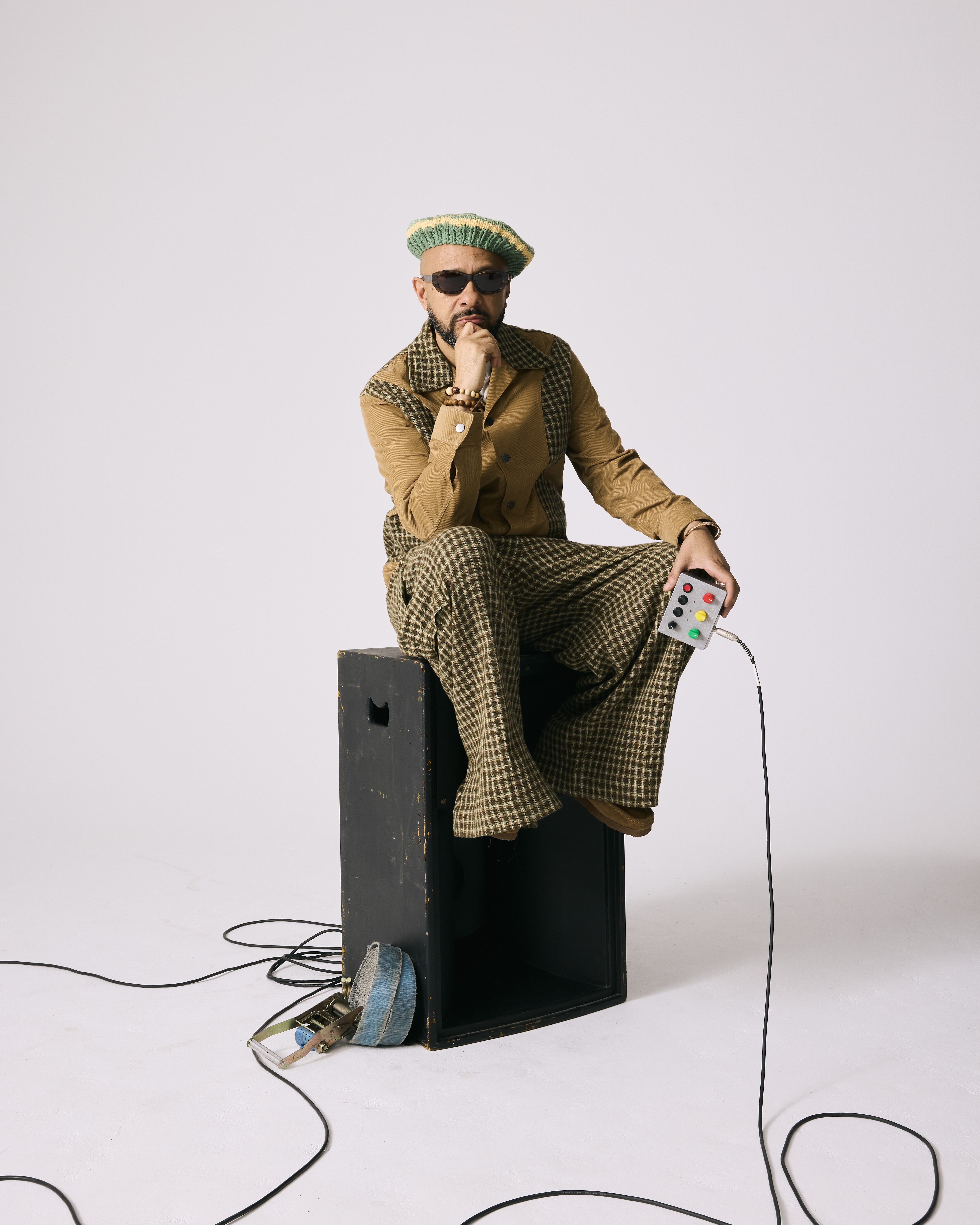
Soon there was no “we”: he and Harper split, having grown apart. “I thought, ‘Shit, man. What am I going to do?’” The answer was simple: speak to Steve Beckett, the co-founder of Warp. He advised Evelyn to fine-tune an album he’d envisioned years before when he was at a pal’s house in the early hours, chemically altered, lost in The KLF. “I thought, I’m going to make a hip hop chillout album and call it ‘Smokers Delight’,” he says, casting his mind back to that very moment. An LP of that name arrived in 1995, one year after the samples were all cleared, establishing Evelyn as a darling of trip hop.
“I didn’t like that label,” he says. “It just felt like a trendy term. Now, in hindsight, I can see that it captures a moment.” Plus, as he’s only too happy to acknowledge, he can’t really take issue with a tag that represents his mindset when that album was conceived. “I mean, I got the idea when I was tripping my nuts off. So, yeah, I get it. I get it.”
Thirty years on, ‘Smokers Delight’ is just as popular, its hazy grooves as memorable as the cartoon cover of mind-bending images bathed in red and green, a nod to the Scientist albums of his youth. “I wanted it to be something that allows you to see different things every time you look at it,” he says, applauding the two artists (Lee McMillan, Leigh Kenny) who created that illustration in his flat. A few weeks from now, when Evelyn returns from Australia and New Zealand, the sleeve will be on show at the Royal Albert Hall, where he will celebrate the anniversaries of ‘Smokers Delight’ and ‘In a Space Outta Sound’. The venue holds 5,000. The evening is sold out.
Evelyn shakes his head in disbelief. First, Adrian Sherwood, whom he’s admired for years (“I respect him enormously. He’s a legend who’s never really left his zone”), reinterprets ‘In a Space Outta Sound’, now this. “It’s incredible,” he says. “I mean, who’d have thought it, right? I was 21, I think, when I started writing ‘Smokers Delight’ in my bedroom, so for it to end up in the Royal Albert Hall…”
So why, like ‘Carboot Soul’, its elegant follow-up, does it still strike a chord with so many people?
“I think because everyone’s got their own story,” he says. “That’s how ‘Smokers Delight’ was born. The song titles are named after certain instances or trips or whatever. And then it was just shared. I meet people and they go, ‘Oh my God, that record. I backpacked across South America listening to that.’ Everyone’s got a story. It’s a soundtrack to people’s memories – that’s what it is.”
Surprisingly, the 90s poster boy for weed smokes very little of the stuff these days – or at least by his own bleary-eyed standards – generally preferring to microdose mushrooms. “I always give thanks for the herb, and I go through phases, like on holiday, but it’s not a major part of my life. It’s like… it’s like…” His face lights up. He grins. “You know how pilots have to do so many hours so they can fly? Well,” he says, leaning in, “I’m sure that I’ve done mine.”
This article first appeared in Disco Pogo issue 9
Styling & Clothes : Nicholas Daley. Styling Assistant: Cara McCrory

.jpg)

