.svg)
Prince’s emergence carried such an impact that culturally, sonically, sexually… nothing was ever the same again. Many of electronic music’s future stars certainly took notice: Frankie Knuckles, Kevin Saunderson, Carl Craig and more were bowled over by his early five-album-run that culminated in his commercial breakthrough, ‘1999’. Kate Hutchinson speaks to many of those who fell under the spell of the man who would be king and assesses how the seeds sown in his early years speak to Prince’s continued influence today…
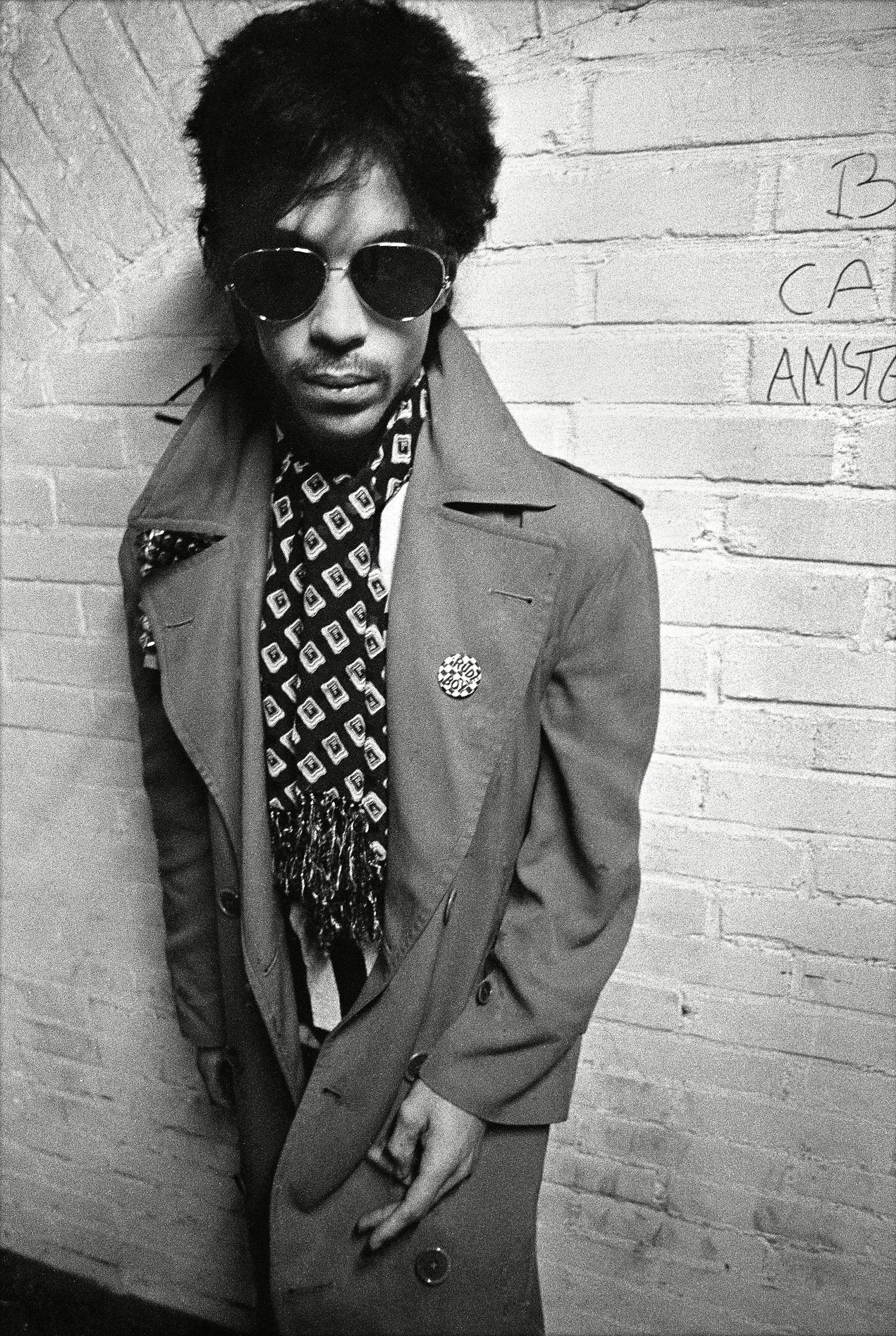
DJs the world over can sympathise. How many times has the party emptied in front of your eyes and you have to act fast? You need a floor-filler, a certified sing-along moment, a song that brings the dancers back from the bar quicker than you can say tuuuune. You flick through the pile of guaranteed whoppers and find the solution: a Prince single. The smoochy strut of ‘I Wanna Be Your Lover’. The metallic funk of ‘Controversy’. The end-of-the-world anthem ‘1999’. Perfect! The needle drops and the energy shifts immediately. Night saved.
Prince’s early releases have long been go-tos for DJs looking to rescue the dancefloor. His albums altered the molecular structure of popular music, but he left an indelible mark (purple, of course) on the club world too. His first five albums between 1978 and 1982 established him as a prodigy, performer and provocateur – and their innovations laid the groundwork for the varying strands of electronic music that emerged just after: house, techno, electro. “He had a huge impact on the culture,” Chicago legend Marshall Jefferson says simply.

Backspin to 1977 and a plucky 19-year-old had signed with Warner Bros. Records to release his debut album, a collection of cosmic love songs in nimble step with funk and disco. Prince biographer Matt Thorne called 1978’s ‘For You’ “both a perfectly realised masterpiece and something of a false start”. It was over-budget and overly fussy, with Prince playing each one of the 27 instruments that filled every channel on the mixing desk. But it reinforced him as a creative genius who knew his way around a studio (and tracks like ‘Crazy You’, with its water-splodge beat, evidently signposted his production innovation).
Prince’s self-titled follow-up came just one year after ‘For You’, with its swoon-worthy cover of the topless star with a blown-out bouffant. He looked more vulnerable than the thigh-high-boot-brandishing Rick James, who he’d soon open for on tour in 1980. Lead song ‘I Wanna Be Your Lover’ entered the disco with the flick of a stiletto and helped the album to go gold, though its follow-up singles failed to crack the Billboard Hot 100. Still, Prince trained his sights on the club. The largely instrumental ‘Sexy Dancer’ wasn’t released in the US but a 12-inch version became a UK dancefloor favourite.
It was described by disco dedicant James Hamilton in his essential weekly Record Mirror column as a “whapping panting breath-sucking strutter” that bettered his big single. Subsequently, it became in-demand with US DJs too. “A lot of his songs in those days were very four-on-the-floor,” house originator Jesse Saunders told the Chicago Reader in 2019. “You could play ‘Soft and Wet’, ‘Sexy Dancer’, all that kind of stuff in your set.”
Gregory James Broussard, better known as Egyptian Lover, fell for its charms too. He has said that the breathy panting of ‘Sexy Dancer’ guided his early forays into electro-funk and the more explicit themes of his music. “The Kraftwerk side came with the beats and the Prince side came with the lyrics and the subject matter,” he told Red Bull Music Academy. “Mix those two together and you’ve got Egyptian Lover.”
With 1980’s ‘Dirty Mind’, Prince was no longer soft and wet, he was standing to attention. While his first two albums were sonically similar to what was already out there ‘Dirty Mind’ was a moist new start. This was Prince’s panties-and-trench era, where he assembled a killer band (an early iteration of The Revolution) and their super-charged live shows started to gain notoriety. ‘Dirty Mind’ presented perversion as subversion, embraced eroticism and gender fluidity, and even had a song objecting to joining the army (‘Partyup’). Promotional copies were sent to radio stations with a warning advising programmers of the “risqué” lyrical content.
“He’s singing about incest and oral sex,” says Hot Chip’s Alexis Taylor – which was shocking, “especially when he was being written about as the new Stevie Wonder. It’s so different from what Stevie Wonder would put on a record.” Sonically, it sounded entirely different too – not just to Stevie but to anything else. “I remember being struck by how minimal the production was,” he says about the title track in particular. “Just a simple drum machine part, falsetto singing and that new wave guitar. It sounded a bit like what I thought dance music was, with its pulsating one-note bassline and the beat that starts a song off, which stays in one place for quite a long time before the synth stabs come in. It feels to me like disco, house and techno-y, and was the foundation of any DJing I did for a long time.”
In Chicago, a generation of music fans were listening – many of whom came to Prince via influential radio shows like Herb Kent’s Punk Out on WXFM. Steve ‘Silk’ Hurley (‘Jack Your Body’) bought ‘Dirty Mind’ while he was at high school; a year later, in 1981, Prince released ‘Controversy’ and Frankie Knuckles would spin its title track at The Warehouse. ‘Controversy’ was key in relation to house music for being the first example of Prince using a Linn LM-1 drum machine to creatively programme beats.
Vince Lawrence is said to have bought a LinnDrum because of Prince and went on to found Trax Records in 1984, which released music by many of the first house producers, including Marshall Jefferson. “If it wasn’t for Vince, I would have retired a postal worker,” says Jefferson.
The ‘godfather of house’ wasn’t so taken with Prince’s music himself: “It didn’t make much of an impression when I first heard it,” Jefferson explains. “He was just another ‘high-voice’ artist.” But clearly Prince saw a synergy between the two. Jefferson recounts how, in late 1987, Prince came to see him play at a New York club called The World. “He was backstage and I shook his hand. He took one look at me and he said: ‘Purple’. I found out later that Prince could see auras.”
Jefferson does, however, wonder what could have been. That night at The World, “Frankie Knuckles was there, he talked to Prince a lot, and wound up working with him,” he says. “Maybe I should have talked to him more and I could have worked with him too!”
To public knowledge, Knuckles didn’t directly collaborate with Prince in the studio, he officially remixed ‘Partyman’ in 1989. But the house producer’s work with a Chicago musician going by the alias Jamie Principle took direct inspiration from the Minnesotan, in style and name (‘Jamie’ references Prince’s alias Jamie Starr, the other clue is in Prince-iple). Their 1987 single ‘Baby Wants To Ride’, a split release with signature tune ‘Your Love’ on Trax Records, channelled Prince’s falsetto and not-so-subtle sexual innuendo over a machine-like rhythm and driving bassline. “Jamie certainly sounded influenced by Prince,” says Jefferson. “The way he sang his songs, his lyrics, how he played all the instruments.”
Indeed he was: “Prince showed me that you can stay true to yourself,” says Principle, “and say what you really wanted to say and not be afraid – ‘Baby Wants to Ride’ is a good example of that. But I also did a song called ‘I’m Going to Make You Scream’, which kind of goes back to the Prince punk years. Prince showed me that I could sing about things that were relevant to me and not be put in a genre.”
Perhaps Felix Da Housecat put it best when he said in his 2009 single: ‘We All Wanna Be Prince’. The Chicago producer recommends listening to “anything before ‘Purple Rain’” like ‘Dirty Mind’ and ‘Controversy’ if you want to get into dance music. Even though there are guitars and lyrics, “you can still get inspired,” he told Billboard. “It doesn’t have to be electronic; it can be the energy and vibe that comes out.”
Jefferson says that Prince’s influence on the wider Chicago scene was actually in terms of the permission he gave people to express themselves more freely. “If you look at early house culture, a lot of people dressed like Prince. [Jefferson’s Ten City collaborator] Byron Stingily, when I first met him, was in this group called Dezz 7 (named for Prince’s lead guitarist in The Revolution, Dez Dickerson) and Dezz 7 looked just like something out of Minneapolis. They had the same clothes, the ruffled sleeves, all that stuff.” And that freedom was in terms of sexuality, too. “Because of Prince, a lot of people came out,” Jefferson adds. “Prince made it more acceptable to the Black kids; he made it fashionable.”
Another artist whose aura is 100% purple is soulful house savant Osunlade. He heard ‘For You’’s ‘Soft and Wet’ squelching out of the car stereo, on the way to his grandfather’s funeral, when he was 10 years old. He decided there and then to become a full-time musician and began to master the instruments he found left over from his parents’ house parties in St Louis, Missouri. “I was like, ‘Wow, this man is doing all this music by himself. I want to do that’,” he told DJ Mag. Osunlade started his Yoruba Soul label – fittingly, in the year 1999 – with a Prince-like outlook: “I appreciated his independence and signature sound,” he told online magazine Stamp The Wax. “He also did important cultural things to bring white and Black people together, which in those days was unheard of, at least in my segregated town.”
The album that crossed over and united audiences was, of course, ‘1999’. While ‘Controversy’ was critically acclaimed, Prince’s 1982 album (his fifth) was his commercial breakthrough and his first Top 10 in North America. The run-up to its creation had been fairly character building: a year previous, Prince and the Revolution had been invited by Mick Jagger to support The Rolling Stones for two shows in LA and were pelted with debris – including chicken carcasses – each night. After that, Prince never opened for anyone again and started building his own army of artists, referencing the controlling music manager in the 1980 film ‘The Idolmaker’. He formed boy band The Time, fronted by his schoolfriend Morris Day, and vocal trio Vanity 6, as well as creating his Svengali alias Jamie Starr to produce them, and began to crystallise what was known as “the Minneapolis sound” – a neon-lit nocturnal stew of funk, new wave pop and synthesisers, jacked up on fast tempos.
“Part of the Minneapolis sound was Prince growing in his ability to assimilate everything around him and get rid of the stuff that didn’t work,” said former guitarist Dez Dickerson in the official Prince podcast about the making of ‘1999’. “The LinnDrum and the polyrhythm thing, along with Oberheim and the synth-simulated horns – that was the Minneapolis sound. But what he did was find a way to do that with more of a pop motif. So you could have a track like ‘1999’ which was purely pop. But at the same time, it’s apocalyptic. He found that sweet spot.” (Brilliantly, the same podcast discusses the fizzy ‘explosion’ sound that you hear throughout ‘1999’ – something Dickerson says they used to cover up technical mistakes).
Dickerson said that the album title came from an Orson Welles-narrated documentary about Nostradamus that predicted the apocalypse year as “1999”. Prince was heavily inspired by ‘Blade Runner’ too, hence the metallic purple trenchcoat of this period. The violet sci-fi he created chimed with a generation of Black people growing up in Detroit, like a young Kevin Saunderson, who was one-third of the pioneering techno trio The Belleville Three with Derrick May and Juan Atkins (whose earlier electro project, Cybotron, released ‘Alleys of Your Mind’ in the same year as ‘Controversy’). “Prince was leading you into the future with that record,” Saunderson says.
He credits radio host The Electrifying Mojo for introducing Prince to Detroit. He’d often play entire albums during his three-hour show. “I started listening to Mojo in high school,” he says. His soon-to-be collaborator Derrick May “lived with me for a semester. It was time to go to bed and he’d be like ‘What do you mean? It’s time for the Electrifying Mojo!’ I had no clue what he was talking about, so Derrick put the radio on, and I fell in love. Mojo played music that you never heard before – regular radio didn’t play it.”
“He was the chief tastemaker,” Carl Craig told Minnesota Public Radio’s The Current, and would play Prince in the mix with “great electronic music, like Kraftwerk, and then the music that was inspired by Kraftwerk, like Afrika Bambaataa, Model 500, Newcleus, that kind of stuff.”
Beyond the machine music with sex appeal (the same cannot be said for Kraftwerk – sorry), you can hear why the Motor City grasped a song like ‘1999’’s ‘Automatic’. Prince embraced Detroit back, calling his fans there “motor babies”. One of those kids was Kenny Dixon Jr. – aka Moodymann – who is known to have an entire house in Detroit filled with Prince memorabilia, complete with purple curtains. Memorably, he re-edited ‘1999’’s ‘All the Critics Love U in New York’, a song with a 145bpm that’s in line with techno. Moodymann slowed it down to a housier pace and renamed it ‘U Can Dance If U Want 2’. “He was showing the world how much he loves Prince with that track,” says Alexis Taylor.
Craig called Prince’s command of Detroit tastes “absolutely humongous”. “He was even influential in the rap world – if J Dilla was still alive, I’m sure he’d tell you that he had been influenced by him,” he told The Current. “[Prince] was the guy who made it so you didn’t have to dress up in a sequinned suit in order to be in a band.”
Saunderson agrees that ‘1999’ was “very innovative” and demonstrated the potential of technology over instrumentalists. Though it was ultimately the Roland TR-909 and TR-808 that would characterise techno, Saunderson “knew Prince was using a LinnDrum machine. So it led me down that path. When I started playing with a drum machine, I didn’t know anything about music, but I sure was excited to get my hands on one, to see what I could do.” This is as good a place as any to mention that Saunderson, like Jefferson, had another Prince near-miss: “He wanted me to work with Cat [Catherine Glover, a Prince protégé in the late 80s]. His management spoke to my management, and then I met Cat, but it never really progressed. But I know he knew about techno.”
Both Saunderson and Chicago-born DJ/producer Honey Dijon note the importance of a track that came a little later, in 1984, ‘Erotic City’ – the B-side to ‘Purple Rain’’s ‘Let’s Go Crazy’. Saunderson had two copies, so he could mix them in DJ sets and extend the intro – another way in which house and techno evolved. Dijon, in an interview with DJ Cosmo of Classic Album Sundays, said of ‘Erotic City’: “That was a house music record. A lot of people misunderstand what house music is because it’s so shiny and commercial now, but back then it was music without borders.”
Beyond those nascent years, Prince cast a purple shadow far and wide across electronic music, from electroclash to dubstep. Red Bull Music Academy writer Michaelangelo Matos linked Prince to the hardcore continuum in the UK, noting how producers Shut Up and Dance deployed a ‘Let’s Go Crazy’ sample for Ragga Twins’ ‘Hooligan 69’, thus closing the gap between 80s rave and jungle.
As with many things regarding Mr Nelson, it’s not entirely clear what he thought of four-to-the-floor, let alone drum’n’bass. On his 1987 track ‘Housequake’, Prince seemed to take a mocking stance: “But if you ain’t hip to the rare house quake/Shut up already, damn!”. But house clearly made an impression on him to some degree: the aforementioned Cat Glover interpolated the lyrics of J.M. Silk aka Steve ‘Silk’ Hurley’s ‘Music is the Key’ on Prince’s canned ‘The Black Album’, which was originally intended to follow ‘Sign “O” the Times’ in 1987. Later, he enlisted Hurley to remix 1991’s ‘Gett Off’.
It took until the mid 90s for Prince to start making what we’d now call dance music, says Taylor. ‘Loose’ from 1994’s best-forgotten album ‘Come’ was an industrial techno stomper that placed Prince firmly at the centre of the rave, guitar in hand, while 1992’s ‘I Wanna Melt With U’ thawed it out to a slower New Jack Swing. The CD-only release ‘Emancipation’ (1996) was perhaps his first to fully go four-to-the-floor: ‘New World’ and ‘The Human Body’ deployed house and techno synth-work that wouldn’t sound out of place now on a Soulwax album. These examples were slight, and of varying success, though who knows how many other attempts are in the vault.
“When he tried to do more hip hop-style records or house-style things, I felt they sometimes didn’t quite work,” says Taylor. “He was better off when he existed between different genres, or a genre all of his own.”
When ‘1999’ was released, it signalled the latter; an individual star here to stay. ‘Little Red Corvette’ became a hit on (white) mainstream radio and Prince headed off on his biggest-ever tour, covering over 40 cities across the United States and with The Time and Vanity 6 in support. And yes, you could drop any of the album in a DJ set today. “It was groundbreaking – uniquely funky and groovy,” says Saunderson, “and it still stands the test of time.”
Read: Prince's Imperial Phase
Read: Prince's Last Hurrah
Read: Prince's Best Edits, Remixes and Dancefloor Deep Dives
This article first appeared in Disco Pogo issue 9
.jpg)