.svg)
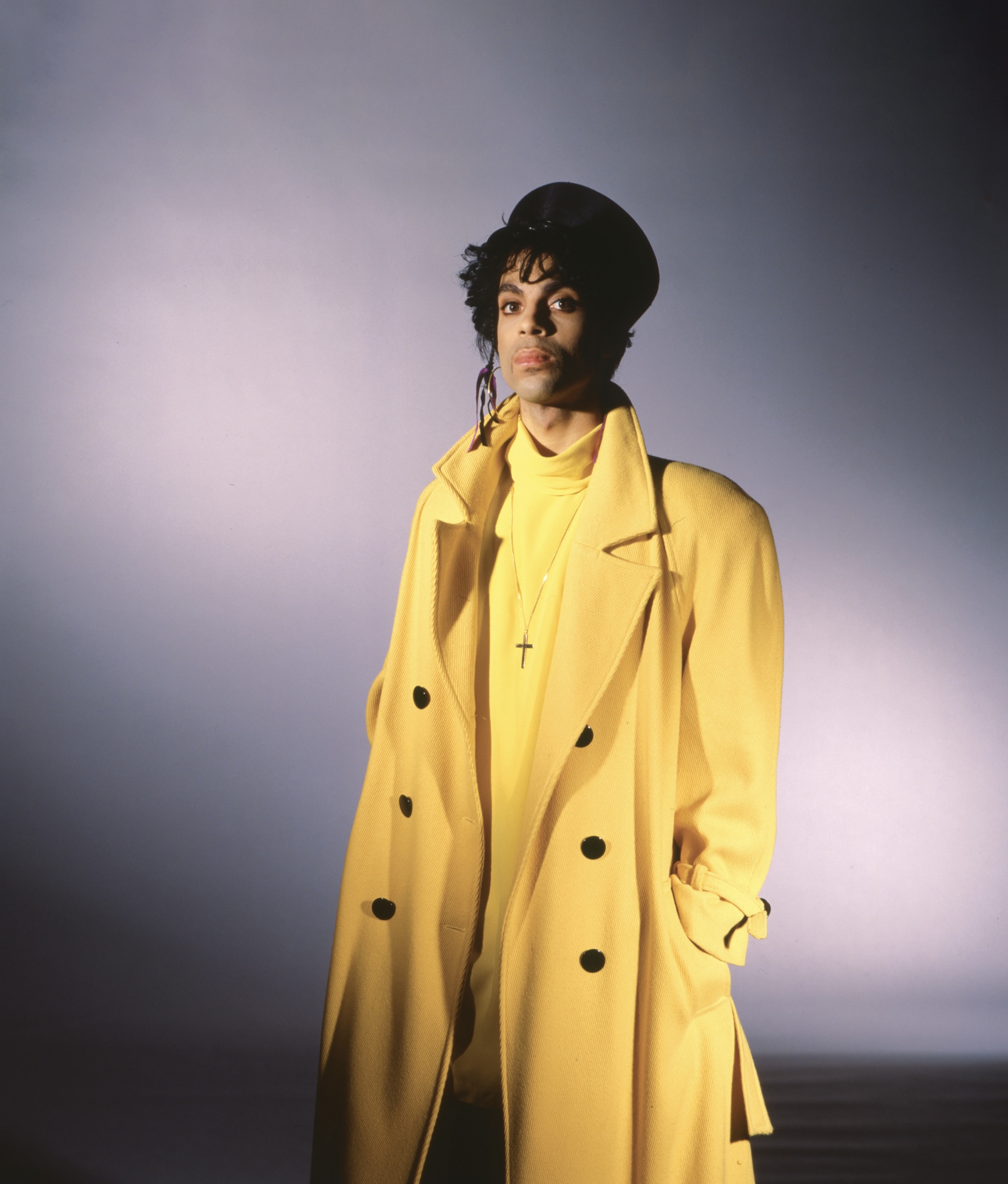
Like the Fab Four in the 60s and Bowie in the 70s, one artist alone bestrode the 80s both creatively and commercially. It was, of course, Prince, a musical iconoclast who absorbed the very best of what had gone before – from Funkadelic, Sly Stone and Jimi Hendrix through to The Beatles, Joni Mitchell and James Brown – and reinvented it for what was a mesmerising run of albums the like of which has never been bettered. This was Prince’s Imperial Phase and, as Joe Muggs demonstrates, everyone was taken with His Royal Badness…
“Yeah, the Untouchable God Zone.”
That’s DJ Tayo talking about Prince’s creative and commercial run through to the end of the 80s. “I mean,” he says, “Stevie Wonder did it for three albums. Prince did it for, what, 11?”
When you put it like that, it really is quite something. And yet somehow we took it for granted that a wild, wired, miniature, mystical, mischievous, omni-talented subversive sex goblin had taken up residence in our TVs and radios and pranced across the top of the charts for an entire decade. What the mainstream press at the time tended to diminish as kooky or quirky was really a tsunami of glorious artistic ambition unleashed across every medium available. Where other stars generally wait until they’re well established before they start with the concept albums, quasi-autobiographical self-produced movies and never-ending guitar solos, Prince started his commercial [pun obviously intended] purple patch that way and only got more indulgent from there on in – and yet also kept the pop and dancefloor bangers coming without pause.
The work that Prince produced from his commercial explosion with ‘1999’ on through ‘Purple Rain’, ‘Sign “O” the Times’ and all the rest, all the way to ‘Batman’ was wild in itself. Books have been penned and many more will be written about its production and inspirations. But so was the way it landed. His initial run-up from his debut in 1978 had already ensnared outsiders and cool kids, but as he blew up into the mega mainstream, he didn’t lose them.
“We’d liked him for a while,” says DJ and S’Express mastermind Mark Moore. “I went to see him at the Lyceum when ‘Dirty Mind’ came out – me and a lot of people on the gay scene did because we thought he was a new gay artist! Even then he was quite outrageous. But then he kept getting more and more out there, more eclectic, more Prince-y. Once ‘Purple Rain’ came out, that was it, his legend was cemented.”
But just as the performance and flamboyance resonated with a former teenage punk like Moore, so the musicianship could appeal across genre boundaries and snare those less invested in the razzle-dazzle. “In the early 80s it was indie music that moved my world,” says Ali Friend of Red Snapper, “albeit the sort with grooving drums and bass: [Elvis Costello and] The Attractions or even The Smiths. But hearing ‘Kiss’ in 1986, that jangling backing, the whisper – which was basically sex – was such a big part of my awakening to the funk. The fact he could nestle this experimentation and risqué-ness in that to a mainstream audience was incredible.”
Out on the Glasgow suburbs, that same experimentation hit another then indie kid, Sean Dickson, aka Hifi Sean and leader of The Soup Dragons hard: “The way he deconstructed a song like ‘Kiss’ in his head whilst writing it, made it sound like it was from another future dimension,” he exhales, the wonder in his voice still apparent 40 years on.
And the funk was irresistible, too, to those who already knew what it was, and again a conduit into futurism. Handson Family DJ and promoter Cyndi Ellesse was a pre-teen music fan growing up in Brixton when she became aware of Prince. “I was already appreciative of hip hop, dance music, funk, lots of Black and underground sounds,” she says, “so to hear Prince it was normal – but at the same time also felt like the future.” She got fully on board, with the kind of fandom only he could inspire. “Records hung up around the room, posters, getting the New Power Generation newsletter, went to see ‘Lovesexy’, got my aunt to make me polka-dot trousers with the buttons down the sides, with one of my best friends we painted her room the colours of Sign
“O” the Times, a whole black room with just the eyes of Prince in peach, because it was the peach and black era…”
By the time that “peach and black era” kicked in in earnest with ‘Sign “O” the Times’, the totality of the world it offered – with every part of the styling, the construction of shows, the costumery, right down to typefaces – offered up something that anyone with a creative or outsider sensibility could fully invest in. Total adoption of the aesthetic made as much sense for teenage girls in Brixton fully immersed in Black culture as it did for indie and alternative kids. Rob da Bank was just coming into his tastes in Portsmouth, armed with a headful of Cocteau Twins and The Cure and “dressing up in my sister’s dresses at the weekend and putting white lipstick on and pretending I was Robert Smith” when ‘Sign “O” the Times turned his and his friends’ world upside down.
“You didn’t have to be sexually attracted to him,” he says, “just the whole ‘Lovesexy’ androgynous look was extremely appealing and exciting and brave for someone with a conservative brass band kind of village upbringing.”
There’s a beautiful symmetry in the fact that Tayo – who would end up regularly playing all-Prince Purple Rave sets with Da Bank – was finding inspiration in this androgyny from a different angle of outsiderdom. “Prince really helped a slightly confused, working-it-out teenager who was from an estate in south London but went to school out in Sussex,” he says. “There was Public Enemy and dancehall and the machismo of that was great, and that was in tune with my upbringing I guess, but Prince offered something more. He was Black and he was white. He was androgynous in a pair of heels, but as someone famously said, he’ll be wearing the heels, but he’ll still steal your girlfriend. So he had a kind of danger and a weirdness about him.”
That level of complexity in sexuality came over to Cyndi Ellesse as vital too: “because I was a precocious teen,” she says, “it was wonderful to hear a man talk about women in a much more mature-minded way, a thoughtful way, that was important.”
For Hifi Sean’s now musical partner David McAlmont, growing up evangelical Christian in Guyana but coming to terms with being gay, discovering Imperial Phase Prince was an experience bordering on the religious itself. He’d read sensationalist magazine articles “and thought he sounded like Satan!” But then one day, home alone, “it was an unforgettable event. I was sitting on the floor, darning a sock and I had the radio on. I heard this organ sound and a voice going “Dearly beloved…” For the next three minutes I was pinned to the wall, and then at the end of it, the announcer said that was Prince, and that was like, ‘Oh!’ So when I got back to the UK in 87, I got my first benefit cheque and I went straight to Our Price, bought ‘Purple Rain’, ‘Around the World in a Day’, ‘Parade’, and ‘Sign “O” the Times’ – and that was me, that was all I wanted!”
As for a kid in the Communist bloc, just on the cusp of the wall coming down… “To me,” says Modeselektor’s Gernot Bronsert, he looked like a hot woman and a hot man at the same time – so unique and just fucking awesome. As a ten-year-old you’d never seen anything like that before… especially not in the GDR!”
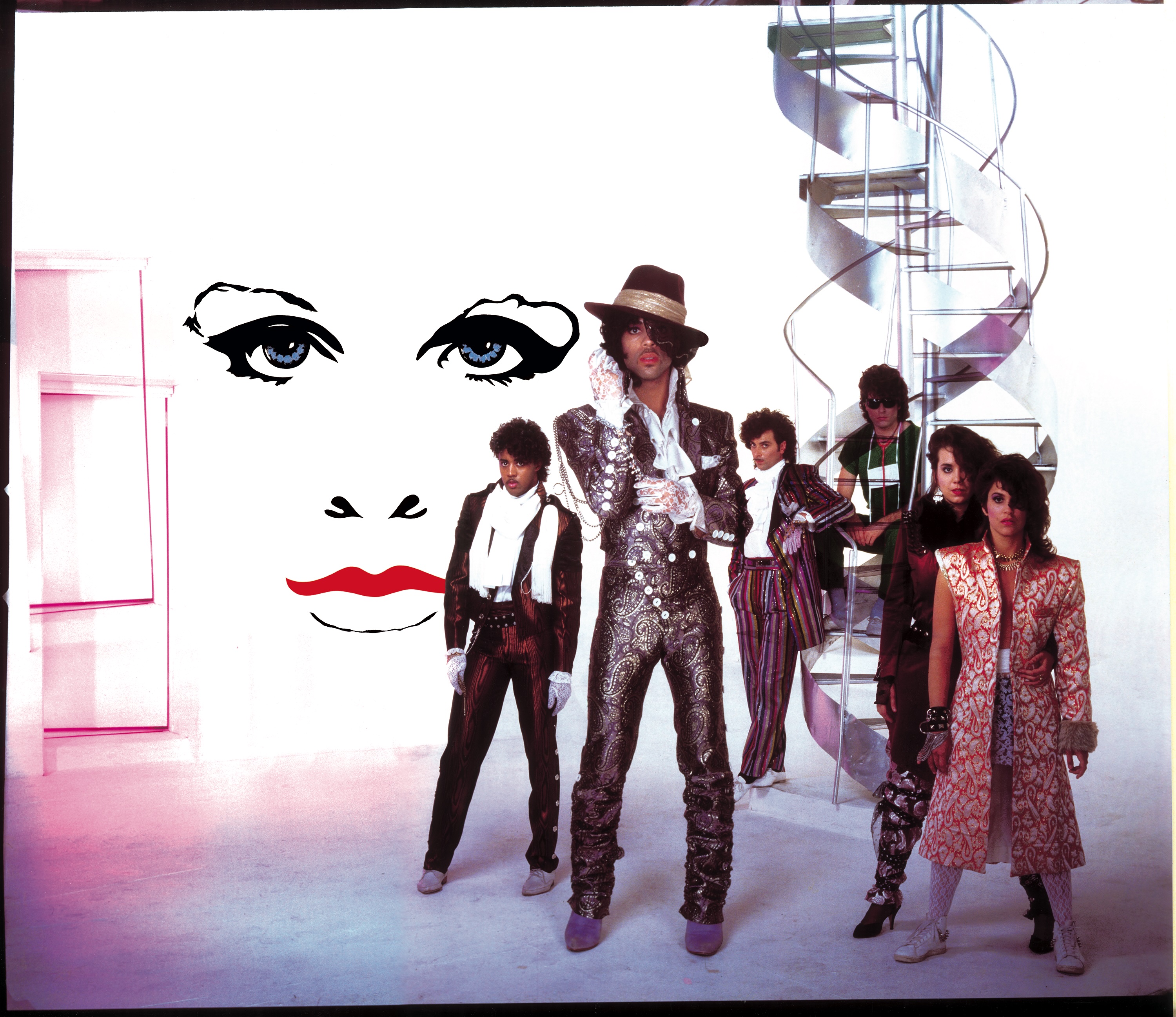
All of this cross fertilisation – introducing funk fans to Joni Mitchell and new wave, introducing indie kids to Sly Stone and George Clinton, completely short circuiting gender and sexuality – of course fed into the heady brew of dance culture as the 80s drew towards a close. Prince’s influence was already there in the constituent elements, of course. Trevor Fung, the OG evangelist for Balearic culture in the UK, says untold tracks were staples of his and others’ sets in Ibiza through the decade, and proudly beams “I remember taking ‘Sign “O” the Times’ out there and being the only person on the island with that album!”
That, of course, became part of the mix that the other Londoners who followed Fung out there took home with them: Paul Oakenfold, Lisa Loud, Nancy Noise and co hammered Prince tunes like ‘Alphabet Street’ as ecstasy culture hit the UK.
Detroit, too, had a special place in its heart for Prince and the feeling was mutual: from him breaking an interview drought to speak to the foundational radio DJ Electrifying Mojo at length in 1986, to the incredible photos of a young Carl Craig with full frilly cuffs and coiffed hair, to… well, just about everything Moodymann has ever done, the Prince influence is so ubiquitous you could almost miss it. But if you listen to, say, the stark, live electro-funk of Drexciya in the light of Tayo’s observation that tracks like ‘Erotic City’, ‘17 Days’ and especially ‘All the Critics Love U in New York’ are “basically proto-techno” a huge amount falls into place.
So with all of this in the mix, the world of Prince was already interwoven with acid house, rave and all that followed. But in fact, the crossover almost became a lot more serious. Mark Moore remembers the thrill of seeing that Prince had named his epic extended version of ‘Alphabet Street (This is Not Music, This is a Trip)’ and thinking he could only have got it from the intro to ‘Theme From S’Express’, and the even greater thrill when shortly after he got the call asking if he’d like to remix ‘Batman’ tracks – unheard of, as the infamously self-sufficient Prince had only once before let anyone rework his music. Bringing in William Orbit, Moore did it with panache on three tracks, an appropriately ahead of its time breakbeat version of ‘The Future’ especially standing out then and now.
Not only that, though: he found himself often in late-night phone conversations with Prince, who wanted to chat about financial difficulties, about life, “and about how house music is amazing and we’re going to get back on top, it’s going to be amazing, we’ll work together and la, la, la, la... And he was crazy about it. He’s saying: ‘I’m working with Mavis Staples, and I want to do a house album.’ He sent me this track, ‘A Man Called Jesus’, which did eventually come out on the Mavis Staples album, but it was really watered down. The demo he sent me was really kind of Giorgio Moroder, I’ve still got it on cassette. We did these mixes and he was just really, really into it. And then, suddenly, he got bored of it, and that was it, moved on.”
_ThePrinceEstate_PhotoCredit_JeffKatz.jpeg)
Hearing this, it’s hard not to feel a pang of regret at what could have been – and even, maybe, buy into the myth of the erratic, cantankerous, even mad genius who hit self-destruct on a huge career. But that myth, as Cyndi Ellesse points out, doesn’t add up. “He understood the music industry far too well,” she says, “but unfortunately because he did, he got completely misunderstood. His whole era of painting ‘SLAVE’ on his cheek, calling himself The Artist Formerly Known as Prince, got headlines about him being a bit loony. But actually, in cutting loose, he was showing us so much about so many of the industry issues we all cry about now. The amount he offered just in that is unimaginable.”
Veteran industry agitator The Secret DJ concurs, hailing a prophet of DIY culture. “He single-handedly showed us the entire industry was a sham,” he says. “A parasitic organism entirely. If left to it, the artist can do it. That was his enduring legacy for me: to show us it can be done... and done while dancing about in high heels.”
Of course, that rejection of the industry was also a rejection of the megastar template, so the Imperial Phase ended at the same time Prince’s brief flirtation with house evaporated. Of course he just kept on keeping on, in other, more sprawling ways. But the blindingly bright purple flame of his 80s ubiquity never went out, and though nobody could ever imitate peak Prince, the spirit is everywhere.
David McAlmont suggests D’Angelo and Janelle Monáe as the closest to musical offspring, and Ellesse says the whole of neo-soul owes Prince a debt. “I felt very vindicated when D’Angelo did an interview where he said ‘The Ballad of Dorothy Parker’ was life-changing for him.” Andre 3000 clearly wouldn’t have been Andre 3000 without Prince. Pharrell’s understanding that funk is futurism, topped with high camp hot sauce, likewise owes Prince billions.
But it wasn’t just Black artists that felt the benefit. Beck in ‘Midnight Vultures’ mode is obvious. Jamie Lidell, of course. Hot Chip? Sure. LCD Soundsystem, Daft Punk, the entirety of electroclash? Drenched in it. Out in art-pop space, could there be an FKA Twigs, Yves Tumour, Perfume Genius without that body of work tearing apart the gay/straight, Black/white, alt/pop, rock/electronic dualities that Prince put in during those years? Not in the same form.
The same even applies to Charli XCX, Remi Wolf, Rina Sawayama, Troye Sivan and any number of spiky, post-hyperpop provocateurs. And of course, dance music has never let peak 80s Prince go, because – well, you can’t, can you?
The Secret DJ remembers a Bugged Out event where DJs were invited to each play their five favourite tunes, and very much not enjoying people choosing, for the most, worthy and arty obscurities. “After two hours of this dreadfully stylish one-upmanship,” he says, “I was ready for the Earth to open and swallow me whole... and then Tayo steps up and goes ‘fuck this’ and literally played five Prince singles in a row. Place went from funeral to party in less than 10 seconds. And stayed that way.” And you know that would be as true today, for just about any crowd – because those peak-time , turn-the-world-upside-down Prince songs still reverberate, not just because they’re familiar, not just because of their influence, but because they still power out of the speakers with the same abstract, absurd, irresistible funk – now as much as ever in the Untouchable God Zone.
Read: Prince's Early Years
Read: Prince's Last Hurrah
Read: Prince's Best Edits, Remixes and Dancefloor Deep Dives
This article first appeared in Disco Pogo issue 9