.svg)
With a flurry of activity related to their various guises this year, you could say The KLF were back. But did they ever truly go away? After a string of hit singles and one massive album in the early 90s, they left the music business following an unforgettable performance at the 1992 Brits, but prank after statement after stunt kept them in the public eye. Joe Muggs analyses their many happenings and ponders whether it was all just one big pyramid scheme. “It’s a cult,” explains one long-time KLF confidant. “Definitely a cult...”

The KLF don’t really exist. At least not in the sense that any other Disco Pogo cover stars do. There’s no big greatest hits package, their tunes aren’t endlessly replayed anthems in clubs, and the only live shows you’ll find on YouTube are a two-minute set where all the music is provided by grindcore/thrash band Extreme Noise Terror, and one 23-minute-long version single track (performed as ‘2K’, five years after The KLF had split up) featuring a brass band and striking dockers’ choir, with Bill Drummond and Jimmy Cauty made up to look elderly, pelting around the stage in motorised wheelchairs, giant horns attached to their foreheads with hazard tape, pouring disinfectant down a dead swan’s neck.
They’ve disappeared and reappeared, taken on different guises, announced tours to happen in 300 years’ time and done stunts so weird that it’s hard to accept they really happened. In researching this feature, some of the things that most leapt out are things they didn’t do: they didn’t produce Pulp’s ‘Common People’ (although Jarvis Cocker asked them to) and they didn’t make a single with Barry White (although they gave it serious consideration). Yet the thing they’re most often accused of having not done – burning a million pounds in cash as The K Foundation in 1994 – they actually did.
It’s easy to think that Drummond and Cauty’s activity has been one long theatrical performance, an art stunt, or just a gigantic in-joke – as DJ and keen mischief maker Artwork puts it, they’re “proper piss takers at the highest level – not many people have trolled the work like those dudes”. Or it can all be seen as a great mystical conjuration, a breadcrumb trail of symbolism and magic for the faithful to follow into ever weirder manipulations of reality. Certainly plenty of die-hard fans are fully subscribed to that version. “Oh yeah, mate,” says long-term KLF collaborator Tony Thorpe, aka Moody Boyz. “It’s a cult. Definitely a cult.”
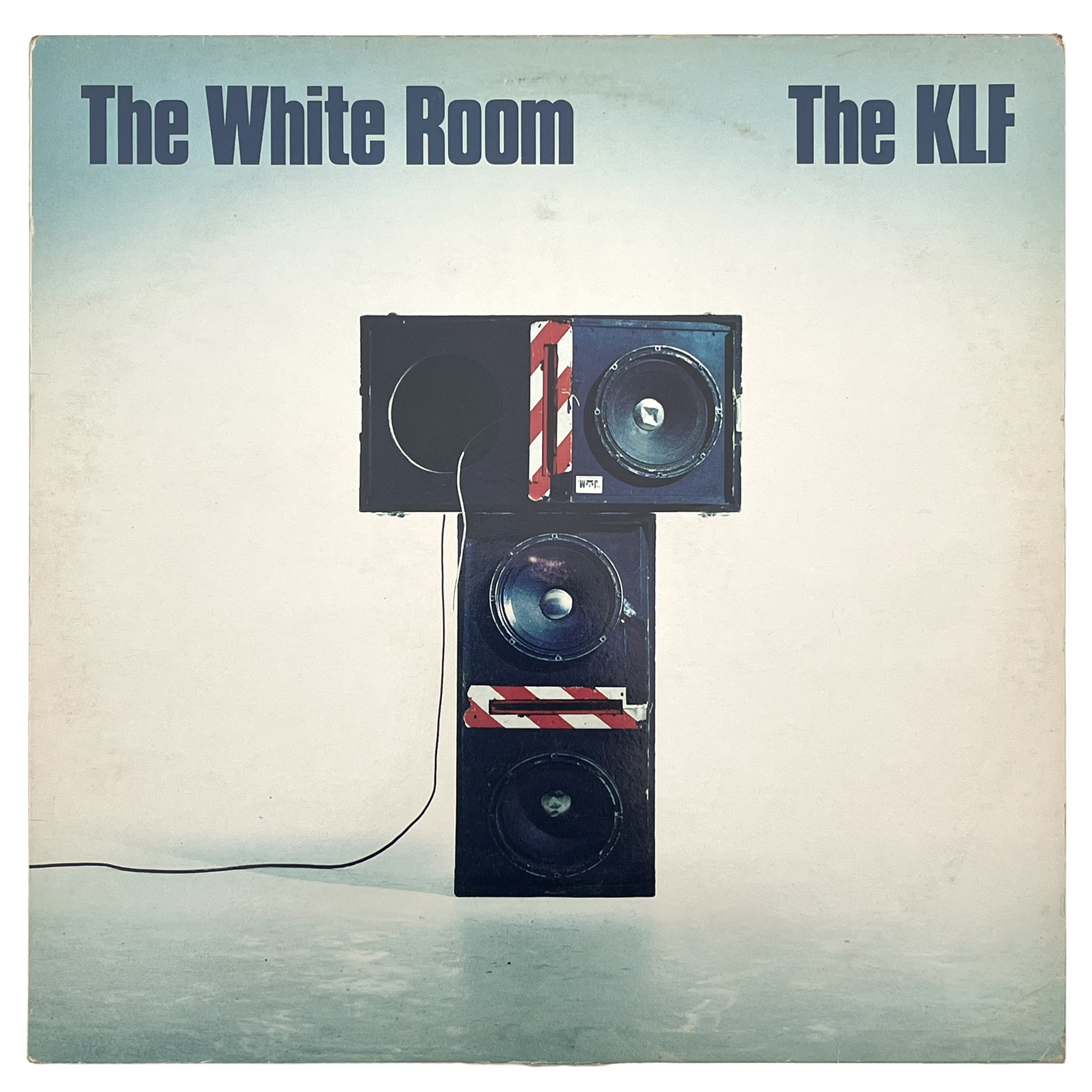
And yet, and yet… Aside from all that, Cauty and Drummond did make some profoundly great music, for the dancefloor, for the charts and for horizontal wreck-heads – music that echoes through the decades and still inspires. The first Pure Trance version of ‘What Time Is Love’ was a staggeringly influential underground staple. And the ‘Chill Out’ and ‘The White Room’ albums were things of melancholy bliss – part of their involvement in a wider chillout movement, which included playing cosmic sounds with Alex Paterson and Youth in the backroom of Paul Oakenfold’s Land Of Oz club and led to Cauty’s early involvement in The Orb. When it came to their global chart dominating ‘Stadium House’ reworks of their tracks, they hit a vein of crazed inventiveness that was instantly accessible – enough to help them sell more singles than anyone else in the world in 1991 – but also sounded like nothing else before or since and came with the still now head-melting dubwise remixes by Tony Thorpe to boot.
The fact The KLF ceased to exist as such in 1992, ending all sales of their physical records, meant they effectively removed themselves from radio play too, pre-emptively erasing themselves from any retro 90s playlists. Yet those records do echo through fans’ and ravers’ memories, endlessly bootlegged in new versions. ‘What Time Is Love’ has been remixed by no less than Ricardo Villalobos (back in the peak ‘mnml’ moment of 2005) and Paul Woolford’s Special Request guise (released online on 23-11-23 and on vinyl last year).
And just this year, KiF’s ‘Still Out’ film and LP reimagining of ‘Chill Out’ has been a word-of-mouth success. “It’s reminded us how important The KLF were,” says KiF’s Will Cookson. “We’ve had messages from all over the world about people’s love for ‘Chill Out’ since it came out.” And since The KLF resurrected in 2017 – marking 23 years from their cash-burning – their People’s Pyramid project has likewise been gathering steady waves of interest, drawing the Sports Banger organisation into its orbit and generating new KLF-adjacent music this year in the form of the deeply eerie (uh-uh) 23-minute ‘Music for Funerals and Bricklaying Ceremonies’ by TowerBlock1 and the Peoples Pyramid Foghorn Orkestra.
Got all that? Good.

If there’s an origin story for all this madness, it comes in the mid-1970s when Drummond, down from Scotland to study art in Liverpool, became a carpenter and scene painter for the notably progressive Everyman Theatre. It was here that actor and anarchist provocateur Ken Campbell put on his 24-hour production of ‘The Illuminatus! Trilogy’ by Robert Shea and Robert Anton Wilson – and Drummond was drawn into the worlds of both Campbell and the serious-not-serious pseudo-religion Discordianism, which surrounds all things ‘Illuminatus!’ Pyramids, golden apples, secret societies, lost continents, the number 23 and the idea that the fabric of reality could be an artistic medium all entered the mix.
All that would remain in the background for a while, but his first musical venture was certainly unorthodox: the sprawling Big In Japan, fronted by Jayne Casey with a lampshade on her head, its shifting line-up featuring a remarkable array of future talent including Holly Johnson, Ian Broudie and drummer Budgie (The Slits, Siouxsie and the Banshees, etc).
Budgie remembers Drummond back then being a stern taskmaster and intense performer: “I still have that vivid memory of Bill standing in front of me, with that huge semi-acoustic Gibson thing, always with the same face on, the grimace of anger, ‘NOOOO! URGGGH!’ that kind of thing. You know, ‘No!! It’s not good enough!’” Another Big In Japan member was David Balfe, who likewise remembers Drummond being imposing. “I was the youngest in the band,” he says, “still just a teenager. He was this big, rugged guy who wasn’t... I mean, not that he was antisocial, but he just seemed to be marching to the beat of his own drum even then. But we ended up getting on really well.” So well, in fact, that when Big In Japan failed to get a deal and fell apart, Drummond and Balfe went into business. “I was wandering around asking the others what they were going to do, Bill said: ‘I think I might start a record label.’ I said: ‘Oh, that’s a good idea. Can I do it with you?’ And for reasons that I’ve often asked him about since then, he said: ‘Yeah, all right.’”
Balfe flags this up as symbolic of the snap decisions that would define Drummond’s life thereafter. They formed Zoo Records, and with what Balfe calls “the impetuosity of youth” quickly made quite the splash by first signing and then managing Merseyside scenesters The Teardrop Explodes and Echo and the Bunnymen. Both Drummond and Balfe went on to further success in the London industry, Balfe eventually signing for management the group Brilliant – which, alongside former Killing Joke bassist Youth, featured in its line-up a young Jimmy Cauty, who was living in a large squat in Stockwell, immersed in a scene that was swirling everything from post-punk and psychedelia to jazz-funk.
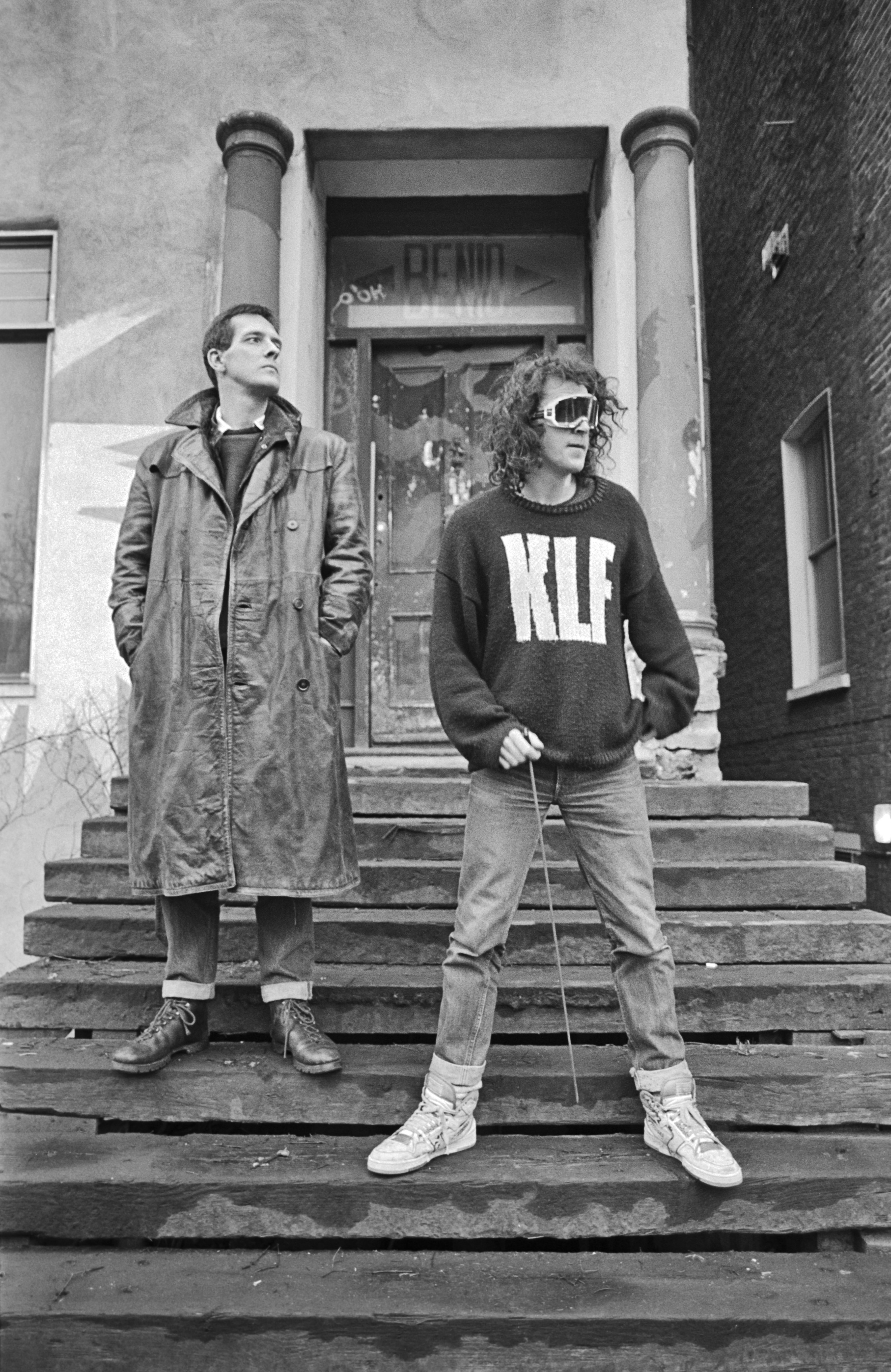
“There was an amazing apprenticeship available to us creatives back then,” says Cressida Bowyer – then Cauty’s partner, soon to be a key part of The KLF, and now a biologist and associate professor in arts and austainability. “A lot of people became quite successful later on because we all signed on the dole and we all squatted, we were all in bands together or separately, and it was easy to learn your craft – you could spend your whole time either trying to be a rock star or waitressing in a whole food cafe or whatever.”
Balfe got Brilliant signed to Warners and installed Drummond as their A&R – but in fact it wasn’t until after they’d spent a fortune on Brilliant’s Stock, Aitken & Waterman-produced album and been dropped by the label in 1986 that Drummond and Cauty hit it off. “I think maybe Bill had had enough of being the industry guy,” says Bowyer, and in short order he made his one and only solo album, ‘The Man’, a very intense and peculiar affair rooted in folk and trad country – and then turned his attention to more modernist, conceptual ideas. He told Balfe he wanted to do sound collage.
“So,” says Balfe, “I said: ‘Oh, you should speak to Jimmy. I’d given Jimmy this old Apple II computer of mine, he’d bought some card that you stuck into it and it did this incredibly early crude sampling. So they tried this and it wasn’t very good, it sounded really rough, but that was state of the art at that point.”
Their first album as The Justified Ancients of Mu Mu (JAMs), ‘1987 (What the Fuck Is Going On?)’, really was rough: collisions of crass (and thoroughly illegal) samples with crude pseudo-rapped shouting – Drummond’s fierce Scots bellow, in particular, still has some of the scary presence Budgie had noted in Big In Japan. “I think they were trying to be the Beastie Boys,” says Iain Baker, later of Jesus Jones. “You could see it with them calling themselves King Boy D and Rockman Rock. They probably wanted to be popular. But I was working in a record shop then, and I can tell you they were only selling to chin-stroking, John-Peel-listening, art-rock-type guys.”
Things were moving very fast indeed, though. They might not have sold loads but their dramatic statements – and getting sued by Abba for one sample, in particular, and having to destroy every copy of ‘1987’ got them plenty of press attention. Drummond moved into the Stockwell squat that would soon become known as Trancentral, and as he and Cauty became thick as thieves the weird symbolism started flowing, starting with the JAMs name, which came straight out of ‘Illuminatus!’. Mystical anarchists such as Ken Campbell were still very much in the mix: his daughter, Daisy Eris Campbell, now the chief “bricklayer” for the People’s Pyramid, remembers Drummond and Cauty “coming round for tea all the time when I was a kid, discussing whatever mad Discordian ideas they were having… I had no chance really!”
Also, crucially, acid house hit London.

Through 1988 and 1989, the JAMs and their new offshoot ,The KLF – all released entirely independently on the KLF Communications label based in the Trancentral squat – had a split personality. On one hand, Balfe says, “they’d got really fascinated with Stock, Aitken & Waterman, who were now getting really big with Kylie and Jason and all that. Bill, especially, loved this idea of factory-made pop and was writing a lot of songs where he was trying to be in that vein.”
This is shot through the JAMs’ second album, ‘Who Killed the JAMs?’, the three mutant punky dance pop singles by Disco 2000 – a duo of Bowyer and Brilliant vocalist June Montana – and explicit in the 1989 KLF single ‘Kylie Said to Jason’ (even if that does sound more like the Pet Shop Boys). But on the other hand – and also audible through those same records – is the fact that Cauty, in particular, along with Bowyer, Balfe and their circle of friends, was soaking up the acid experience non-stop.
“We were in [Paul Oakenfold’s] Spectrum early doors,” says Bowyer, “totally amazed to be experiencing it and really wanting to replicate this culture… actually no, not replicate it but help forge it.” Cauty would stay up all night in Trancentral letting sequencer settings modulate. One of these sessions became the unforgettable ‘What Time Is Love’ riff – which, in Drummond’s words at the time, became “our three-note warhorse of a signature tune.” Edited to a crisp seven minutes, the ‘Pure Trance’ version was passed to DJs in the summer of ‘88 and began to spread entirely organically – almost the opposite of the highly conceptualised pop they’d been hoping would be their core.
“For a few weeks Oakey would play it as the last tune at Spectrum,” says Bowyer. “Everyone had been having the most amazing time, then they’d put the lasers on, everyone would know it was the last track, and to see them buzzing on that… we knew!” The track also exploded across Europe, bootlegged and reworked by big names in Belgium and Italy, and inadvertently setting the pace for trance, Euro-techno and rave as such.
Their pop leanings did bear fruit the same year, though, in the form of the ridiculous ‘Doctorin’ the Tardis’, a bona fide novelty record mashing up ‘Doctor Who’, (unfortunately) Gary Glitter and ‘Illuminatus!’ imagery. It was “probably the most nauseating record in the world”, as Drummond put it on their KLF Communications information sheet but also made them a ton of money and allowed them to ramp up ambitions. Even as they continued to experiment with pop in 1989, the Pure Trance singles and the backroom chillout experiments at Oakenfold’s Land of Oz alongside Youth and Alex Paterson saw them becoming part of an expanding electronic underground. A gloriously weird remix 12-inch for the initial release of ‘3am Eternal’ featured makeovers by The Orb (then Paterson and Cauty) and Moody Boys – marking Tony Thorpe becoming a part of the KLF machine.
Thorpe was already a veteran of the post-punk scene with his band 400 Blows and an early adopter of house. He first come in contact with the duo as The JAMs: “They were sampling really stupid music,” he says, “and I thought, ‘Who are these clowns?’ – but I was fascinated. I asked if I could remix one of their tracks for a compilation I was doing, they said yeah, but then told me it was shit. I think Jim might have even thrown it in the bin in front of me.” This combative beginning was the beginning of a surprisingly fruitful relationship; the ever-blunt Thorpe became “the person who could tell them ‘no, this is shit’” in the studio but also an ear to the ground of the evolving rave scene.
“Tony used to turn up on a Friday evening at the squat,” Bowyer remembers, “with a bag of new records he had picked up in Soho, and we used to just spend the weekend listening to these tunes and going out, that was our stimulation and inspiration.”
As that suggests, the party energy wasn’t just out in the clubs by this point but was part of The KLF infrastructure. Manda Glanfield was already in their extended clubbing and raving circles and had had notable early UK house hits with The Beatmasters, when she moved in next door to Trancentral.
“They were friends of friends, and they were so cool that when the flat came up we nabbed it,” she laughs. “We lived next door for a few years of total madness. We had a little sort of nice two-bed flat in a Victorian semi, but they had this gigantic wreck – it was like this five-storey squat and they just ripped out every internal wall, the place was full of acrow props holding up the ceilings. Their parties were a bit terrifying. I remember going in the front door and just standing there and watching this... the floor above... just bouncing.”
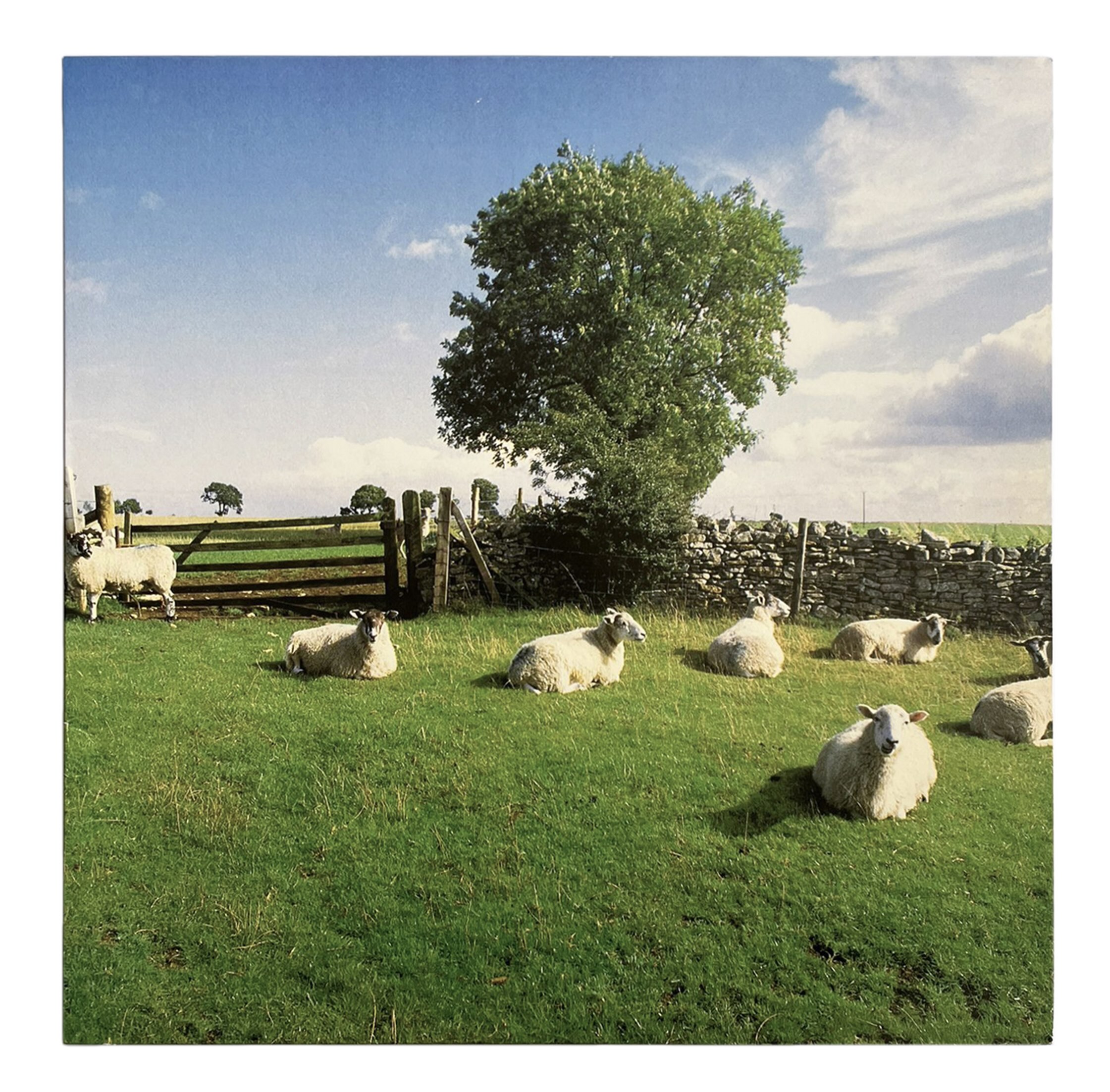
It’s this energy, as much as any high concept, that fed into The KLF that the wider world knows. From 1990 through 1992, the vast Stadium House reworkings of the Pure Trance songs put deranged rave mania and KLF conceptualism into the mega mainstream the world over.
“Bill was less interested in the acid house thing,” says Balfe, “but his genius was taking Jimmy’s backing tracks, adding samples, finding the right people to make them pop.”
Trancentral became a hit factory, albeit not in the Stock Aitken & Waterman fashion they’d imagined. Thorpe, as well as being a grumpy sounding board, regularly added beats and brought in vocalists from the London hip hop and reggae scene.
“There was nothing like it, nothing like it,” laughs Maxine Harvey, who became the “KLF aha-aha-aha” voice of ‘3am Eternal’, as she remembers the differences from her previous role in Maxi Priest’s touring band. “Though my mum phoned me up panicking when she saw ‘Top of the Pops’, like, ‘What are all those hoods!?’, thinking they were some Ku Klux Klan thing…”
Glanfield was brought in to add some of the pop-dance magic she’d given to remixes of The Shamen, Erasure and suchlike. “Though actually they literally just brought me into the studio and asked me to programme some ‘trademark drum fills’,” she smiles. Bowyer became de facto creative director for ever more elaborate videos and performances and held the chaos in check (“Her and Jimmy were the mum and dad of Trancentral,” chuckles Thorpe), and Sally Fellowes came in from their distributor to become KLF Communications label manager.
With Fellowes’ smart deals, the Stadium House remixes kept getting bigger and more lucrative – albeit with the money going back into ever more ludicrous staging and stunts such as hiring Tammy Wynette and building Viking ships – and ‘Chill Out’ and ‘The White Room’ achieved major cult status. “I wanted it to keep on going,” says Thorpe. “The music was great; we were having hits… I even persuaded Bill it would be a good idea to get Barry White to sing a Stadium House version of ‘Build a Fire’ from ‘The White Room’… but basically they burned out.”
Less than four years after The KLF began, the project ended in 1992, followed by a symbolic sacrifice a couple of years later as their K Foundation guise burned the million pounds that they calculated were the remaining profits from their hits. Cauty, Drummond and various members of the team they’d assembled would continue to make music through the 90s, though, via K Foundation, K2 and Kalevala projects, but it became increasingly confrontational, fragmented and opposed to industry involvement.
“When we came to record ‘Common People’ in 1994,” says Jarvis Cocker, “we really wanted them, because they did ‘Stadium House’ and we thought this could be ‘Stadium Indie’. I got as far as tracking Bill down, but they weren’t having it. Maybe for the best, who knows?”
The aftermath was still creative, but wild. Witness the chaotic outsider art and chaotic noise performances that took place at the east London bar The Foundry, owned by Drummond and run by pugnacious ex-forces tour manager, security man and long-time associate Alan ‘Gimpo’ Goodrick – fond of letting off munitions in the basement as entertainment for drug buddies. Or Cauty’s “sonic cannons” built on to armoured cars, which, says Thorpe, involved “me playing horrible drum’n’bass in a hazmat suit and trying to punch journalists”. Or, indeed, the K2 performance of ‘What Time Is Love’ recast as ‘Fuck the Millennium’ at the Barbican in 1997 when the then 19-year-old Daisy Eris Campbell was asked to direct the choir of striking Liverpool dockers.
“It was trial by fire,” she says. “And it shouldn’t have worked, but of course when Bill and Jimmy set something in motion, somehow it does.”
Eventually, though, the duo separated into their own artistic lanes going into the 21st century. Cauty made overtly politicised installations in collaboration with the L-13 Light Industrial Workshop, notably focusing on riot imagery, while Drummond produced books, hosted artworks in a tower in Northern Ireland and cooked up other more conceptual work such as ‘The 17’ (a template for spontaneous choirs, designed as an escape from recorded music). But finally in 2017 – 23 years on from burning the million pounds – they reconstituted The JAMs. This wasn’t to make music, though (although some KLF material did trickle on to streaming sites in 2021): rather to publish a convoluted sci-fi story, ‘2023: A Trilogy’ (announced at 23 minutes past midnight on 23 August, of course), and throw a three-day carnival in Liverpool, Welcome to the Dark Ages, at which the People’s Pyramid was announced. In contrast to pyramids dedicated to kings and emperors, this was to be a tomb of the people: built over centuries, each brick containing 23 grams of the ashes of one person, starting with Cauty’s brother, Simon, who had died the previous year.
There was a new seriousness to this, a sense that they weren’t getting any younger, which has also led to them archiving their entire work together with all music master tapes going to the British Library and all film material to the BFI. “We’re in the process of dying,” says Cally Callomon, who manages Drummond and Cauty, and has long been the designer and realiser of Drummond’s conceptual books and pamphlets. “But instead of waiting for someone to be dead and then having lots of children saying: ‘We don’t know what to do with this stuff!’, they are living that process of dying by ensuring that everything is taken care of.”
And that includes steadily handing over the People’s Pyramid to… the people. As Daisy Eris Campbell, who lays bricks containing the ‘MuMufied’ ashes in the Toxteth Day of the Dead each year says: “It’s new territory for them to be doing such a community project where you really do need the community onside because that’s not their way: their instinct is to kind of keep pulling the rug!”
And in that handing over to the community – their community – they tacitly acknowledged their links to the rave and to their own musical legacy. That first 2017 event featured Jarvis Cocker singing ‘Justified and Ancient’, and was glorious chaos. “I had to wait in a room,” he says, “in this sort of church, community centre place, and I could see people queuing up to help tow their ice cream van through Liverpool. Then I sang my song, and there was an amazing event afterwards, with bands and Greg Wilson DJing, all these people gathered in strange face paint, a really good atmosphere. It seemed to fall together: I’m not sure how much forethought there was behind any of it, but it really happened. It worked.”
Most recently, in a symbolic roping in of younger generations, Sports Banger was recruited to throw a “workwear fashion show” and rave after the 2024 Day of the Dead. Jonny Banger wasn’t that familiar with The KLF’s work when he created artwork around a riot theme. Incorporated into that was a photo of a bizarre seven-foot-tall character at the 1990 Poll Tax riots, which he didn’t know was in fact Drummond’s old charge Julian Cope in papier-mâché costume as his Sqwubbsy alter ego. The artwork attracted Cauty’s attention; he playfully pointed out the similarity to his own work and eventually sent Banger one of his signature smiley riot shields in the post. Banger instantly grasped the sense that he existed in the same deep streams of raving and subversion as them, and since then has got drawn more into their world. “I now know where I’m going to be in November every year from now on in!” he says.
The KLF never really existed in the sense that any other musical act does. But in the four years they officially were a thing, even if it was one big conceptual joke or mad mystical conjuration, they made more impact than most people do in entire careers. And that impact, and its legacy, as we still try to puzzle it out decades later, still reverberates through lives and through culture.
For a band that never existed, their presence looms large indeed.
This article first appeared in issue eight of Disco Pogo.