.svg)
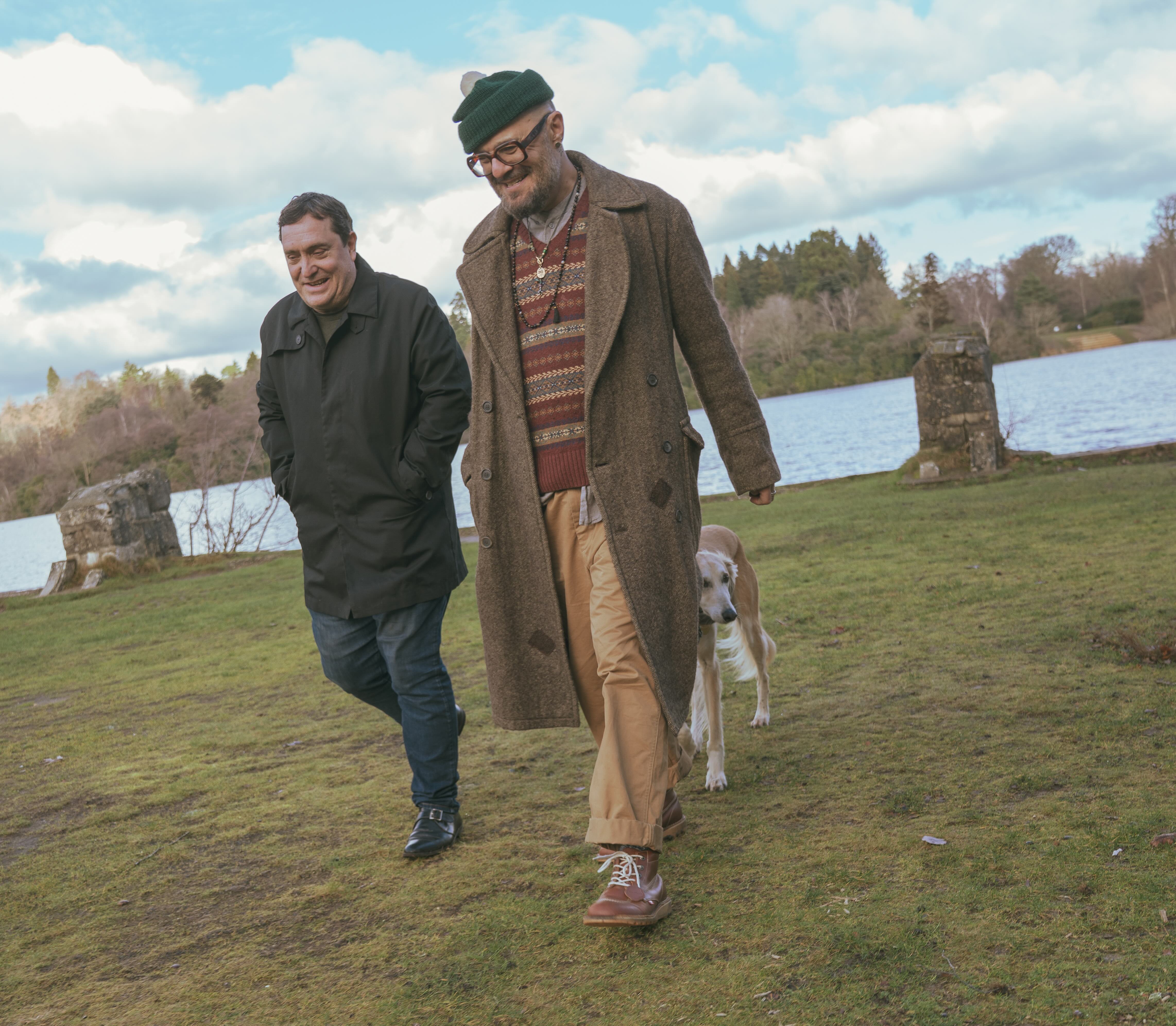
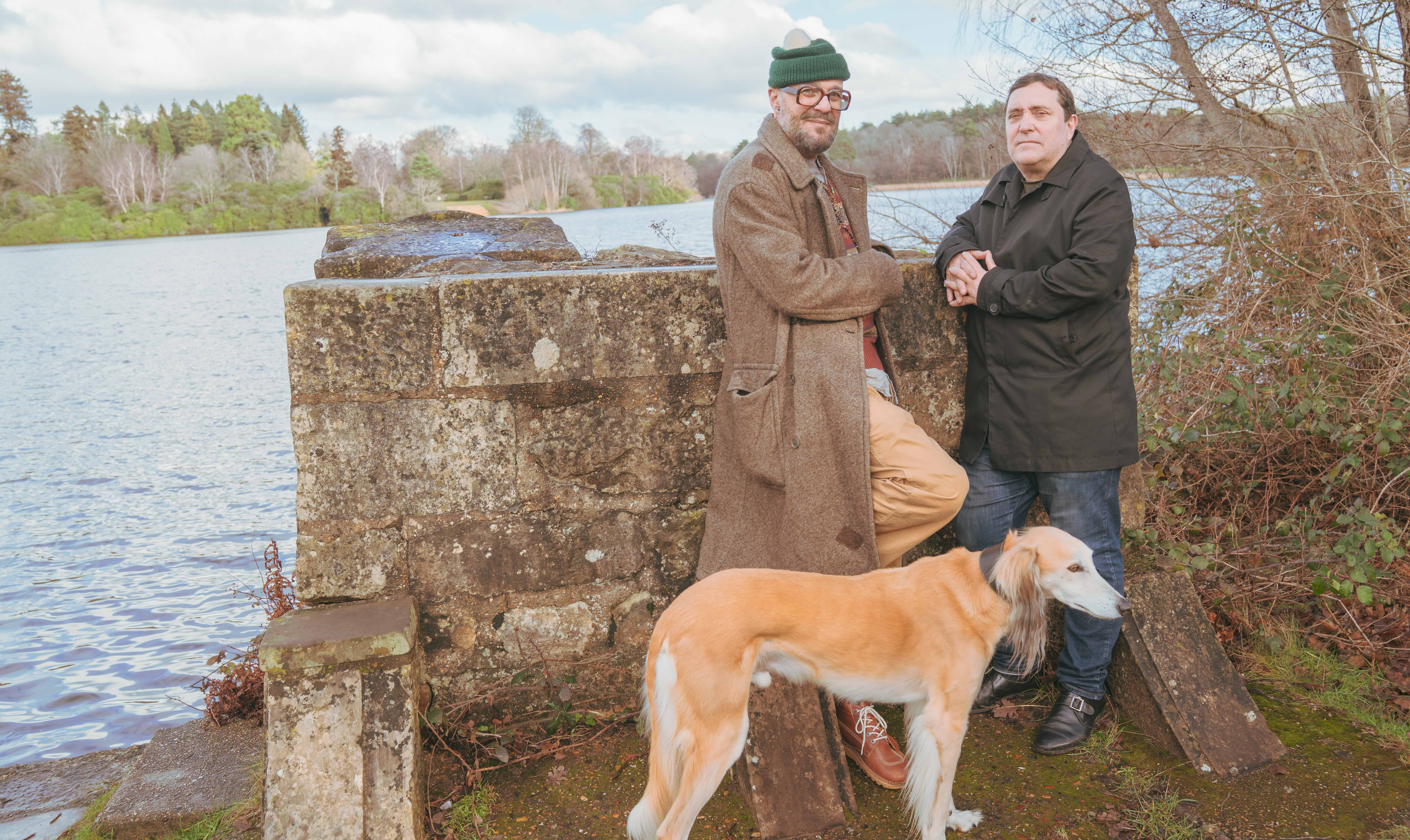
Here comes Justin Robertson singing oldies, goldies, “This is acid”; here comes Richard Norris singing “House music all night long”. Ahem. Of course not. The pair might be happy to talk about their early experiences of dance music, but chatting to the duo in 2026 doesn’t see them harking back to the “good old days”. As the twosome take a hike around a Surrey park, they outline how the past has been a dress rehearsal for current pursuits. “Why are we still doing it? The point is, there isn’t a point,” they tell Jim Butler…
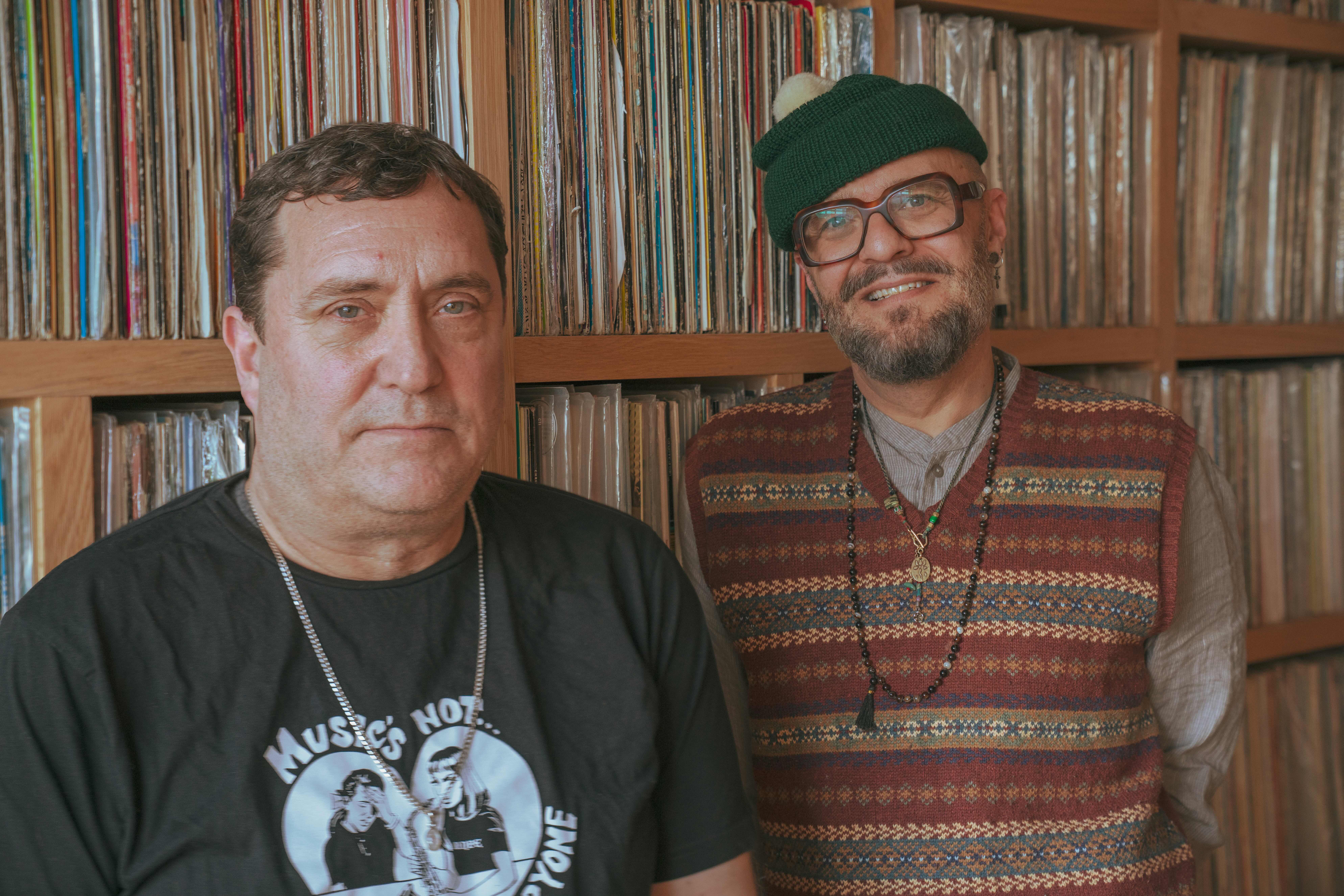
Justin Robertson and Richard Norris have spent the best part of the day reminiscing, analysing and laughing at what it is they do. The pair, both foundational figures in the UK’s post-acid house electronic music scene, have been firm friends since the early 90s.
In 1993, Robertson remixed The Grid’s ‘Crystal Clear’, providing Norris and his Grid bandmate Dave Ball with the distinctive version of their classic track. “It got us on ‘Top of the Pops’,” says Norris of their first of five appearances on the show, “and it really started it all off. A pivotal record for us.” Their relationship – as we shall see – goes back further than that, however.
During the course of their shared 75 years in the creative industries, the pair have trod a remarkably similar path. Both were raised just outside London in the Home Counties: Norris in St Albans; Robertson in Chalfont St Peter, 30 minutes west on the M25. Likewise, both went to university in the north west: Norris in Liverpool, Robertson in Manchester.
Their approach to ‘dance’ music has been marked by an analogous approach, chiefly multi-genre. Robertson’s various projects – from Lionrock and Revtone to The Deadstock 33s and latterly Five Green Moons – have seen him traverse dub, modish disco, house, techno and more. Norris’s various incarnations – among them The Grid, The Droyds, Beyond The Wizards Sleeve and his recent excursions under the Music For Healing banner – have incorporated ambient, electroclash, chillout, house and new beat, all underpinned by a lifelong psychedelia obsession.
Both are successful DJs, although Norris defers to Robertson’s prowess behind the decks (“I remember watching you when you were playing with The Grid, thinking, fucking hell, he’s good. You told me: ‘There’s this trick, when you bring the bass in on the next one, make it slightly louder’ and it’s like, oh, yeah, that really works”); and both have branched out into writing. Norris published his brilliant memoir ‘Strange Things Are Happening’ in 2024, while Robertson’s new novel, his third, ‘The MineralTail’, tells the tale of the greatest record ever made – by a megalithic stone and two dogs – after the end of the world. An accompanying record - excellent, naturally - brings the book to life. And because there aren’t clearly enough hours in the day, Robertson is also a successful painter.
Norris is currently finishing work on a (possibly) final Grid record, started before Ball’s death in November 2025, while Robertson is playing itinerant gigs under his brilliant Five Green Moons moniker.
After spending a day traipsing round the bucolic Virginia Water at the southern tip of Windsor Great Park on the Balearic borders of Berkshire and Surrey, Norris and Robertson have failed to find much disharmony between them. Suddenly Norris realises where their paths diverge…
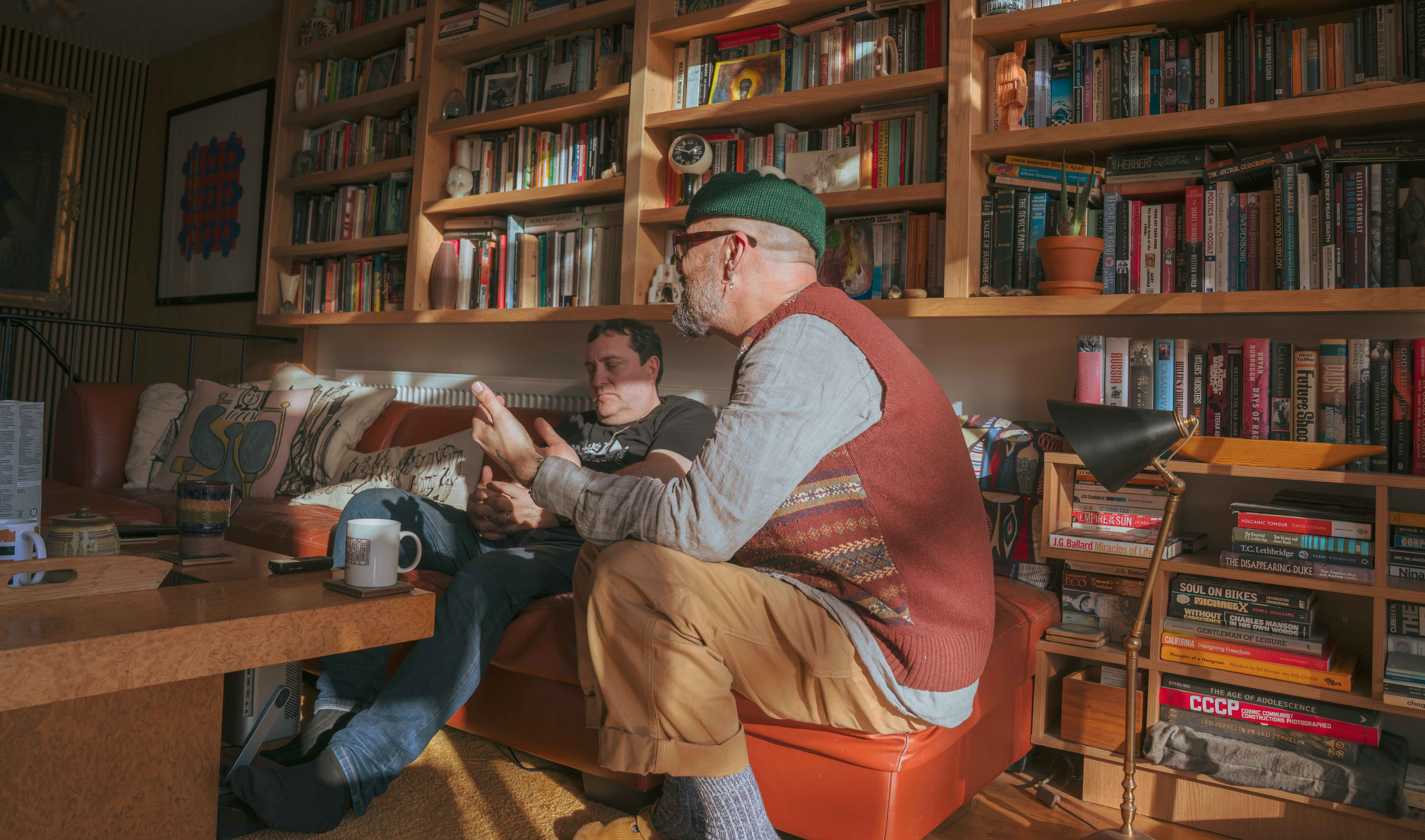
“You are definitely more prog than me,” he says, safely back in the front room of Robertson’s ultra-cool modernist home, surrounded by walls of records and books. “I’m more psych and you’re more prog.”
“I’ve made peace with that,” Robertson smiles. “After years of denying it – ‘Thrice you shall deny me!’ – I’ve made peace with it now.”
Let the prog psych wars commence…
Disco Pogo: How did you two meet?
Justin: “I don’t remember when we met, but what I do remember is… so, in Manchester there was a Detroit techno, Chicago house, New York garage bedrock to most things post-acid house. But I was more interested in Balearic and other sorts of music. Me and Greg Fenton had a club on Sunday nights called Spice and it was named after a track that Richard made – G-Force ‘Spicey’. So the first time I met Richard I knew this was the guy that had made ‘Spicey’. I was in awe that someone had made this record.”
Richard: “It was a strange kind of Belgian new beat record. I had written a big article on new beat for the NME. I convinced them it was going to be the new acid house. I’d got them to pay for me and my girlfriend to go to Ibiza previously and that seemed to work. I went four or five times, interviewed Renaat from R&S and all these bands. New beat is a very unsung thing. I remember Tony Wilson being very disparaging, but I used to love those records. They’re very much like what ALFOS records are now. Slightly doomy, slow, ‘I Feel Love’ slowed down with this industrial edge. There’s something about those records. But yeah, G-Force ‘Spicey’ came out of one of those trips.”
This was prior to The Grid?
Richard: “Yeah, it was 1989. We’d started The Grid but hadn’t released anything. It’s a strange record. Not least because I’m singing on it. Sort of singing. A bit like Yello. It’s quite Balearic… And there it is (Justin locates the record). I’ve not seen a copy of that for so long. I don’t even have a copy.”
Justin: “At the back of my record box I used to have three lucky records and this was one of them. I think the other two were Italian records. This is from Eastern Bloc. The sticker says: ‘A song so good they named a club after it.’”
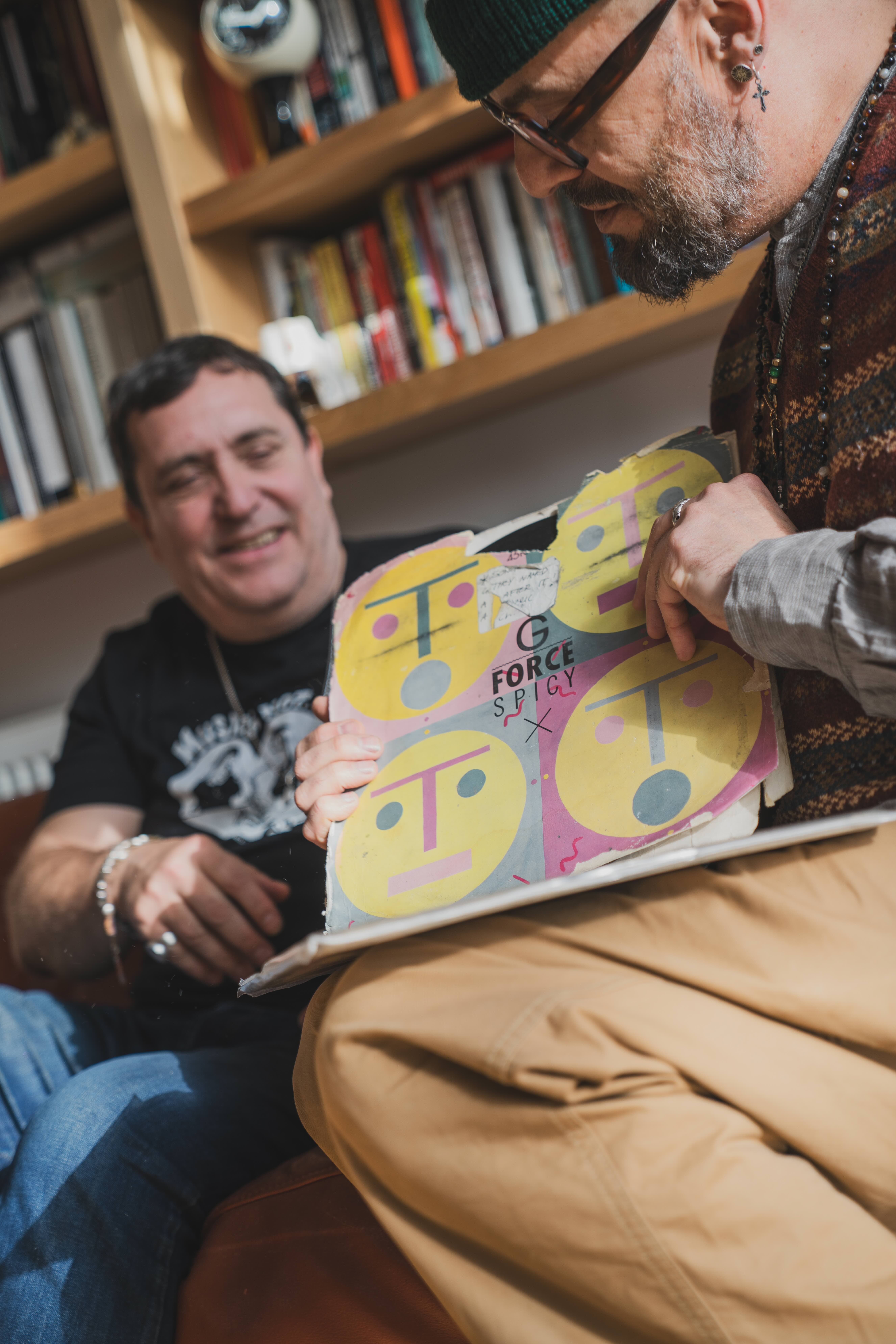
Richard: “Yes, [reads the sleeve]: The Grid appear courtesy of Warners, so, before we started releasing records. Certainly before ‘Floatation’. It was me and this guy Patrick De Meyer, T99. His mate did Technotronic. There was the whole scene of rural, strange, industrial new beat-making people in Belgium. There was this amazing club, Boccaccio, four big speaker stacks. A proper sound system, playing this doomy Front 242 music, but everyone was dressed like the ‘Hitman and Her’.”
Justin: “I suppose in the same way, if you went to Detroit or Chicago clubs everyone looked like they were in the ‘Hitman and Her’.”
Richard: “All those clips of early house clubs, there was a look wasn’t there.”
Justin: “Proper dancing. Not waving their arms like Windy Miller.”
Richard: “Manchester was very good for that wasn’t it. [Seminal dance crew] Foot Patrol. All the dancing and dressing up. Was that slightly pre-acid house?”
Justin: “Yeah, I moved to Manchester in 1986, and if you went to Nude night then it was very dressy. People would put on their best gear. And there was a lot of dancing. A lot of the time you’d be on the periphery of the dancefloor watching these dance troupes come on and do their routines. And they’d be wearing like spats, you know, jazz dancing, but to Adonis records. There was a really nice energy to that pre-acid house house scene.”
How did The Grid come into all of this?
Richard: “We had something of an art school approach, so things like Cabaret Voltaire and industrial records. We met because of working with Genesis P-Orridge so there was the Throbbing Gristle end of things. Me and Dave mostly bonded over Throbbing Gristle and Suicide. I went to interview Genesis for Strange Things magazine. Six hours of him pontificating in his scary house in Hackney that had a dentist’s chair in one room. I remember there being cutlery on the wall, like a fork with a swastika on it. Hitler’s fork was next to Genesis’ PRS registration, which was framed. He was very proud of his PRS certificate. After doing that interview, this was about August or September 1987, he said: ‘Have you heard about acid house?’ I hadn’t, but said it sounded amazing. Psychedelic dance music, that sounds like a great idea. And he said let’s make a record next weekend. It was that quick. I hadn’t heard any acid house. I’d heard house music, because it had been in the charts, but I hadn’t heard acid house. I’m not sure there was that much out. By the time ‘Jack the Tab’ came out we had heard things like Adonis and Phuture. And things like X-Ray ‘Let’s Go’. Those records were probably 86 or 87.”
Justin: “‘Acid Trax’ [Phuture] was a big track in Manchester. And the early Transmat things. I remember hearing those things maybe 1986, going into The Haçienda. I always have it in my head that it was going into The Haçienda, it could have been any club in Manchester. Just hearing this open-ended music that didn’t seem to have any beginning or end and then hearing people mixing records, which I hadn’t experienced before. There was this story of my friend Richard Hector Jones, who was working in Eastern Bloc and this kid came in on a Saturday morning. He’d been at the Haçienda the night before, and he goes, ‘Can I have that record they play at The Haçienda?’. Richard said: ‘Which one?’ The kid goes, ‘There’s only one, isn’t there?’ It was an interesting time. You didn’t need to know anything about it. It was probably a drawback if you did.”
Richard: “We were definitely interested in the idea of it as much as the music. But then we got to hear the music and were definitely interested. We made ‘Jack the Tab’ before we’d gone to Shoom. I’m not sure it existed. And then went and took Jack the Tab T-shirts which got us in. I think you were meant to get your Shoom membership and Gen sent the weirdest picture of him with bug eyes and a T-shirt with Hate written on it, which at the time was not in the spirit!”
When acid house exploded, did you both recognise it was a cultural event?
Justin: “I’m not sure. In those days you were used to things happening, micro trends, micro changes. So the soundtrack didn’t really change, but the energy level switched. Not always in a good way – I quite liked the expressive jazz dancing at Nude. This became much more uniform. What was interesting, was this total dissolving of barriers. That was really new. The energy was completely different. And OK, the liberating feeling of being on ecstasy and that rush where you love everybody was remarkable. You can look back and mock it and go, oh, it was just the drugs, but the drugs were just a catalyst. You could forget about your job and whatever worries you had and for a few hours every weekend – or every night in some places – you could become part of this weird great whole. It was very idealistic for a while, without anyone pinpointing it. No one was saying, this is what is happening. It just happened. The music press took a bit more time to get their heads around it because they couldn’t really get a handle on it, because there was no one to talk to, or even wanted to talk to them. If someone came in and took photographs or videos, you’d presume they were the drug squad.”
When you both started making music, did you take that energy and idealism into the studio?
Justin: “A couple of times I literally tried to take it into the studio. Just to stay awake. What I took [from those times] when I started making music and still do now… I mean the past seems like a rehearsal for me, for what I’m doing now. The roots of it, it’s taking all the things that you grew up with and the influences that you found around you and the rulebook had been ripped up, if there was one, and you could just chuck all these things together and sometimes it worked and sometimes it didn’t. I was thinking I like the Pebbles psych sound, I’ll stick a drum beat underneath it and see what happens. And obviously the reggae stuff that I grew up with. Using those influences, because you were given a pass to do it. It was a nice freedom. I didn’t know how it worked. I could string a few chords together on the guitar, but I had no formal training and I think that was an advantage. I think if I had gone in knowing what I was doing I don’t think it would have been… I still don’t really know what I’m doing! It’s all trial and error and accidents. And that was the thing about acid house, the whole thing was created by accident – or at least that acid sound was created by accident. It was making something new out of past influences.”
Richard: “We absolutely took the spirit of the times into the studios, including half the people that we’d met in the clubs. Sacha [Souter, the vocalist] on ‘Floatation’, was from Shoom. Polo, who played the bongos, was from Shoom. You can’t really get more Balearic than the bongo player on ‘Floatation’. He was the first person I met at Shoom, coming down the stairs, and within half-an-hour we knew most of the people. Very friendly. When a tall skinhead comes up to you in a club… three months before I would have run out the door. Luckily, this one hugged me. I remember we did a version of ‘O Happy Days’ by Edwin Hawkins and we got half of Shoom to come down to the studio and sing backing vocals. It never made it on to the album. It’s alright. I was singing as well, trying to be some kind of southern Texas preacher. You did have licence to do what you wanted for a bit. It wasn’t so genre-specific and that certainly spilled over into the studio.”
Justin: “What’s interesting about that time is how it’s provided a seed bed for future enterprises. I was wondering about what both of us have taken from that time and I suppose it’s that open-endedness. For the first time in a few years, I feel really relaxed about making music again, because it’s a similar feeling to the first time I went into studios. A freedom to do what you want. We’re talking about why we’re still doing it; what’s the point? The point is, there isn’t a point. And that’s the point.
“I don’t like to put my name on things because I don’t want to be pigeonholed as doing one particular style of music or be associated with any one particular… I mean it’s not even genre now, it’s one particular profession. I was DJing at a literary event recently and I was introduced to this guy in publishing as ‘Justin is a DJ and he’s become an author’. I don’t think of myself as a DJ who’s become an author. I don’t think I’ve suddenly become something else. And also, when acid house started, I just fell into it. I worked in a medical records office, a graveyard and a record shop. DJing wasn’t a profession, it still isn’t. Career’s a death, as I have said before, but you find yourself doing something… ‘Oh, you’re a DJ’. Am I? In what way am I a DJ? So creating personas and projects and discarding them when they don’t do anything fresh… we had this conversation didn’t we, when you’re caught between two moments, you have a doubt as to what you’re doing this for. And it’s definitely not for financial reasons as I’m constantly lurching between financial crises and I’m skint all the time. If you do things for a reason that’s just advertising. It’s not art and it’s not music. It’s just advertising. I think there have definitely been times when I’ve been unsure about what I’m doing, and this might be to do with my overdramatic persona, but there’s never a time when I’m not doing something.”
Richard: “We came into it, a bit like Andrew (Weatherall) used to say, as enthusiastic amateurs. I think that’s why we’re still doing it, that curiosity. We don’t have to do it. And lots of people haven’t done it as long as us, but we still do. Probably even more.”
Justin: “I think I do have to do it. Again, not talking in financial terms, that’s a fucking disaster, but I do feel compelled to do it.”
Richard: “If you were retired, which bits of it would you veer more towards? The painting, the writing or the music?”
Justin: “So that was one of the awkward things about being introduced as the DJ that’s become an author. I feel like all of those things are the same. I don’t think painting and writing and making music and playing it are different. They’re all the same thing.”
Justin, your new book has an accompanying album. Was that always the intention?
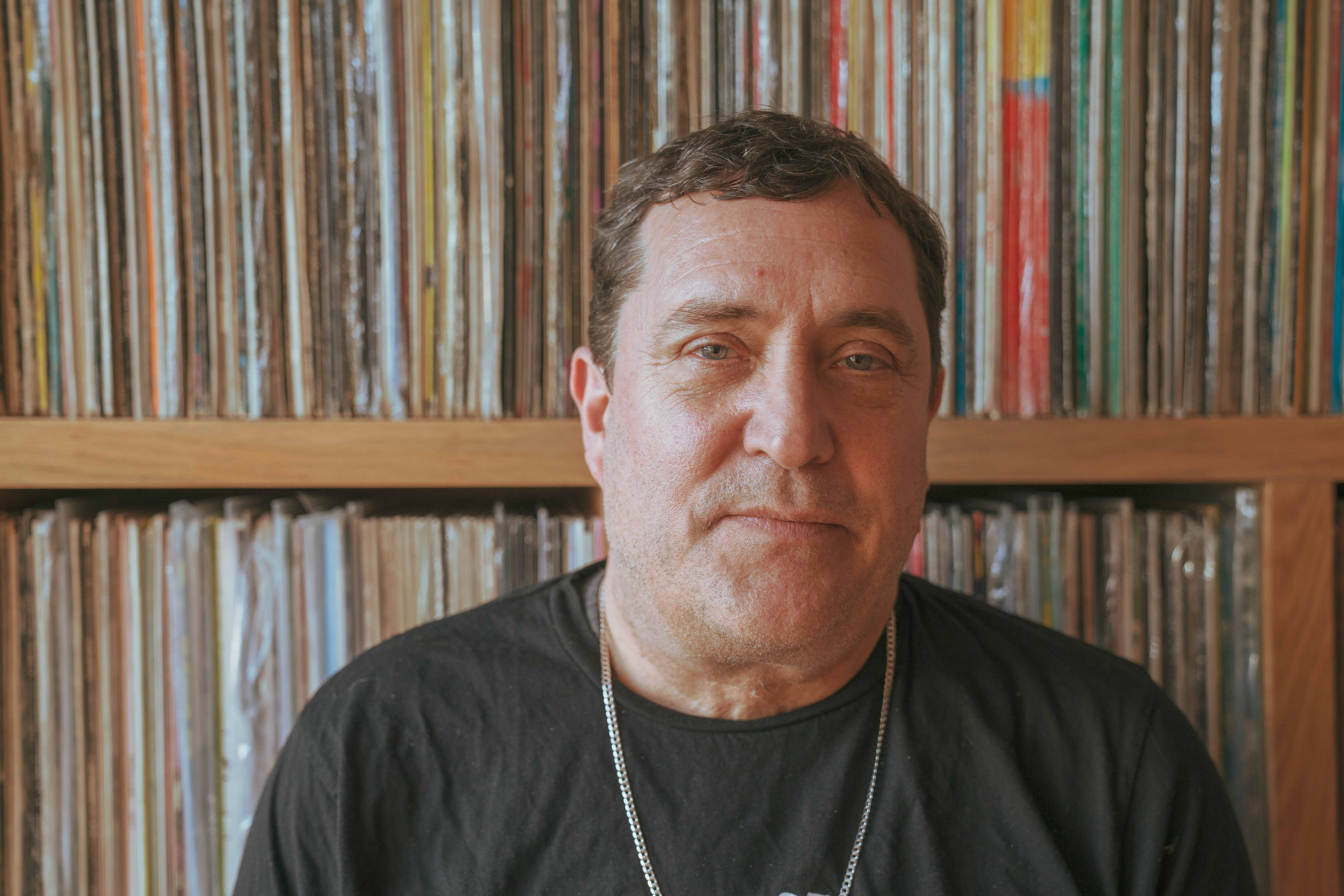
Justin: “The book’s about the recording of an album. The greatest album ever recorded after the extinction of humanity by a megalithic stone and two dogs. Guaranteed best seller this summer. Watch out for it, folks! Basically it’s about music. A philosophical discussion and a cosmic comedy about music. What is music? What’s the magic of it? what is it that draws people back to it and what makes it so important in people’s lives? So, I thought I definitely need to record an approximation of this record.”
How do you both work day-to-day?
Richard: “I’ve got a studio down the garden and I go in there every morning and I work every day. Quite early, 8am until 2pm. Postman hours, well, late postman hours. I do that every day entirely on my own. I do like bringing people into the studio, I just did something with Mal (Stephen Mallinder) from Cabaret Voltaire. Bringing people in just changes the energy. You make different records when there’s someone else in the room, definitely. Even if they’re just sitting in the corner reading the paper it does change it. I love working with singers, but very rarely do I get to do it. Done it a lot on the new Grid record that’s being finished at the moment.”
Justin: “I work, almost entirely, on all fronts, in a stream of consciousness. I think that’s when you start second guessing yourself when you start thinking that there must be some structure or some purpose that I’m working towards. I don’t actually think I’m very good at making records to dance to, house records. I struggle to make functional club records... My mind goes off in weird tangents and I think, ‘That’s a pretty jackin’ sound, I know what I’ll do, I’ll stick a sitar on it’. Opening myself up to that stream of consciousness and just seeing where this thing takes me. The Five Green Moons thing I’ve found a real sense of liberation.”
Richard: “Are you a late-night person?"
Justin: “Not at all. In my new place I’ve got neighbours on both sides, even though I am well soundproofed. I tend to go downstairs and work during the day, music-wise. My problem is, I live alone now. When my wife and I were together there was a certain amount of ‘Can you stop doing what you’re doing and sit and have dinner?’ But now, I have no such restrictions, so I often find myself painting while watching TV and listening to records. An overload of stuff. The trouble with that is you’re unable to switch off. I actually don’t think I’m switching off from anything. As we’re getting older, people talk about retiring and I’m like, retire from what?”
Richard: “That’s because it’s all play isn’t it? It’s not work. We’ve been lucky enough to do stuff that we like doing and are really passionate about. You’re right, making a traditional dance track is quite hard, making anything that is functional is hard. With the ambient stuff… you could see it as being quite functional music, but it’s not actually got a function, it’s got a purpose. The purpose is that people listen to it and it helps them relax. People write in about the Music For Healing pieces and they say it’s helped with bereavement, anxiety, kids have been born to the music… and suddenly it’s a different thing. That was a purpose.”
Justin: “Did you have that in mind when you started it?”
Richard: “No. I started making it for myself, because we were living in Portobello Road and there was this gang war going on outside. I had to create a safe space for myself in the studio and I created this calming ‘Analogue Bubblebath’-kind of music and just did it for myself. When lockdown happened I started putting them up on Bandcamp and gave profits to MIND. The response was amazing. Even now, every few days someone will write an email telling me how that music has helped their mental health. It’s incredible. It’s much better than being on ‘Top of the Pops’.”

Justin: “It’s very liberating music isn’t it. I made this quasi-ambient album with Dan Avery, which still hasn’t come out. Formlessness and getting into that stuff where it feels as though it could go on forever…”
Richard: “I’ve got massively into drone lately. The idea that music is just one tone or one note. Every culture’s got it, from eastern European things to Aboriginal, Indian… it seems like a real anchor and actually quite primal. Dan’s gone quite droney, hasn’t he, and other contemporaries like Richard Fearless.”
Justin: “Nothing wrong with a bit of drone. It’s tapping into, as you say, something primal and… it’s that thing when you talk about making music, you almost have this implication that music is somehow created out of the human mind or the human community, when it isn’t that at all. It comes from outside. If we weren’t here, if there were no human beings alive there would still be music. There would still be sound. It’s the cracking of the rocks, the crashing of the waves, the birds singing… or just micro sounds of plants growing. A hippy take, but there’s sound everywhere and what people do is make approximations. I remember speaking to you and you were throwing microphones into ponds or something!”
Richard: “Yeah, I got into these strange underwater microphones. Going to the Thames, sonic fishing, just throwing them in on this massive line. It’s weird because you don’t get any reverb, just these weird sounds. It sounded like electronic prawns scuttling along. Sounds change if you just start listening on headphones and recording outside. One thing is you notice how many bloody aeroplanes there are. To find somewhere and get a really good recording is really hard.”
Justin: “There’s a chapter in the new book called We Are The Asteroid, about an unemployed asteroid rock that’s floating around space and gets an invitation to come to Earth. So it collides with Earth and ends up on the ocean bed and is introduced to the music of Basic Channel. That density and compression… crushed sound. When you spend time in silence to listen to sounds around you, you realise that they’re better than any record you could ever make.”
Richard: “There’s a lot of God and the Devil in your book and I like the way you describe the Devil as a hack. That he didn’t have the best tunes; he just made really bad approximations of the good tunes. So, I thought, ‘Yeah, the Devil is basically AI’. That’s what I got from that. He’s a chancer.”
Justin: “Yeah, the Devil has a disastrous house party and is thrown out of Heaven and he tries to make music but he’s incapable of doing so. That’s his first original sin.”
Given Dave’s death, is it quite strange coming back to The Grid?
Richard: “Yeah, we had been making a new Grid album for two years. We were kind of getting on with it, but not really that focused on it. Dave was doing bits with Soft Cell and I was doing other things. We were making it gradually, he was sending me stuff and I was sending him stuff. But since he died… it’s weird, the label and everyone have been, ‘don’t worry, take as long as you need’, but for me the opposite thing happened. I feel there’s a real urgency and need to finish it. The album has changed from being just me and Dave to being very much a celebration of him. Getting loads of guests involved, either people that we both loved like John Grant or people that we’d both worked with like Andy Bell from Erasure. It’s definitely more celebratory, but it’s very weird, having been in a duo for 38 years to suddenly making a record and not being able to say: ‘What do you think?’ That’s hard. The extra musicians are definitely helping. Very much a celebration of Dave, because he was so loved. That was one amazing thing, the outpouring of love for him. There’s still processing the grief but there’s a celebratory aspect around it – this is for him; this is what we did.”
Has music given you everything in your lives? Is it the one thing that you keep coming back to?
Justin: “Yes… Like I say, I find all of them [books, art, film, music] are the same thing really, they’re all connected in some way. It’s like being in a happy penitentiary, you can’t escape from it and I’m happy to stay locked up under those circumstances. You can find it frustrating at times and you can second guess yourself, but you end up going: ‘I’ve got to do this.’ I love it. And I don’t know what the fuck else I’d do. I’m unemployable, for various reasons. It’s given me the sense of community and friends and it’s a great conversation starter.”
Richard: “Certainly for me, it’s music. Music and clubs really. I really feel those spaces were clubs, rather than just nights. There’s something different about that. The thousands of people we’ve met, all over the world, who have been brought together through that. I remember DJing in Taiwan and going into this place and you’re straight into the culture, relatively superficially, but more so than if you’d just gone on your own. And then you’re back at that person’s house, they’ve got decks, you have this shared knowledge of things. Sure, we’re the tourists, but you get straight into their thing and the shared culture that we’ve got. It’s certainly helped me make more friends quicker. So, yeah, the community aspect is great. The music aspect is the fun bit and the play. The older I get the more I’m into the idea of small communities and what difference 50 people can make.”
Justin: “It’s like a reaction to AI slop. Imperfect. Strange. And I’ve noticed with Five Green Moons, people are excited by it because it’s faulty and wrong. It’s rough round the edges.”
What is it about the acid house generation that still feels curious and is still creating great art?
Justin: “You’ve hit the nail on the head with curious. I don’t know anything really. There’s so much to know and see and experience and I’m quite ignorant of most of it and I think it’s that constant curiosity and constant attempts to peel back the layers and the invisible world around us and find out what’s going on. There’s so much. But it’s this constant curiosity.
“You do get a lot of people in our scene who demand it to be 1992 every weekend, but that has never really interested me. I’ve always seen the past as a rehearsal for now, really. I look back with fondness because I enjoyed myself, but I think the stuff I’m doing now, and the stuff Richard is doing now, is the best, most interesting stuff. Because you’re taking all that experience and only now is it starting to make sense. Or no sense. Or nonsense!”
Richard: “I think it’s being self-employed as well. Even though money isn’t the main reason for it, you do think I’ve got to find a way of doing something and that does have a bearing on your creative input and output.”
Justin: “I’ve got nothing else to do. Apart from walk the dog.”
This feature first appeared in Disco Pogo issue 9