.svg)
Vini Reilly’s The Durutti Column were forever slightly out of time. While his native Manchester got on one, Reilly, aided and abetted by drummer Bruce Mitchell, pursued, variously, indie chamber music and modern classical, all while sampling grand opera diva Dame Joan Sutherland. Now, having been lauded by musicians as varied as Brian Eno, Harry Styles and Frank Ocean, sampled by Blood Orange and featuring alongside Taylor Swift in ‘The Bear’, he is edging ever closer to fame. “We go into a studio unrehearsed,” Reilly tells Toby Manning in a rare interview. “You’re discovering by accident…”

Products and purveyors of the cultural and sonic space opened by post-punk, The Durutti Column have never been big sellers, and with mainstay Vini Reilly the very definition of ‘retiring’, they often seemed to disappear into space altogether. Yet Durutti have tracked their times far more than their ephemerality, originality and oddity would suggest. In the last few years alone, the music has lit up ‘The Bear’, been sampled by Blood Orange and inspired none other than Harry Styles’ new album. In 2026, they’re perhaps more relevant than they’ve ever been. As ‘Sketch for Summer’ hits 23 million Spotify plays, Durutti even have a new album due 46 years after ‘Sketch...’ launched their debut.
As the title of that album, 1980’s ‘The Return of… ’ implied, The Durutti Column arrived fully formed, albeit, named after an Anarchist troupe, by abjuring standard musical form. For if Factory’s sandpaper sleeve was highly designed (Tony Wilson RIP), the contents were closer to accident. After a stint in by-numbers punks The Nosebleeds and a post-punk Durutti, the frail Reilly retired to spend more time with depression. Yet in turning inwards, he developed a unique guitar style – clean, echo-laden, intricate – that was paradoxically outward-reaching, and which, far from being academic, was chock-full of emotion.
Having started Factory to release Durutti’s music, Wilson, in his usual dance between flair and folly, lured the delicate Reilly from his bedroom to record with the notorious producer Martin Hannett. “Martin was Martin,” Reilly chuckles today: “he was an experimentalist more than a producer. He was ignoring me completely, taking new equipment out of cardboard boxes while I’m sat there all plugged in. Luckily the engineer hit ‘record’ while I was just messing about on my guitar. Then suddenly Martin produced these sounds like birds twittering and I’d play something, he put down a very simple beat, I overdubbed a second guitar line and that was that.”
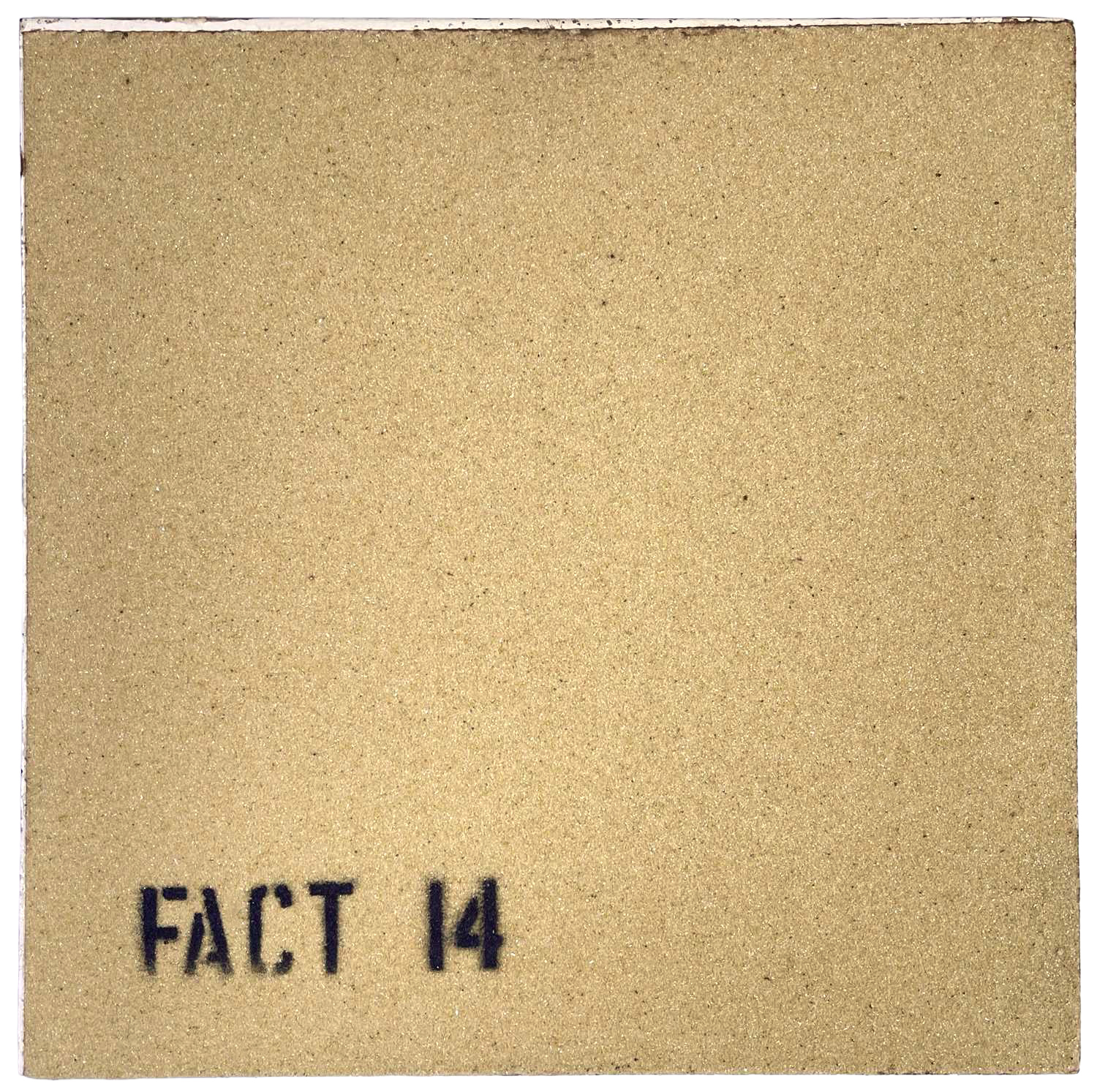
‘That’ being the wondrous ‘Sketch for Summer’. “After a while I got very angry and stormed out. I thought, ‘there’s no way that’s an album’.” Yet Wilson put it out. “I’d never heard the guitar sound that way!” marvels Reilly. “I always thought that was Martin’s album and the fact it was so different created a platform for me.”
Reilly is being characteristically self-effacing, for as future releases would reveal, the Durutti vision was all his. In those bleak, recessionary Thatcher days, Reilly’s prioritisation of the pastoral over the urban, of warmth over contemporary cold, of beauty over abrasion was a commentary through contrast. The clean guitar-sound and bossa nova feel of ‘Beginning’ and ‘Collette’ would soon suffuse mid-80s Style Council, Everything But The Girl and The Colourfield.
For Reilly, “empathy is the essence of humanity, if you lose that ability to empathise, it’s the deadening of your own soul.” Note how many of his tracks are named after someone (‘Katherine’, ‘Jacqueline’) or dedicated to them (‘For Belgian Friends’, ‘Detail for Paul’). “From the moment we’re born we’re never ever instigative, only ever reactive,” says Reilly. “It’s like Newton’s law of motion, if you’re not pushing against anything, you lose momentum.”
As in politics, so in music, and Wilson named 1981’s ‘LC’ after Italian leftists Lotta Continua (“continuous struggle”). Although the struggle was no longer against Hannett, Durutti’s accidental approach was starting to seem methodical – a statement in an increasingly slick, corporate culture. Reilly recorded himself on a TEAC tape machine in his mother’s council house late at night, “just to give Tony something to play on his car stereo”. Wilson was always both yuppie and radical, and he wanted an album. So, Reilly shyly approached linen-suited drumming legend, Bruce Mitchell.
“Even before I’d finished asking him, he’d already answered, ‘it would be an honour and a pleasure’.” Mitchell completing what Reilly tentatively started would become their partnership’s essence. “As soon as I started playing Bruce was on it,” Reilly explains. “Bruce’s skill is to give some sort of life to what I’ve done.” While bringing Durutti closer to a ‘band’ on tracks like ‘Messidor’, Mitchell eschewed rock dynamics and always tucked in behind Reilly.
“I’m good at blagging the gig along,” quips Mitchell, a self-proclaimed “chancer with a drum kit”. “It’s not hard – Vini’s so inspiring. There’s the sound of surprise in nearly every chord change.” For Reilly, he “didn’t know whether I was following him or he was following me – there’s this mutual symbiosis”, empathy in action.
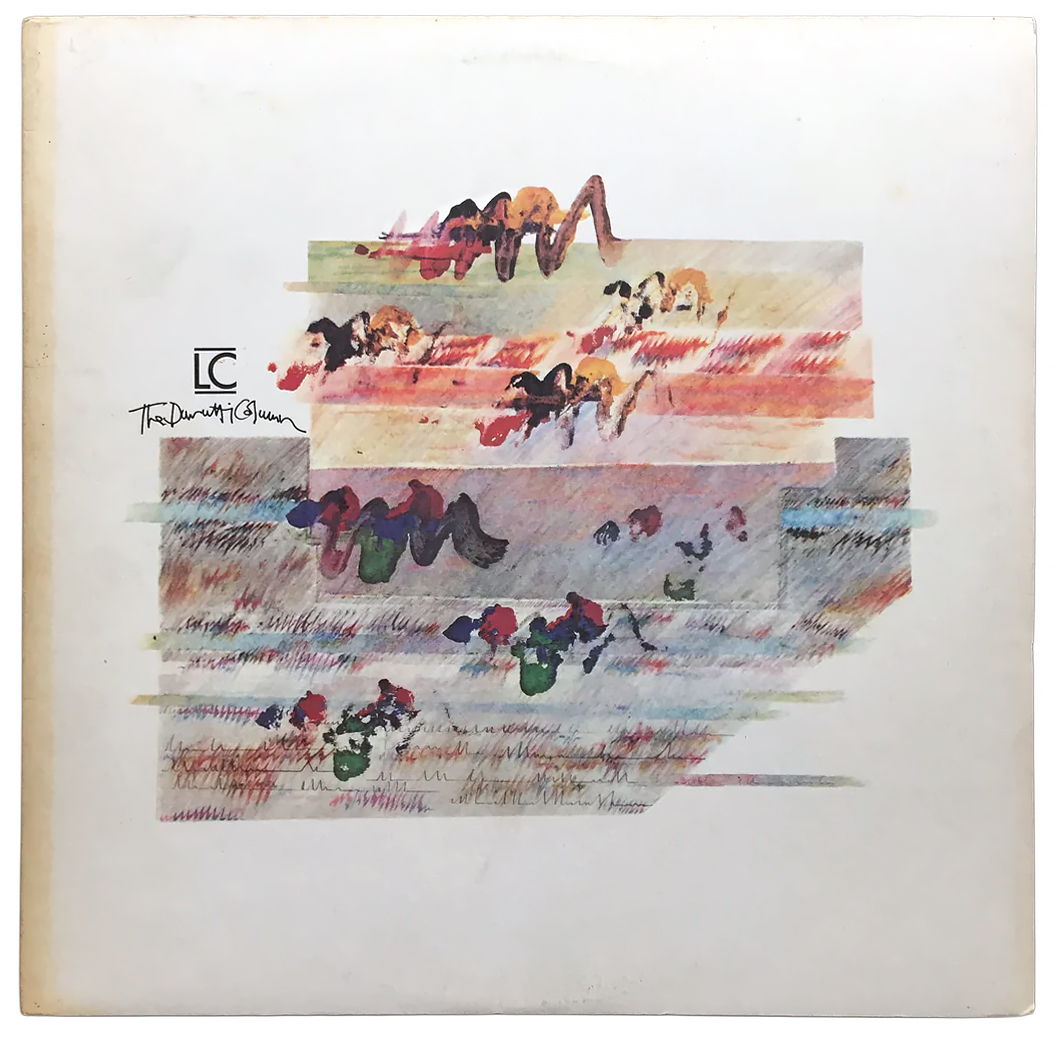
The other new element on ‘LC’ was Reilly’s vocals – expressionless, mixed low, like he’s disappearing as you listen. So ‘The Missing Boy’ could be about Reilly as much as subject Ian Curtis: “Some accident of beauty/Try to capture/As the light begins to fail/Shapes to compose/Shadows of frailty/The dream is better/Dissolves into softness.” This suggests the music’s increasing lushness, the lovely piano embellishments on ‘Missing Boy’ and ‘Sketch for Dawn II’ pointing the way forward.
As the likes of 4AD caught up, 1983’s ‘Another Setting’ expanded into indie chamber music: witness the shimmering electric piano, guitar and oboe trio ‘Prayer’ and the serene oboe-led ‘Second Family’. Despite the encroaching classicism, there was no ‘score’. “Sitting down and writing something is kind of silly,” says Reilly. “We go into a studio unrehearsed, nothing prepared and it organically just sort of happens. Because the studio is one of the best paintboxes you can have. You’re discovering by accident.”
Wilson wanted something more considered, however, and – pretension never a worry – requested 1984’s long-form “modern classical” ‘Without Mercy’ to “choreograph” Keats’ Romantic poem ‘La Belle Dame sans Merci’. Mitchell chuckles: “We would follow wherever Tony would lead, and if that was over the cliff, like lemmings we would go.”
Yet their attitude was as much pisstake as piety. Reilly requested pointers from producer Wilson and when told knights were approaching, he simply moved up a semitone. In his element, Wilson hired a host of musicians to create a mini orchestra. The Royal Northern College of Music trumpet student Tim Kellett’s audition was at The Haçienda – Wilson’s green Jag parked outside. “It was the start of the most magical chapter in my life,” remembers Kellett, who’d soon join Simply Red. “One of the best things I ever did. None of the music was logical, it was always an odd space, you really had to know it to keep abreast of it. Vin’s a genius: no rules, he just gets the thing in his hand and does it.” Despite Reilly’s disparagement, the first half of ‘Without Mercy’ is near perfect, both out of time (but pioneering the 2000s’ neo-classical boom of Max Richter, Hannah Peel and Hildur Guðnadóttir) and of it, prominently using the new Oberheim DMX drum machine, the sonic essence of the 80s.
Within weeks the expanded Durutti were playing ‘Mercy’ on ‘The Tube’ with another RNCM student, John Metcalfe on viola. Metcalfe recalls: “I’d get called in at short notice, I’d noodle over the top of the track, and they’d go, ‘great that’s it’. I’d reply, ‘But it’s out of tune, can I go again please?’”
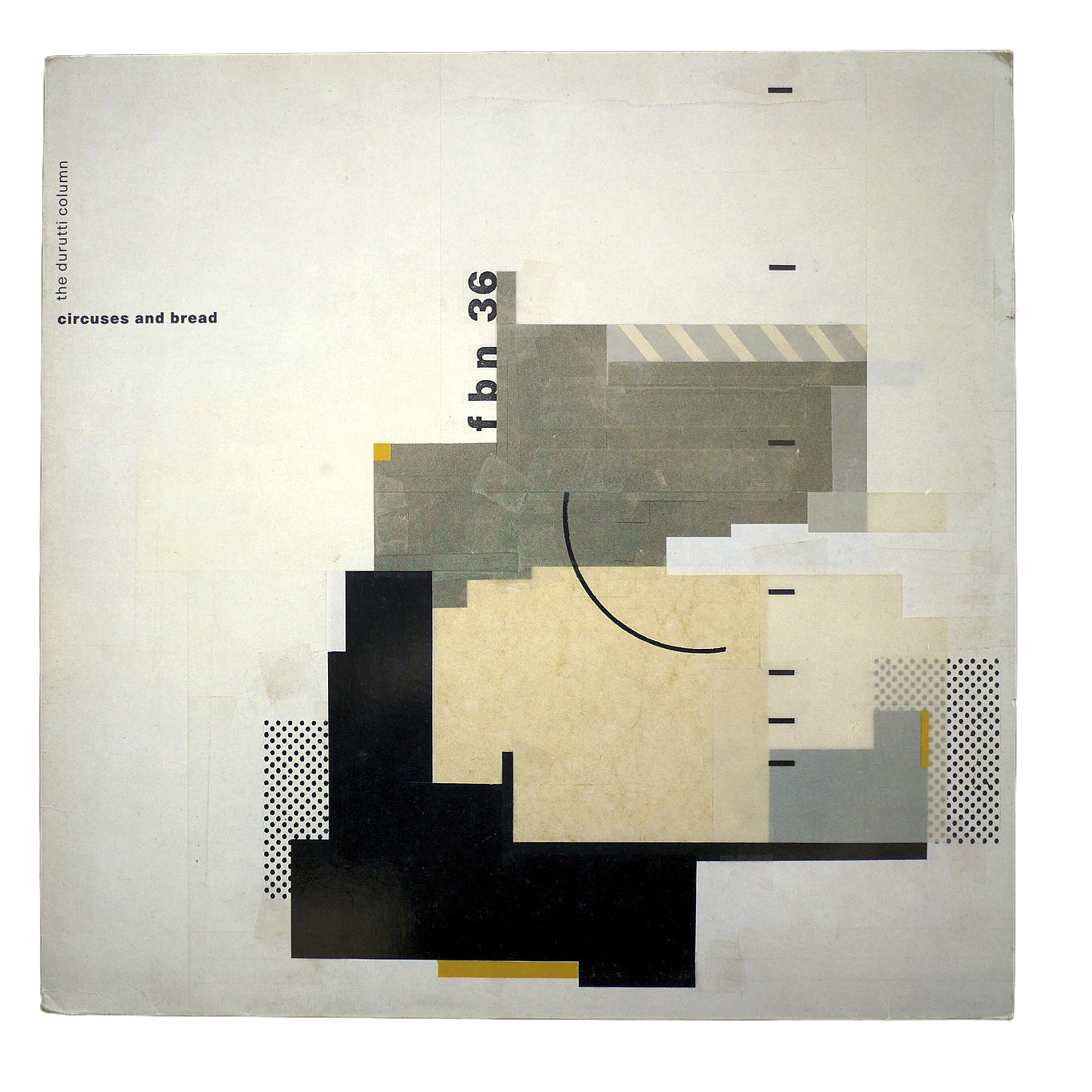
The gig engagements were growing. “Bruce would turn up at the college,” Metcalfe laughs, “peel off some folding and maybe a lump of dope in lieu.” 1986’s ‘Circuses and Bread’ reduced the lineup’s size and musical scope to short-form chamber music. ‘Street Fight’ is a quartet for Reilly’s piano, Metcalfe’s viola, Kellett’s trumpet and gunfire (either sampled or Mitchell creating gun shots via the drums or synth), while ‘Royal Infirmary’ is a luminous guitar and piano duet. Reilly’s playing was becoming increasingly chordal (e.g. ‘Hilary’), leaving the soloing to others, but pointing forwards, it’s newly aggressive on the synthy ‘Dance II’, as Mitchell and Kellet ricochet off the melody.
For 1987’s ‘The Guitar and Other Machines’, Wilson recruited The Smiths’ engineer Stephen Street, enabling Reilly to let rip with “very distorted, heavy guitar”, underlain by a muscular electronic chassis (tracking the times again, ‘Arpeggiator’ is named after a Yamaha sequencer).
“I’m a technophobe” says Reilly, “but Tony gave me these keyboards and said: ‘Go away and do something with these.’” If the results risked being more a reaction to technology than Durutti’s characteristic humanity, the video for ‘When the World’ (with Stanton Miranda) matched the electronics to the visceral physicality of dancers DV8 (literalising Wilson’s choreographing fantasy), while on ‘Bordeaux Sequence’ Metcalfe and Reilly meld empathetically. Reilly recalls: “You couldn’t tell the difference between us when he played pizzicato.”
For most musicians, backing Morrissey (on 1988’s ‘Viva Hate’) would be a career highlight, but Reilly immediately eclipsed it. Regrouping with Street, 1989’s ‘Vini Reilly’ was another response to new technology, the AKAI 900 sampler, but Reilly was keen not to “reduce human emotions to binary code”. The sample snippets enhance rather than structure the tracks, while the AKAI’s grainy sound paradoxically accentuates the human factor. Acoustic opener ‘Love No More’’s wordless blues and opera wails created a futuristic nostalgia, while Metcalfe’s viola, Reilly’s piano and sampled diva (Dame) Joan Sutherland out-haunt each other on ‘Opera 1’. Coming just before sampling rules toughened up following Gilbert O’Sullivan suing Biz Markie for copyright infringement, the musicians would never be so fast and loose with samples again. “We only got away with it because it didn’t sell very well” says Mitchell.
Nevertheless, the album contains the band’s second-best known track, ‘Otis’, Reilly’s playing at its most blissed-out, peppered with samples from Otis Redding’s ‘Pain in My Heart’) and Tracy Chapman’s ‘Behind the Wall’. “We’d been recording at great cost in London,” remembers Metcalfe, “and Vin was really ill, he’d fired two different studios and with the album virtually finished, he fired Steve Street! So, we recorded ‘Otis’ in a little dodgy
studio in Manchester in about two hours, with (A Certain Ratio’s) Andy Connell playing a two-bar sequence ‘til his hand fell off.” Heart-wrenching but euphoric, this afterthought is the album’s – and arguably Durutti’s – peak, technology amplifying rather than containing humanity, the tangible sound of empathy.
The impetus for 1990’s dance-inflected ‘Obey the Time’ was “Tony again” laughs Reilly: “‘Dance is happening now so do an album of that stuff’, and that’s as close as I could get.” Hardly a natural clubber – “I’ve never taken ecstasy, I was too anxious” – Reilly drove his Vespa to The Haçienda, chatted with music-loving footballer Pat Nevin and absorbed the club’s sounds. Yet Durutti had never obeyed the time and the results were weakest when they did (‘The Warmest Rain’s Italo piano-house), strongest when being “reactive” to the time, the yearning ‘Home’ and Mitchell-driven ‘Art and Freight’ finding common ground between Durutti’s characteristic manipulation of sound and 808 State’s or Orbital’s texturality over danceability.
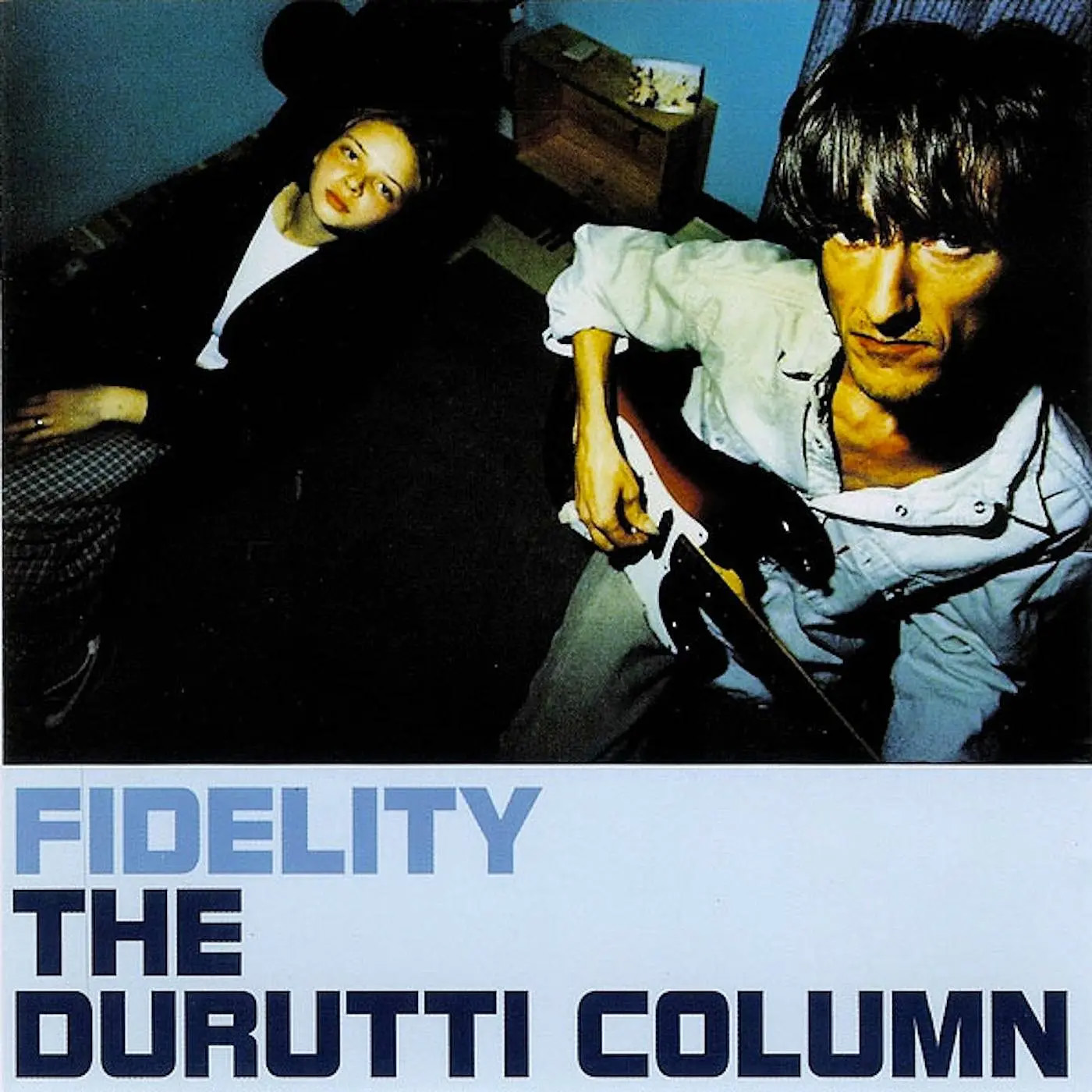
Where Durutti had once released albums annually and moved forwards each time, a four-year wait found ‘Sex and Death’ adding ‘Vini Reilly’ sampling to ‘The Guitar…’’s slickness, with both Street and Metcalfe returning. Aside from a Louis Armstrong-sampling tribute to Wilson, ‘Anthony’, the highlight went even further back into Factory’s past, with one-time Durutti sleeve-assembler Peter Hook driving ‘The Next Time’ alongside a sample of Reilly’s favourite flamenco singer Cameron de la Isla, often known as El Cameron. ‘Fidelity’ (1996) returned to dance and is best-known for their fourth-biggest track, the guitar-less ‘Future Perfect’ thanks to its incorporation in season two of ‘The Bear’. It’s aptly titled in looking forward both to electronic millennial pop and in featuring Eley Rudge’s first vocal for the band (Reilly calls her voice, “very English and pure” – like Durutti).
Having created the second album on Factory, it was apt that 1998’s ‘Time was Gigantic… When We Were Kids’ should be the last (on the post-Factory imprint, Factory Too). The first with production mainstay Keir Stewart (“He’s as daft as I am” says Reilly), ‘Time…’ is far more organic, all clean electric and pristine acoustic guitars, Mitchell’s tablas and marimbas (‘I B Yours’) and children’s choirs (the-piano sprinkled ‘For Rachel’). On ‘Sing to Me’ (sampled in Blood Orange’s 2025 ‘The Field’), Rudge’s warmly wistful vocal is contrasted by eldritch choral samples, Reilly’s bossa Spanish guitar rhythm cross-currented by Mitchell’s almost Burundi drums. “That sums us up, two of us playing different things but it really works,” chuckles Reilly. The melding of past and present to produce optimism – and hence the future – is also very Durutti: life-affirmingly so.
This momentum was immediately lost, however, along with Rudge, with Durutti’s 2000s discography on makeshift labels as scattershot as the music. Yet while mostly mired in drab Floydean guitar and pedestrian baggy beats, as Mitchell says, “each album contains something of serious merit”. ‘Spanish Lament’ from 2003’s ‘Someone Else’s Party’ sets Rebekah Del Rio’s ‘Llorando’ against old-school Durutti guitar and ‘Let Me Tell You Something’ on 2006’s ‘Keep Breathing’ draws new life from Lyn Collins’ ‘Think’. The Polly Roberts-sung ‘Whisper to the Wind’ gives spectral depth to 2007’s ‘Idiot Savants’, while the austerely beautiful ‘For Bruce’ from 2009’s ‘Love in the Time of Recession’ is dedicated to Mitchell and sounds it.
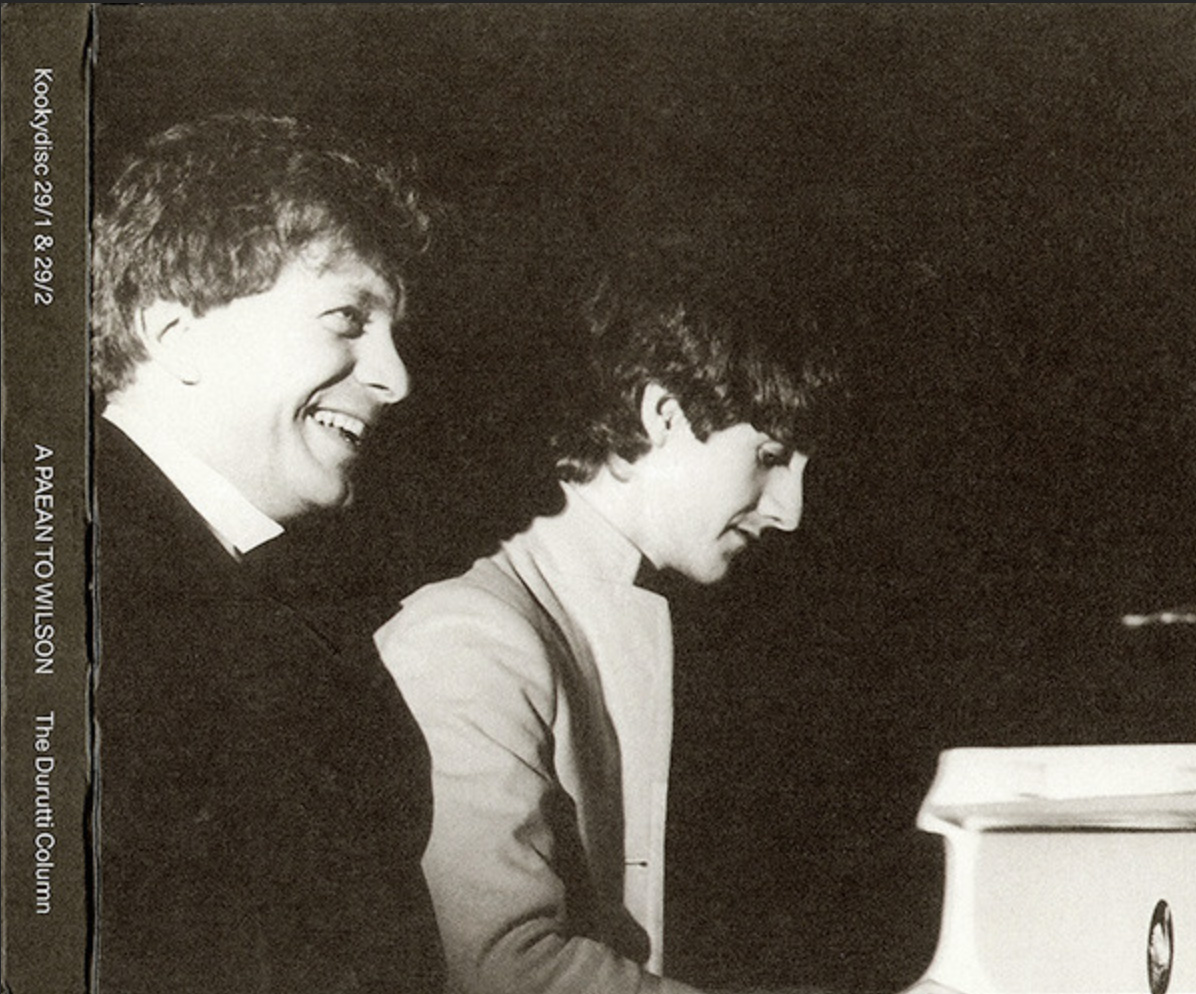
Aptly, 2010’s ‘Paean to Wilson’ returned to form, by returning, effectively, to Factory, complete with cohorts Kellett and Metcalfe. Reilly recalls: “Tony Wilson never put any pressure on me to promote or sell myself or do very long tours. The only thing he ever got from The Durutti Column was a rather standard car stereo.” The pair’s empathy is tangible from the opening sample of Wilson ribbing Reilly: “Is it an art form, or are you just a technician?” (Wilson’s voice futzed like Steve Reich’s ‘It’s Gonna Rain’), spinning out into the gorgeous ‘Chant’ and throughout an album that’s nostalgic without sounding dated.
Indeed, the flamenco-influenced ‘Quatro’, with Metcalfe, seems to stand outside time altogether. ‘How Unbelievable’, Wilson’s closing rant against New Labour widening the poverty gap, champions the human over the economic – just as Factory had. “Wilson didn’t care if it was selling,” says Keir Stewart, “he just knew it was important to sustain the music. And that Factory attitude – come to us, we’re not gonna come to you – fits in nicely with a contemporary hipster musician or punter. It means that streaming has worked in Vin’s favour.”
Since ‘Paean’, Durutti have been championed by or influenced musicians as diverse as MGMT, John Frusciante, Brian Eno, The xx, Frank Ocean, Yung Lean and Jonny Nash. Metcalfe, now a ‘modern classical’ composer himself, calls Durutti’s music “fabulously harmonically rich”. He enthuses: “Some of it is painfully beautiful and melancholic, quite nostalgic: it’s pensive, it’s meditative, but it’s also energised, euphoric, kind of celebratory.”
The music’s expression of the original Spanish Durruti Column’s utopianism – “we carry a new world in our hearts” they declared – is as apposite to our dystopian present as when Reilly first plugged in his guitar in Cargo Studio at the dawn of Thatcherism in 1979.
This article first appeared in Disco Pogo issue 9