.svg)
From DJ to producer, party host to curator and presenter to remixer, Colleen Murphy sports many hats. Having just released her latest ‘Balearic Breakfast’ compilation,
she tells Chal Ravens about her new musical supergroup, searching for the perfect copy of ‘Pet Sounds’ and the superfan who calls her the Captain. “It’s fun,” she says, “especially when the people on the dancefloor can experience something that is joyous…”
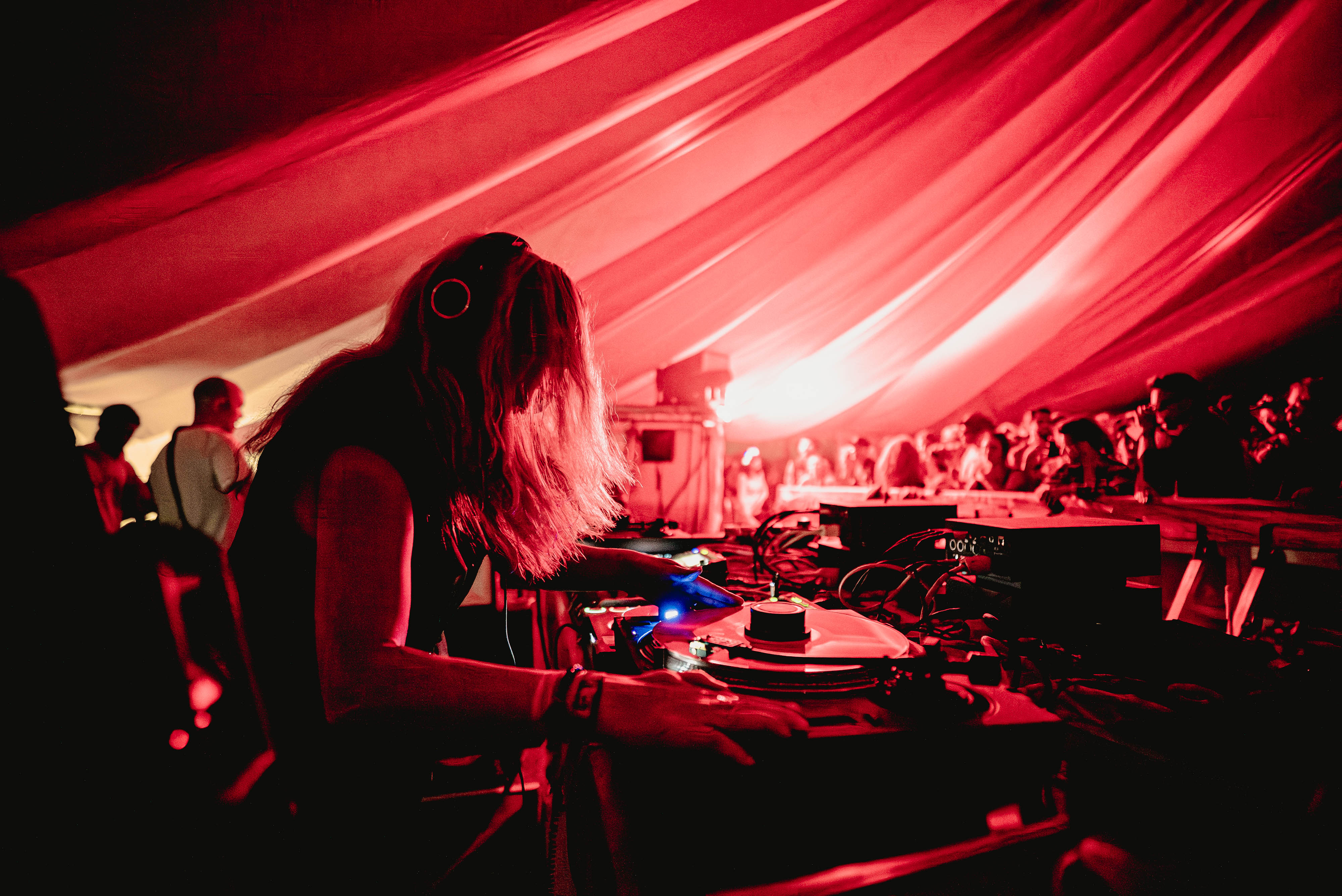
Colleen ‘Cosmo’ Murphy is a woman of exceptionally high standards. Her long career might be summed up as an endless quest for the best – the best records, the best pressings of those records, and the best sound systems to play them on. Her ears are attuned to things that most of ours aren’t. All of this sometimes produces strange results – such as the seven copies of ‘Pet Sounds’ currently housed in her record room, each procured in her search for the perfect pressing. Because even the smallest imperfection “just sounds so awful when it’s amplified”, she says, shuddering at the thought.
How to explain the many different hats worn by Murphy, an American who has lived in east London for about 25 years. She offers “musical educator and curator” as her job title – which isn’t wrong but doesn’t quite capture the enterprising nature of her CV, which spans more than 35 years of radio, DJing, producing, remixing, party-hosting, writing and – most recently – starting a band with a few friends from Hot Chip and LCD Soundsystem – as you do.
“I was very embarrassed about it for a long time, if I’m really honest – all the different things I’ve done and how they didn’t fit,” she explains, sitting between two ceiling-height shelves of records in her canalside home. “People still say to me, ‘I didn’t know you knew David!’ I like that, actually, because I do a lot of things.”
David Mancuso comes up a lot. He’s in the room with us now, in fact, looking dapper yet ethereal in a framed portrait on the wall. Many first heard of Murphy via the buzz around Lucky Cloud, a London incarnation of the party first thrown by the American in his New York loft in 1970. Founded with his approval and oversight in 2003, the Sunday gatherings replicated the Loft’s pin-sharp sound and intimate atmosphere, opening up a portal into the pre-history of clubbing. (It’s a party, not a club, as acolytes will tell you.) Since her mentor died in 2016, Murphy’s mission has been to keep that flame burning.
Her attachment to the Loft’s strict idealism, along with a passion for finding great records and playing them to other people, has often put her in the strange position of being both behind the times and ahead of the crowd. When she started playing with Mancuso in the 90s, the Loft was attended by a select few heads – many assumed it had shut down years before. Later, along with a revival of interest in the Loft, came the vinyl revival of the 2010s, the boom in archival reissues and the vogue for listening bars: Murphy was ready and waiting for all of it.
Now 57, she’s more popular and busier than ever, with a new cohort of Loft devotees flocking to the quarterly party, seeking the antidote to commercial clubs, over-hyped DJs and cruddy sound systems. High standards are maintained at home, too. Her husband, Adam Dewhurst – a music manager and the founder and selector of Trojan Sound System – makes a virtuosic cup of coffee as Murphy settles into conversation in her record room. It’s here, surrounded by a mere 10,000 records, that she hosts Balearic Breakfast, a show that started on Worldwide FM during the pandemic and now continues weekly on Mixcloud. She chose the name for its musical vagueness. “Balearic, to me, is just music that takes you out of yourself. It could be a euphoric dance track, it could be spiritual jazz, it could be something that relates to the Balearic canon in terms of what DJs like Alfredo and José Padilla played, how that was reinterpreted in the UK… it’s very open-ended.”

It’s a testament to her authority as a record digger that Balearic Breakfast has just spawned its fourth compilation, recently released via Heavenly. The double vinyl combines newer songs previously only available digitally with a handful of rarer cuts, including 70s spiritual jazz from British outfit Paz, sun-kissed psychedelia from Paqua, and the trippy 12-inch mix of Gloria-Ann Taylor’s soul epic ‘Love Is a Hurtin’ Thing’ – all Loft-adjacent tracks that are either expensive or hard to find on vinyl.
Not many radio shows can boast a spin-off compilation series, but not many have such a dedicated listenership of serious heads, either – they even sit in for Murphy when she’s travelling, submitting mixes to fill the scheduling gap. “Most of these listeners do not have a career in music and they know their stuff. Some of them have specialties,” she explains. “I’ve really learned so much from them.” One superfan runs a blog that archives all of Murphy’s episodes and media appearances, referring to her simply as “the Captain”. Another flew from New Zealand to Australia to see her DJ, informing her that the show helped him recover after a bad accident. “I’ve cried a few times,” she nods. “I look at it as a family affair.” In person, Murphy seems like an open book: quick to laugh, emotionally switched-on and – how to put this? – surprisingly well-adjusted for someone who owns seven copies of ‘Pet Sounds’. (She also has fantastic hair – again, playing against type.)
For much of her career, she has been the only woman in the room – on college radio, on the floor of NYC record shop Dance Tracks and in nightclub green rooms through the 90s. She reveals that her DJ bookings dried up when she had her daughter, Ariana, in 2004: “My agent dropped me. No one else would take me on.” Later, she asked “a very popular woman DJ” if her agency might consider signing her. “She said: ‘No, we already have a woman.’ And it was a woman who said it!” Even well into the 00s, it was rare to see more than one woman on a line-up: “We were pitted against each other – because if one person got on, you knew you weren’t gonna get the gig.”
But whether it was unconscious bias or outright misogyny, the worst of the sexism she’s experienced has come from the audiophile world – the “keyboard warriors” who can’t accept that she knows how to deal with hi-fi sound. Murphy sounds more amused than aggrieved. “I don’t mind proving myself, I’m fine with it. I’ve had to do it my whole life.” As a child in smalltown Massachusetts, she was learning electric organ while other girls played acoustic instruments. Her father forced her to take woodworking, and taught her how to drive, scuba dive and sail. “He said: ‘I don’t want you to be a helpless female.’ I know what it sounds like now! But he said it in the right way,” she attests. “He got me my first toolbox, so when I was living by myself I could do all these things.”
Learning so many practical skills meant that she never felt out of place in “all-male environments, which I’ve been in a lot, and I think David saw that in me. I already had this audio background – he actually didn’t even know that, honestly. But I understood basic setups and how sound works”.
Over time, Mancuso taught her almost everything he knew about the Loft sound system – specialist knowledge that remained largely theoretical until the day in 2009 when her usual engineer broke his leg. Panicked, she consulted Mancuso, who calmly told her it was time to put what she’d learned into practice. “He used the word zen. He said it’s like walking across rice paper,” she laughs. Afterwards, she realised how much she loved the technical challenge.

Murphy isn’t usually described as a musician, but her discography includes stacks of remixes (Róisín Murphy, Horace Andy, Chaka Khan, The 2 Bears), an album with Captain Beefheart guitarist Gary Lucas on her Bitches Brew label and even silky deep house as Ch’i for Tommy Musto’s Sub-Urban Records. Earlier this year she got back on keys to form a new band with Hot Chip’s Joe Goddard. Electrick Eden includes his bandmates Alexis Taylor and Al Doyle (also a member of LCD Soundsystem since 2007) and Lou Hayter, the DJ-songwriter-producer who first found fame with New Young Pony Club. The band already had a few days of studio time booked in when an email arrived from Robert Smith: would she like to remix a song from The Cure’s 2024 album, ‘Songs of a Lost World’? Murphy was on a writing holiday at the time, attempting to wrangle her life story into a forthcoming “musical memoir”.
“I honestly couldn’t believe it,” she says, still agog. “I’d been going through some personal and professional troubles with some individuals over the last few years and this request just superseded all of it. Anytime I was feeling down I’d say to myself, Robert Smith asked me to remix The Cure!” Electrick Eden’s first studio session resulted in a twinkling motorik take on ‘And Nothing is Forever’ (released this summer on ‘Mixes of a Lost World’) as well as their first original track: “A long, epic disco odyssey – which is a little bit unfashionable now, because the way music is going everyone wants their TikTok-length remixes.”
Amid the rising panic about our fried attention spans, Murphy’s obsession with distraction-free listening seems almost prophetic. Her hi-fi playback event Classic Album Sundays was an instant hit when it launched in 2010 and now seems like a precursor of the trend for Japanese-style listening bars and audiophile experiences, as heard at Brilliant Corners, the recently opened Space Talk (both in east London) and at artist and audiophile Devon Turnbull’s Listening Room. “They’re not like the ones in Japan, though,” she says, decisively. “I think Classic Album Sundays has been the closest, because it is about listening and not talking.” The prospect of strictly enforced no-phone time is part of the appeal, surely? It’s always a very IRL experience, she confirms. “People would cry, they’d laugh, their blood pressure would go down. It changes you physically.”
Which brings us right back to the Loft, a dancefloor where even the most familiar records sound different – broader, more vivid, packed with details you’d never noticed before. The party’s Sunday crowd is relaxed but focused, subtly psychedelic, munching on vegetarian food and clapping between the songs – which aren’t mixed with EQ and effects, but simply played one after another. It’s the polar opposite of “clubbing”. When Mancuso first invited Murphy to play at the Loft, she impressed him not only with her selections (starting with Arthur Russell) but her understanding of the physical properties of sound.
After moving to London in 1999, she began to dig deeper into hi-fi, experimenting with valve amplifiers and preamps at home. “I would listen to things in my record collection and think, ‘Gosh, that 90s house record is pressed too hot.’ I would really start listening to the sonics of the recording.” Classic Album Sundays was a way of letting other people enjoy the finely tuned system she and Dewhurst had built. Years on, they’re working with audio manufacturer dCS to develop a portable DAC (digital-to-analogue converter) to make switching between vinyl and USB sonically seamless, as tested on their Love Dancin’ stage at We Out Here festival this summer.

“When I play with my high-end cartridges the sound is so warm and rich, and then you go to a CDJ, a digital signal, and it sounds a bit brash – almost too bright and crunchy,” she winces. “Listening back to the Love Dancin’ sets, it’s much smoother – you can’t really tell if I’m playing vinyl or digital.”
Not that everything needs to be hi-fi to be heard. As a teenager listening to punk, “it didn’t matter if the Dead Kennedys had a bit of distortion”, she asserts. But something mysterious happens on the dancefloor when the balance of frequencies is off. “Actually, [producer] Joe Boyd said this: ‘A glass can’t be more than full.’ If you turn up the frequency of something, everything else has to be reduced,” she explains. The Loft’s sound system can make great mixes come to life but will also expose any flaws. “I remember one time David and I were playing – ‘musically hosting’ – back-to-back here in London and I wanted to play ‘Peace Pipe’ by BT Express, the album pressing. I was putting it on and he was like, ‘That’s not a very good pressing.’ Yeah, but it’s a great song, I’m just gonna play it anyways. And I put it on and you just saw the energy in the room go down, and no one knows why. I know it’s not the song, because since then I got a 12-inch and I play it all the time and it brings everyone up! But the pressing on the album is not good.”
Such are the exacting standards of the Loft’s innermost circle. But as his followers have found out, their shared passion for executing Mancuso’s vision has made it harder, not easier, to maintain a harmonious balance. In the nine years since his death, a legal wrangle over control of the Loft has left the New York party in disarray, with Lucky Cloud splitting into two factions. In 2023, Murphy set up again as the London Loft, while her former collaborators – including Tim Lawrence, author of the early disco history ‘Love Saves the Day’ – continue with their own parties, All Our Friends and Beauty and the Beat. It’s been a difficult divorce and Murphy treads with care as she clarifies her position.
Mancuso, she maintains, “wanted me to manage his legacy upon his demise, because I worked with him internationally for decades”. She brings up an old email to corroborate, reading out her mentor’s words: “‘You and I are the only two people I know, in all the years, that can cover as many bases there are for the parties and to try faithfully and spiritually to get it right.’ So that’s a really high bar and I don’t take that role lightly.” In her mind, the Loft is about much more than just the quality of the record pressings. “When I went as a young woman, in my early 20s, I could go alone and not get harassed,” she explains. “I could dance with men and not feel like they were trying to pick me up. I felt protected. And I felt that as a gay man, [Mancuso] was able to mitigate a boys’ club, macho, bro attitude.”
Her mentor’s wishes are not so easily enforced now that he’s gone, however. As Resident Advisor reported in 2024, the “hostile takeover” of the NYC Loft came about because its founder didn’t leave a will. The resulting schism within Mancuso’s following can seem almost religious – a framing that Murphy rejects (“David was an extraordinary person, he wasn’t a god”), while also maintaining that she is, in effect, the chosen one. “David had very strong opinions on who he felt should, and who he felt shouldn’t, musically represent the Loft,” she states. “So in order to honour David’s directives, the London Loft features the musical hosts that David chose, which is myself along with Guillaume Chottin and Simon Halpin, who support me as musical hosts.”
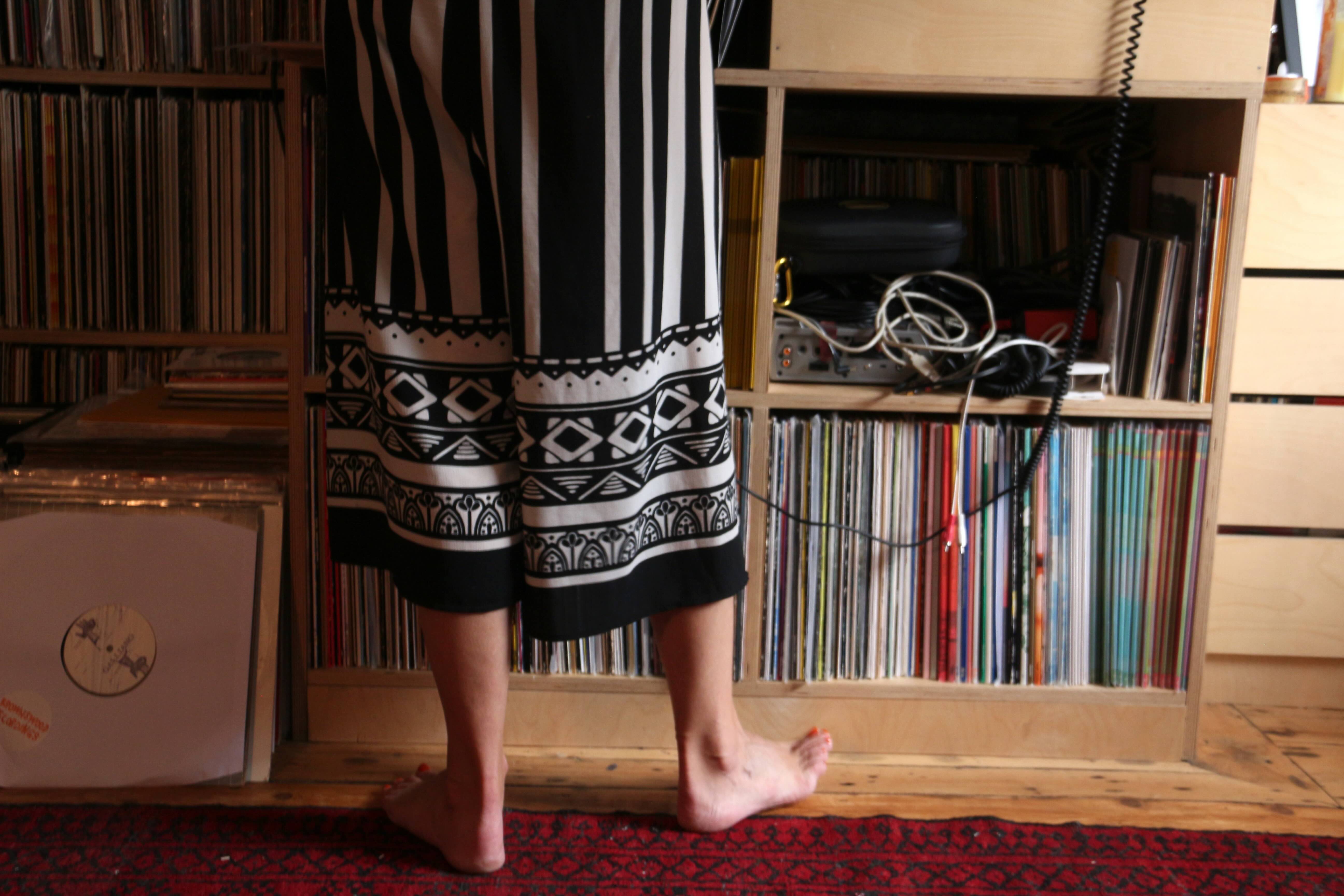
For now there seems to be enough room in London for multiple Loft-inspired parties – time will tell whose congregation remains the most passionate. After spending the past two years in Camden, the London Loft has just moved to a new spot in the gentrifying wastes of Hackney Wick. As always, Murphy avoids gig listings and online promotion – those interested in coming can simply join the mailing list (loftparty.org).
The party is better than ever, she thinks, with more diversity in both the team hosting the parties and its attendees. “We have consciously worked to foster a safe space. There’s more of a Queer element, which is great, as David was a gay man,” she reminds us. “And, you know, it’s fun,” she adds, reminding herself. “It is fun working with people who are really passionate about it. It’s fun, especially when the people on the dancefloor can experience something that is joyous, but also sonically beautiful – and as close as you can get to the artist’s original intention in that mixing studio.”
This article first appeared in issue eight of Disco Pogo.