.svg)
How did Speedy J, one of electronic music’s earliest innovators, get over not making an album for nearly 25 years? He went for a walk…
It’s impossible to overestimate the seismic effect that the series of albums Warp released under the Artificial Intelligence banner between 1992 and 1994 had on the world of electronic music.
Bookended by two compilations, the series brought us the debut albums from Autechre and Richie Hawtin, two acts who would emerge as some of the scene’s biggest names. Beyond that, the series – which also included albums from Aphex Twin (under his Polygon Window alias) Black Dog Productions and B12 – completely redefined the way dance music would be consumed, shifting it away from the ephemeral, here today/gone tomorrow nature of 12-inch culture and claiming the more immersive nature of the album as very much its territory.
Speedy J, the acclaimed Dutch artist and early stalwart of the electronic dance music crossover, was another to spring to fame as part of the Artificial Intelligence camp, his debut album, 1993’s ‘Ginger’, the equal of anything his arguably better-known peers released.
“Back then,” remembers Speedy J, or Jochem Paap to use the Rotterdam producer’s real name, of the days before Artificial Intelligence, “the music came out on 12-inch and the artists were pretty much these anonymous people in a home studio making this music. The music became famous but the people behind it never did. There was this dismissive attitude that ‘this is not music; this is not worth an album’. Then Warp came along and basically raised the profile of the music to be as valid as every other type of music. Before that it was completely dismissed by every type of mainstream media, even radio.”
Paap says it’s genuinely amazing to see how far the artists from the series have travelled since then, not least Aphex Twin, whose brief overtaking of Taylor Swift in monthly YouTube listening figures is massive news when we speak. Back then, he says, no-one expected to make a career out of what was essentially messing about on equipment.
Warp’s other great move, he believes, was in establishing a form of dance music that was perfect for home listening, the kind of listening people turned to when they returned home from a night of banging techno or outlandish house anthems.
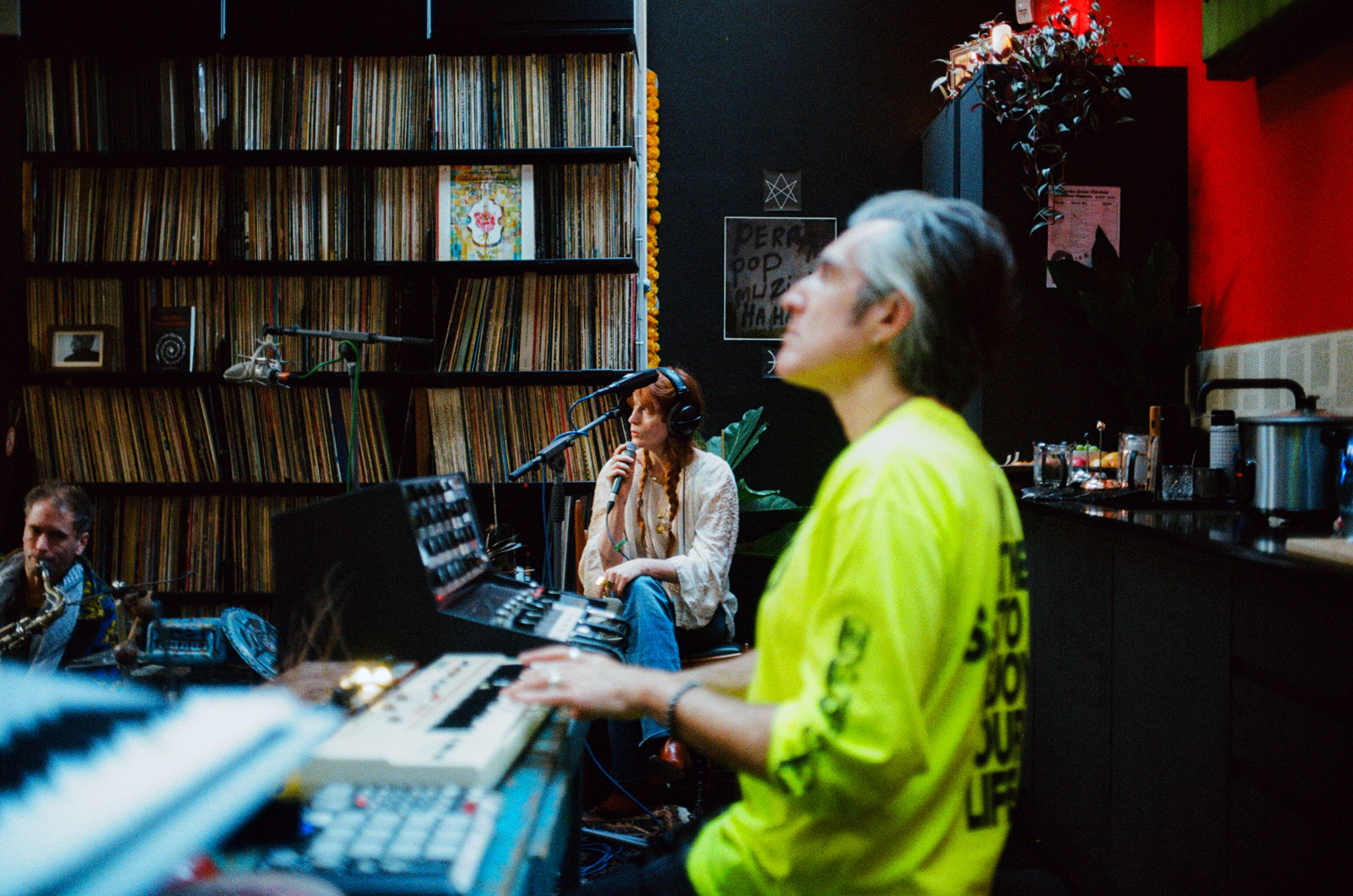
The album format, and the way people consume it, has been very much on his mind recently, as he prepares to release his first solo longplayer, the 20-track ‘Walkman’, since NovaMute released ‘Loudboxer’ back in 2002. Speaking to us from his studio – a former nuclear bunker in the centre of Rotterdam, where reinforced concrete walls ensure he can make “crazy levels” of noise without disturbing anyone – he explains why it’s taken him nearly 25 years to return to the format.
“I did a lot of albums and at a certain point I didn’t know what to add to it as a solo artist,” he says. “I had some doubts about the format as well, where things were going. The way people were listening to things was changing. You could listen to any recording from anywhere, every recording made at any moment in time. So, people started – including myself – to consume stuff in a different way, and I thought at that time, capturing a whole body of work at one time on one format and presenting it as an album was probably less relevant.”
A change of tack was required. He reverted to producing singles, buying himself a boutique hand lathe on which he could produce limited runs of, effectively, handmade vinyl for a limited number of subscribers under the STOOR banner. He describes it as a “focused way of making things”, a fixed format to work towards.

The process of cutting vinyl by hand is one that fascinates him. “I didn’t know much about it when I started, but if you really get it down, if you really get all the technique and physics behind it well worked out, then basically you can make records that sound as good as or even better than the ones you get from factories. I really like to have the option to make choices all the way along to the end of the process. So normally you have your recording and you send it off to the person who’s going to cut it for you. And sometimes you can be there to attend the cut. But it’s nice to have decisions right to the end and look after the sound the way you want.”
By his own estimation he’s made thousands, maybe tens of thousands. “But for every one that came out nicely,” he admits, “I’ve probably thrown another away. They make good coasters.”
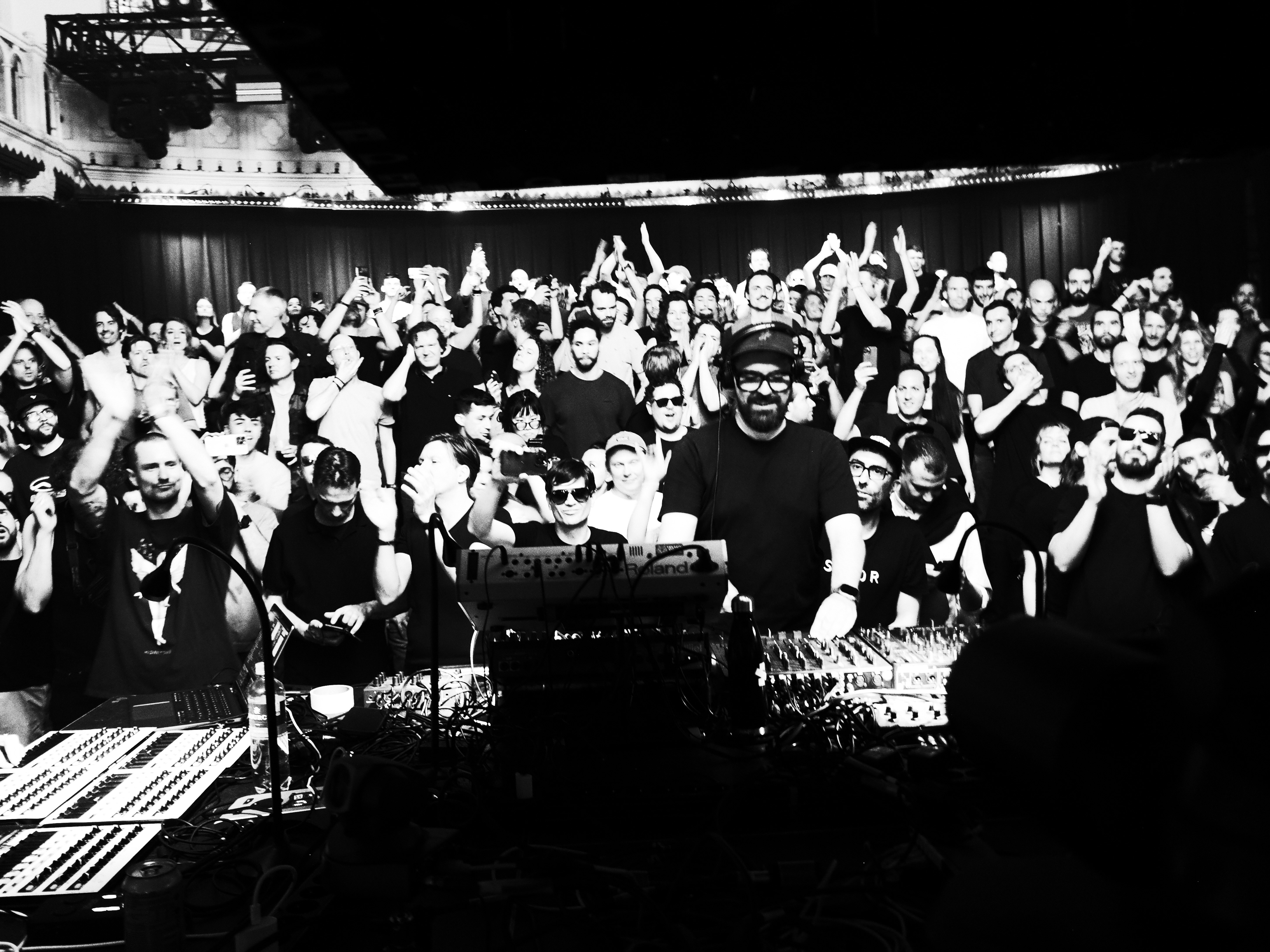
There have been collaborations aplenty in the interim too. He’s worked with Chris Liebing, Adam Beyer, Literon, George Issakidis and Surgeon, with whom he made the ‘Two Hours or Something’ album as Multiples. STOOR live, meanwhile, is an eight-hour improvised live jam, which made its debut at the Paradiso with four guests in 2021. It soon became an unmissable highlight of the Amsterdam Dance Event. Luke Slater, Donato Dozzy, Regis, Function, Surgeon and Rødhåd have all taken part and the live extravaganza will visit Turin and Barcelona this year, as well as returning to ADE.
What finally led to him returning to the album format was another shift in listening habits. “I can feel it in myself, but I also notice it with other people. I try to find ways to enjoy longer format things again. You’re bombarded with so much stuff from everywhere, you really have to restrict yourself not to get confused and break this endless stream of stuff being fired at you. I see a lot of people, including myself, looking for longform listening or content. I think the album has become more relevant than ever, because it is a chance to get away from the endless fragmented stream of stuff and just focus on one thing.”
While he’s obviously aware of the title’s similarity to a certain piece of 1980s technology made by Sony, that wasn’t his intention. It was more to do with the fact that moments of transit seem to provide those rare opportunities to enjoy music without distraction.
“Everybody goes from A to B sometime, whether you’re walking the dog or out on a run or sitting in a car or the train or whatever. That’s probably the only space people have these days to enjoy something uninterrupted. ‘Walkman’ refers to me. I am the ‘Walkman’. I go for a walk and I listen to things. During the process of making the album, the walks I took, listening to the stuff I had recorded, that’s the time I made my decisions. In the studio I just made the work, but listening to and reviewing what I’d made was all during walks. The whole ritual of going from A to B and listening to it has been part of making the album, so that’s what made me decide to call the album ‘Walkman’.”
It may be sequenced to fit onto two sides of a C90 cassette tape, but any resemblance to the usual electronic album ends there. Of its 20 very different tracks – from the distorted glitchfunk of ‘Chronoroute Fank’ to the mellow head-nodder ‘CR78 Mesh’ – only three are more than five minutes long, with many clocking in closer to three minutes.
“A lot of the tracks on there don’t really need to be five or ten minutes long,” he reckons. “Three or four is enough to contribute to the overall thing, and I like the fast pace of the changes. It’s a bit like walking, exploring a city – you turn a corner and suddenly everything is different. I like that energy.”
By returning to the original source everything is different again for Speedy J.
This article first appeared in Disco Pogo issue 9