.svg)
Twenty years ago, the mysterious Burial left an indelible mark on music with two ghostly albums – one a masterpiece – that lingered in the shadows, romanticising drizzly zone 3 London late at night. Paul Mardles lauds the elusive raver who was born too late to rave and hears from some of his associates and fans…
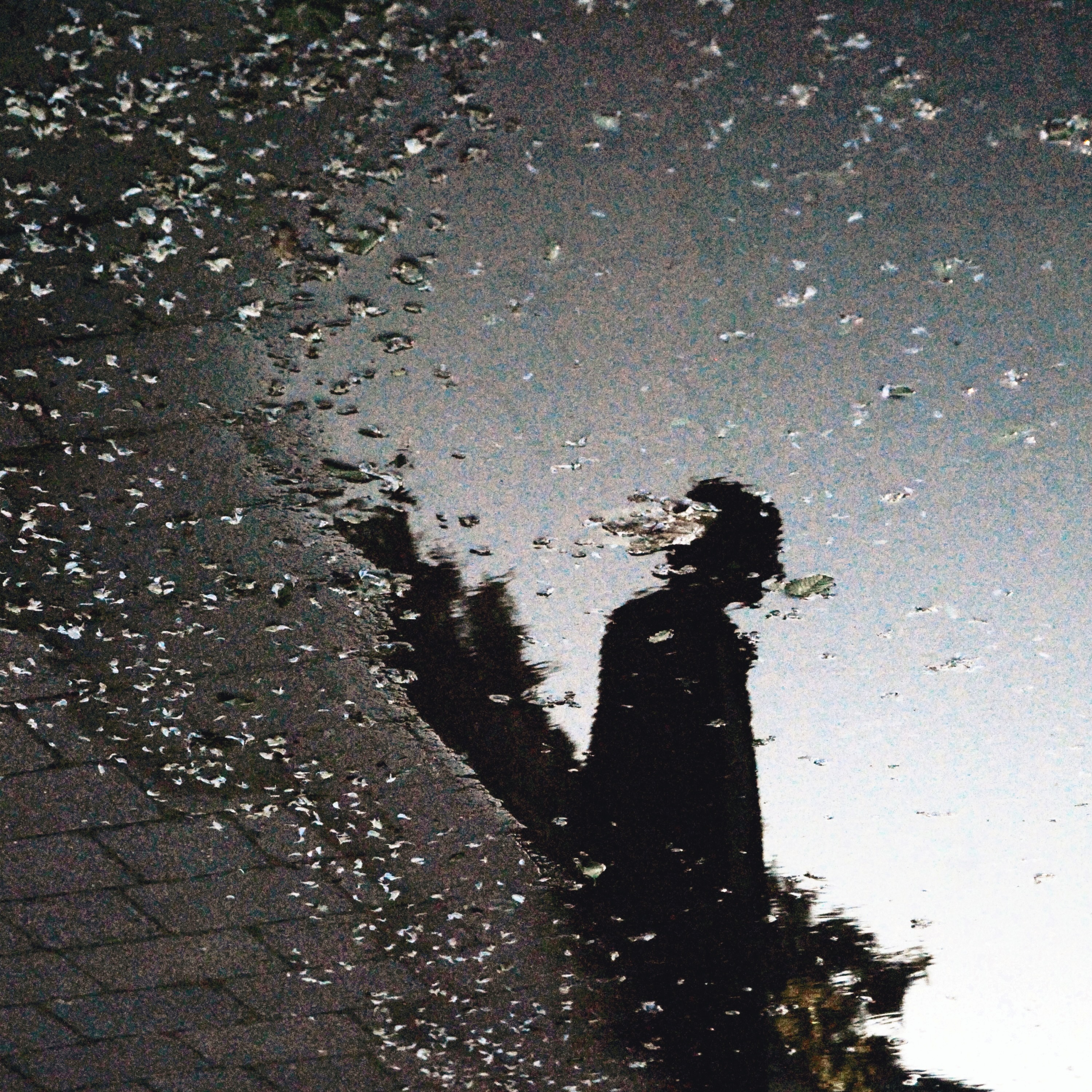
As befits an album swathed in mystery, it begins with a track called ‘Untitled 1’. There are hisses, crackles, etched in the same shade of grey, and a disquieting line of dialogue from the 2003 film ‘21 Grams’ (“God even knows when a single hair moves on your head”). Then, as fireworks exploding somewhere in the distance fade, the song peters out, so quiet it’s barely there. This is Burial’s slightest tune on his eponymous debut yet somehow, in the space of 35 seconds – 35 seconds in which next to nothing happens – “dance” music is irrevocably rewired.
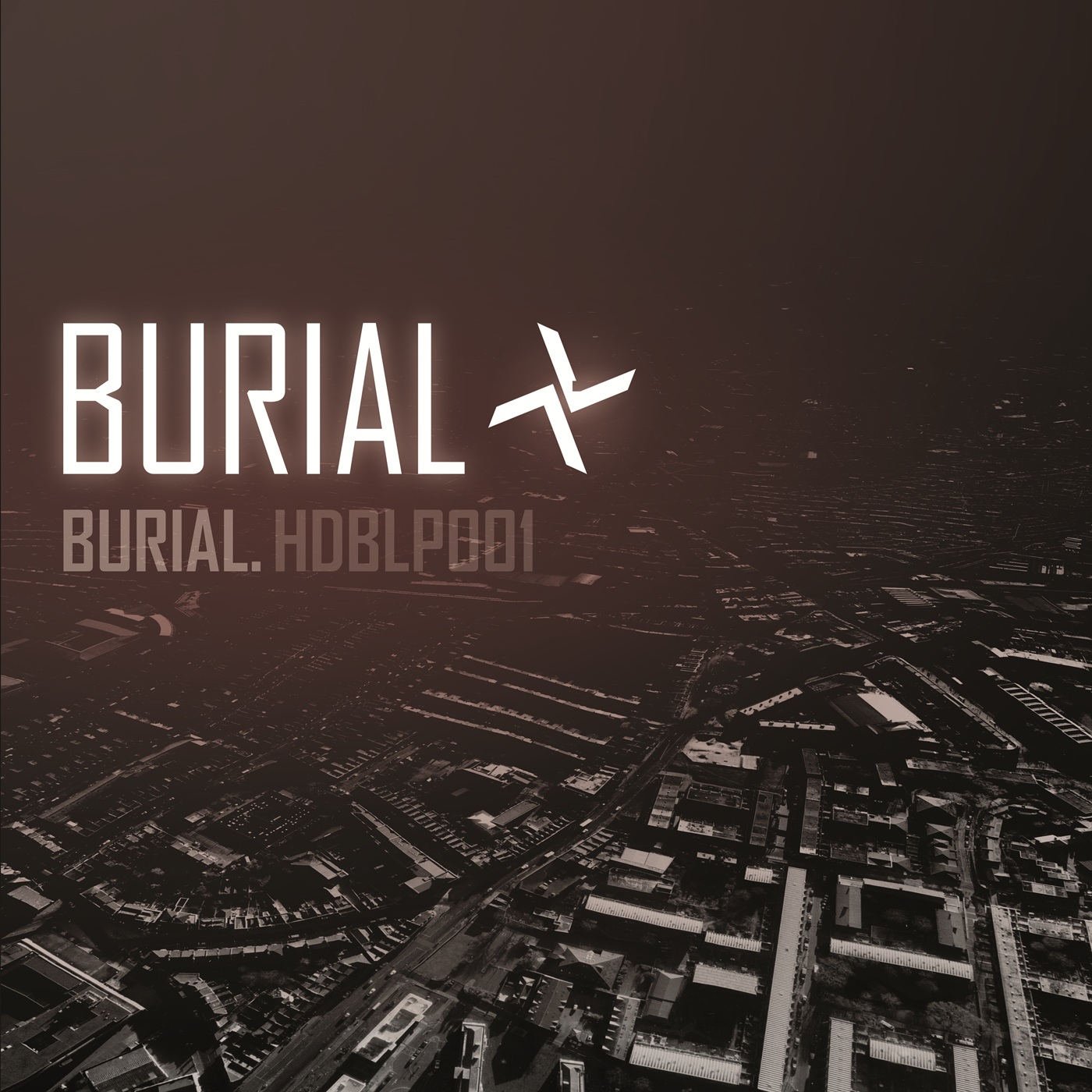
No one sounded like Burial in 2006. Twenty years later, that is still the case. Others have tried to replicate his sensibility, but Burial’s ability to conjure up dread, to capture the sensation of walking through a city in the early hours, half asleep, is unparalleled. Frequently he brings to mind spring-heeled 90s garage stripped of the swagger, the cocaine and the bling and reimagined by producer Martin Hannett, whose ominous contributions to Joy Division’s records were anchored in Manchester’s industrial past.
In common with Hannett, Burial’s methods are informed by dub, chiefly its regard for the space between the notes where the magic happens almost imperceptibly. He employs muffled howls, whispers, rainfall, sighs. Everything is cut up. The drums rarely stop. At times it’s like being on a ghost train at the fair when shrieks and moans leap out at you and catch you unawares, but Burial’s singular, unearthly soundscape goes hand in hand with a love of zone 3 London life.
His territory is the chicken shops and garage forecourts – the Viennese coffee houses of the post-club crowd – where people seek connection and swap rambling anecdotes. The contrast between this humdrum backdrop and the music’s beauty is most apparent on the cinematic ‘Night Bus’, wherein strings and faint, filtered cries are paired with the sound of the skies opening. Similarly, on ‘In McDonalds’ from ‘Untrue’ – Burial’s second LP, and arguably the greatest album of the 21st century – a gentle, sombre synth wash paves the way for an aching vocal snippet, before the song slowly draws to a close with the interjection of a lovestruck man (“You look different”). It’s incredible.
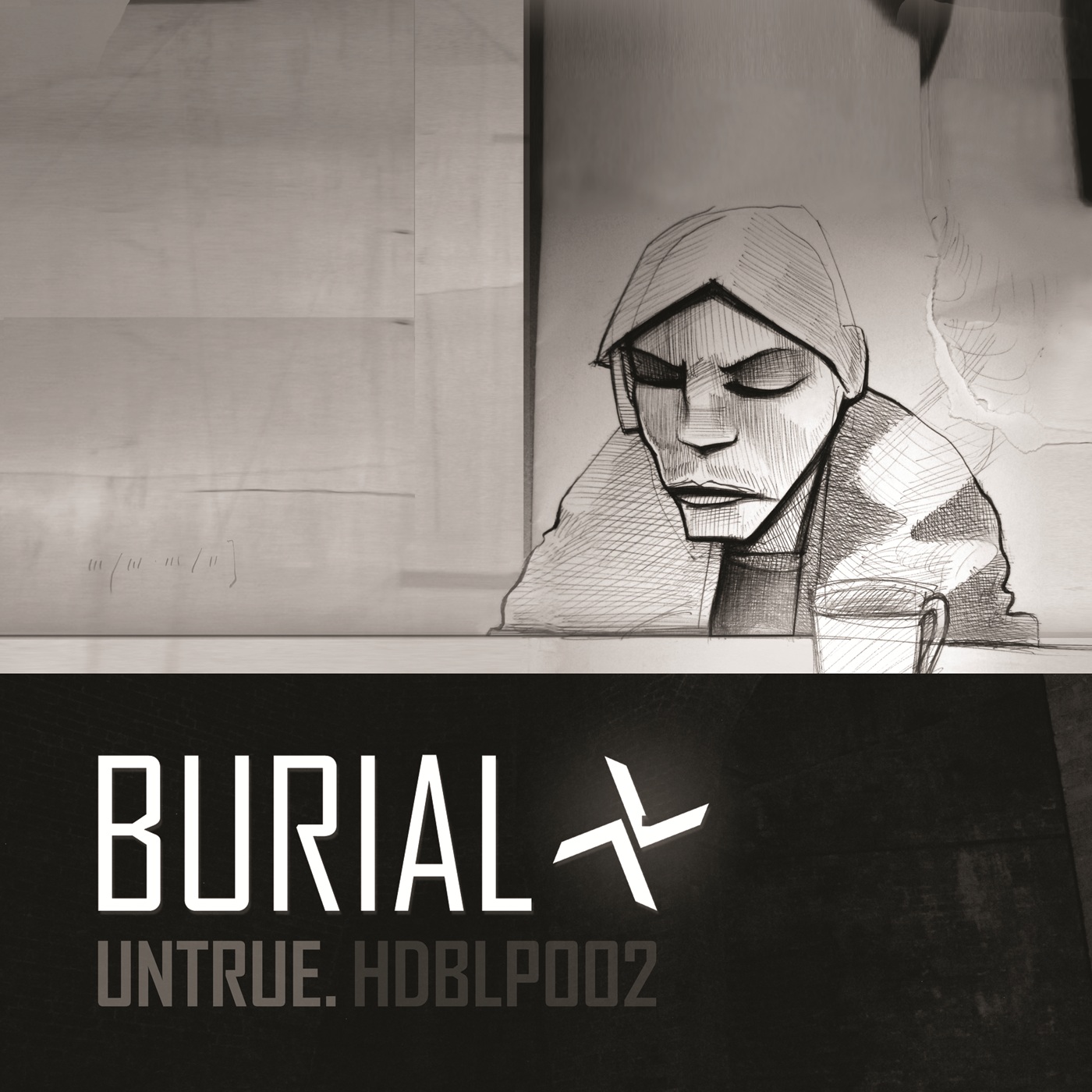
And it’s not just about the extraordinary music. Look at ‘Untrue’’s sleeve: the back is a photograph by Georgina Cook featuring an austere building in south London, while Burial’s striking sketch of a troubled-looking guy, a mug of tea beside him, occupies the front. “I’ve been drawing that same one since I was little,” he once said. The result is that, much like Joy Division’s ‘Unknown Pleasures’, the cryptic artwork hints at the contents therein. It’s all about the details, whether sonic or visual.

But until February 2008, when Burial was unmasked in The Independent, three months after ‘Untrue’ was released to rave reviews (“Like beautiful secrets being whispered to a listener”, enthused Pitchfork; “a brilliant, otherworldly triumph”, concluded The Observer), his identity was a secret. In August of that year, on his MySpace page, the producer confirmed the paper’s declaration, not least because the rumours were distracting from the music. “For a while there’s been some talk about who I am,” began the message, “but it’s not a big deal. I wanted to be unknown because I just want it to be about the tunes. Over the last year the unknown thing became an issue so I’m not into it any more.” Then, displaying an aptitude for the slow reveal: “My name is Will Bevan. I’m from south London.”
Martin Clark was one of the few people outside of Burial’s confidants who knew as much already. A DJ, producer and journalist, and co-founder of the label Keysound Recordings, he chronicled the dubstep scene in its infancy “when it was just a few of us standing in a room”. In 2005 he was sent a CD-R by Steve Goodman, aka Kode9, dance artist and owner of the label Hyperdub, who was contemplating making the man behind the disc the first signing to his fledgling imprint. Inside the package was a note: what did Clark think?
All these years on, he laughs, as if there could only be one answer to that question. “I loved it,” he says simply. “Probably the single most important influence on Burial’s early sound was El-B, one of the true founders of dubstep. Both Kode9 and I really love El-B, and Burial’s music had that same kind of dark two-step style. Its rhythmic skeletal core was great UK garage.”
In March 2006, 10 months after Burial’s debut single, the skippy, head-spinning ‘South London Boroughs’, Clark became the first journalist to interview the artist for his BlackdownSoundboy blog. “He’s very shy,” recalls Clark, “but also, in a good way, intense and passionate.” Revisiting the piece now, a lengthy Q&A, that much is evident from the off. Burial loves Gary Oldman’s movie ‘Nil By Mouth’ (“The only film I’ve ever seen that gets London properly – just distant lights down the end of your road”); the sounds of rain and fire (“I’ve got recordings of rain and fire crackle that would put most electronica producers to shame they’re so fucking heavy”); pirate radio fans, crate diggers, “margin walkers” (“They’re on the outskirts. They don’t know where it’s from; they just get the music”). Burial hates musicianship, the “enemy” of his tunes (“Fuck Rhodes chords. Fuck that noodle stuff”); “male rage” tracks (“It’s good to have girls liking it”); late-night jazzy trip hop (“If my tunes sounded like the Herbaliser or some shit, I’d shoot myself. I’d throw myself under a train at Clapham Junction”).
What Burial also disliked, as the feature underscores, was the assumption he would promote his work. “I don’t know any other producers,” he told Clark. “I’m not part of the scene and I can’t get up and DJ. I’m proud of this music but I’m not a fully paid-up member of the board.” All of which chimes with Clark’s own memories. “Someone asked me about this the other day,” he says. “I only have one recollection of being in a club with him. I had some emails from him, then we went to a really big DMZ night – and that was it. It’s not really his thing.”
Burial’s “thing” was peculiar to him. He was a raver, a wannabe raver really, who was born too late to party in a field. On both albums, particularly ‘Untrue’, he recreates his own foggy versions of those nights, utilising noises that linger in the ether to flesh out raves he heard about from his brother, who would share his mixtapes with the young Burial.
“Is that true?” asks Tom Ravenscroft, the former go-to guy for new acts on 6 Music who now presents a weekly Thursday show on Rinse FM. Like Burial, Ravenscroft was too young to attend raves but listened to hardcore and drum’n’bass compilations. “That era – Helter Skelter and Mindwarp and events like that – is still my favourite period of dance music, but I never got to experience it live. Everyone goes ‘What would you do if you had a time machine? Where would you go back to?’ For me, it would be 1992, Milton Keynes. It wouldn’t be checking out the pharaohs.
“Burial somehow managed to take that whole period,” he continues, “my entire education in dance music, and encapsulate it all in one moment. For me, that was the joy of it. He did it in a very cool way while managing to make it all seem very romantic. There’s a nostalgia to it that I fell in love with.”
He remembers buying Burial’s first album from Black Market Records in Soho, where it was displayed next to several dubstep records. Fair enough, thought Ravenscroft. Then he took it home. “I just thought, This isn’t a dubstep record at all,” he says, citing ‘Forgive’ as his favourite track. “It didn’t feel to me as if it belonged there. Me and my mates would stay up all night listening to that album and try to add bits of it to our sets but it was impossible to mix, because the beats weren’t regular. It didn’t sound like anything else we had heard before. It was pure atmosphere.”
Atmosphere is everything in Burial’s world. While his songs are usually little more than sketches, he possesses the forensic eye of an editor, deleting everything deemed extraneous, concentrating solely on establishing a mood. Sometimes, as on ‘UK’ and ‘Forgive’, all that remains is a beatless sweep of sound, an angelic voice trapped inside the studio walls and an allure that is his and his alone. Elsewhere, tracks shift pitch, slow down, assume new spectral forms, the twisted vocal lines expressing a desire for love. “Holding you,” begins ‘Archangel’, from ‘Untrue’, perhaps the quintessential Burial tune, “couldn’t be alone, couldn’t be alone, couldn’t be alone”. Another ‘Untrue’ highlight, the dazzling ‘Etched Headplate’, starts with a woman’s defence of a man (“He’s not setting out to hurt people/He’s got a lot of love in him”) before the tune fragments, growing wobbly on its feet, mutating into starry-eyed psychedelia. “He looked inside me/Love you, love you, oh no”, runs ‘Ghost Hardware’, whose title encapsulates Burial’s entire oeuvre.
“These fragments of voices hint at actual conversations,” says Clark, who, while regarding both albums as one body of work, identifies ‘Untrue’’s ‘Raver’ as Burial’s greatest track (“It’s not classic Burial, but everything comes in perfectly at the right time”). “Sometimes dance music can be very functional, but he has this sense of humanity. Loads of the samples he uses are about intimacy, and everyone wants those feelings.”
“I love everything he’s done,” says Jason Goz, the mastering engineer who worked on both Burial albums and who owns south London’s Transition Mastering, an integral component of the dubstep scene. “The way he drags atmosphere into his music is very special. I don’t know how he does that. I’ve intentionally never asked him. His stuff is art. That’s what it is – art. There’s a soundscape going on there. He’s trying to tell a story so it’s like a picture. As a mastering engineer, you have to get in and get out without having too much effect on that.”
For dubstep artist Mala, what makes Burial’s music so remarkable is its “grain and texture”, especially on ‘Untrue’. “It really lures you in,” he told Crack Magazine in 2017. “The way that a lot of electronic music is arranged, generally, is kind of basic. But Burial’s music felt really free. Even though it was repetitive, you felt like the same thing never happened twice.”
Not everyone felt so warmly towards Burial. In 2008 ‘Untrue’ was shortlisted for the Mercury Music Prize, triggering The Sun’s predictable attempt to find the producer and take him to task for publicising his music with the album drawing rather than a photograph of his actual face. Not long before then, before he grew mistrustful, before Elbow’s ‘The Seldom Seen Kid’ beat ‘Untrue’ to the Mercury award, he spoke to Dan Hancox – journalist, author and dubstep champion – for an article in The Guardian. “My tunes are really quiet,” he said. “I always feel really defensive of them, like it’s their first day at school and they’re going to get bullied.” Later, during the same interview, he made the link between his tunes and rain explicit, as countless others have done since he first emerged. “My music probably is just for moody people to walk across London in the rain to. That might sound rubbish but most of my experience in life has been exactly that. Everyone knows that feeling. Everyone. And if they don’t, they probably spend too much time in All Bar One. My music’s like a little sanctuary – it’s that 24-hour stand in the park serving tea and coffee; a light in the darkness.”
That was 19 years ago. He’s said nothing since. There has been more music, though, mostly superb, if not quite as mysterious as ‘Burial’ and ‘Untrue’. There has been the occasional sighting too. “I stood next to him once,” says Ravenscroft. “We were on stage a few years ago watching Four Tet. I looked across and thought, Fucking hell, that’s Burial. I was slightly starstruck.”
Small wonder: for Ravenscroft, ‘Untrue’ stands alone. Some may hear its impact in dubstep, film scores and television adverts, in the theme tune of last year’s series of ‘The White Lotus’, but you can’t reproduce the album’s essence, he believes. “It has such a powerful presence and atmosphere that to just use one part of it would be not to hear it at all. To take an influence from ‘Untrue’ and to stick it on your own record would immediately make your own record disappear. So I don’t hear Burial in anything really, ‘cause I can only hear Burial in Burial.”
Clark agrees – and he’s heard hundreds of imitators. “I did a Rinse FM show for 17 years and we got sent so many Burial copies that were just awful. I never thought, Oh, that’s inspired by ‘Untrue’, but it’s really good. That never happened.” He pauses for effect. “Ever.”
What does Burial himself think? We can only speculate. Maybe he’s at home now, somewhere in south London, rewatching ‘Nil By Mouth’ for the umpteenth time while relishing the solitude, the sound of the wind and rain. When, nearly 30 years ago, the late Mark Hollis of the peerless Talk Talk walked away from music to become a full-time father, he reasoned, understandably, that his band’s two fragile masterpieces (‘Spirit Of Eden’, ‘Laughing Stock’) contained everything he’d ever wanted to impart. “Anonymity is a dream situation,” Hollis said, “the one that gives me the most space. All that counts is the records.” Burial, you suspect, knows exactly how he felt.
This article first appeared in Disco Pogo issue 9